

What is missing from Vietnamese sports?
"Please don't interview me, I'm... too shy," said an athlete who had competed in the Asian Games to the author upon returning from the Asian Championships. Despite receiving professional training and competing in numerous major and minor tournaments, this athlete still felt nervous in front of the camera.
Sharing the same sentiment, midfielder Tran Thi Hai Linh of the Vietnamese women's national football team jokingly said that the pressure of competing in the 2023 World Cup, where she and her teammates faced players from the USA, the Netherlands, and Portugal, couldn't compare to a few minutes of answering interview questions. "I feel nervous, even more nervous than when I'm playing," Hai Linh affirmed. In the Vietnamese women's national team, except for the more experienced players who are used to the press and media like Pham Hai Yen, Huynh Nhu, and Chuong Thi Kieu, most players are hesitant to give interviews and don't want to appear on screen because… they don't know what to share.
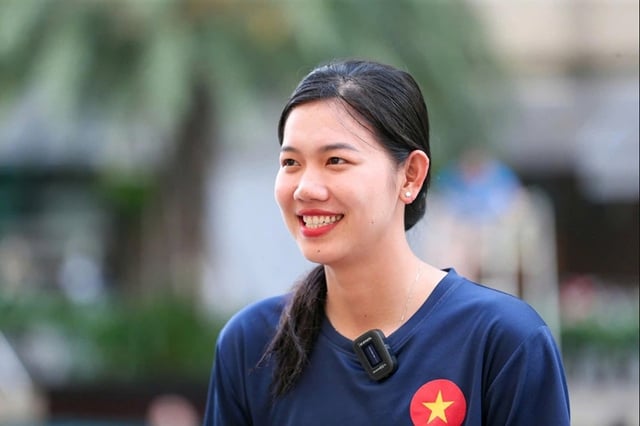
Swimmer Ánh Viên has built a very successful swimming instructor brand after retiring from the sport.
PHOTO: MINH TAN
Six years ago, when he was coaching the Vietnam U19 team at the PVF Youth Football Training Center, Coach Philippe Troussier gave the young players an interesting test. Normally, when the press arrived, the Vietnam U19 team would select two players to answer questions. But that day, Coach Troussier had the entire team line up to answer. A few players answered clearly and confidently, while most stammered. One young player shared that the pressure of playing matches probably didn't stress them as much as being on camera. Coach Troussier said that having the whole team interact with the press was a way for him to test the players' composure.
Coach Troussier's caution is not unwarranted, as it's not uncommon for athletes to sometimes tactlessly tactless behavior lead to damaging their own image or alienating fans. There was once a former Vietnamese national team player who got into a heated argument with a fan on social media, ultimately losing out in the process. Similarly, some athletes, when faced with pressure, choose to withdraw, becoming withdrawn and afraid of public opinion, and no longer wanting to appear in front of crowds.
The stories above stem from one thing: athletes have long been neglected in terms of interview skills and how to interact with the media and fans. Yet, this is a crucial foundation for Vietnamese athletes to build their personal brand and generate income.
It's not simply about building a personal image; if athletes learn soft skills, they can communicate effectively with coaches, teammates, the media, and fans, fostering good relationships and a positive image. Soft skills also help them interact better with teammates (especially in team sports), enabling them to analyze situations, find optimal solutions, and overcome difficulties in competition and life. Simultaneously, athletes can more easily integrate into new environments and adapt to changes in training and competition.
Expert Doan Minh Xuong, Head of the School Football Department of the Ho Chi Minh City Football Federation, analyzed: "Teaching soft skills to athletes needs to be done systematically, integrated from when they are still young athletes. The nature of sports is that athletes often live and train in isolation, rarely interacting with society, spending most of their day on the training field or within the four walls of the arena. Therefore, training communication skills and image building is even more important. However, it needs to be taught thoroughly, interspersed with professional training, and not just as a temporary fix through workshops and sharing sessions. Because, like professional skills, soft skills need time to absorb and apply. Vietnamese sports need to be socialized, needing the cooperation of businesses to become professional and systematic from the smallest details, avoiding outdated ways of thinking."
A TEAM IS NEEDED TO BUILD THE IMAGE OF THE ATHLETE.
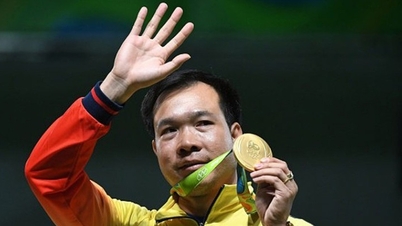
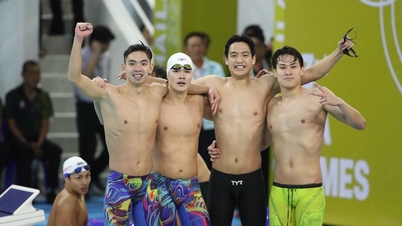
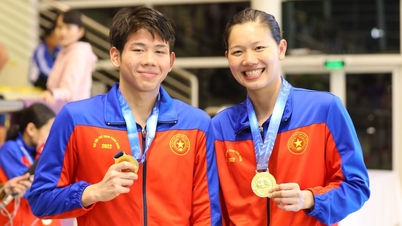
Top athletes and former athletes today, such as Nguyen Quang Hai, Nguyen Tien Linh, Nguyen Hoang Duc (football), Nguyen Thi Oanh (athletics), Nguyen Tien Minh, Nguyen Thuy Linh (badminton), Nguyen Huy Hoang, Nguyen Thi Anh Vien (swimming), Hoang Xuan Vinh (shooting)... are all confident in front of the camera, answer interviews confidently, and are always close to their fans.
Athletes build their reputation through self-learning and self-improvement, both professionally and in their personal lives. However, to develop their personal image, athletes also need a team, a brand ambassador, a media company, and press to support them.
Expert Doan Minh Xuong emphasized: "International athletes always have a whole entourage accompanying them to help with everything from technical aspects to behind-the-scenes support. Of course, top athletes are very well-trained in how to behave in front of the camera and how to maintain a clean and professional image. However, they don't do everything alone; they have a team behind them taking care of every detail, so that the athletes can focus 90-95% on training and competition. Recently, I've seen more frequent appearances of support teams when Vietnamese athletes compete, but this is still limited to famous athletes, while most Vietnamese sports are still being conducted quietly."
The Department of Sports and Physical Education in particular, and the sports sector in general, need to be more aware of the importance of building a positive image for athletes and for the sports industry itself. Only by creating a positive and widespread image can athletes more easily find a livelihood before and after retirement. Don't think of sports as just about competing and achieving results. In the era of social media development, athletes have ample means to enhance their image, participate extensively in mass sports, and promote their brands. The issue lies in the mindset of managers and how well they can support athletes. That's why I believe Vietnamese sports must become more professional, finding ways to connect more with businesses and fans." (to be continued)
Source: https://thanhnien.vn/vdv-viet-nam-kiem-tien-tu-thuong-hieu-ca-nhan-xay-dung-hinh-anh-co-suc-lan-toa-185250720210827954.htm

















![[Photo] Prime Minister Pham Minh Chinh holds a phone call with the CEO of Russia's Rosatom Corporation.](/_next/image?url=https%3A%2F%2Fvphoto.vietnam.vn%2Fthumb%2F1200x675%2Fvietnam%2Fresource%2FIMAGE%2F2025%2F12%2F11%2F1765464552365_dsc-5295-jpg.webp&w=3840&q=75)












































Comment (0)