

 |
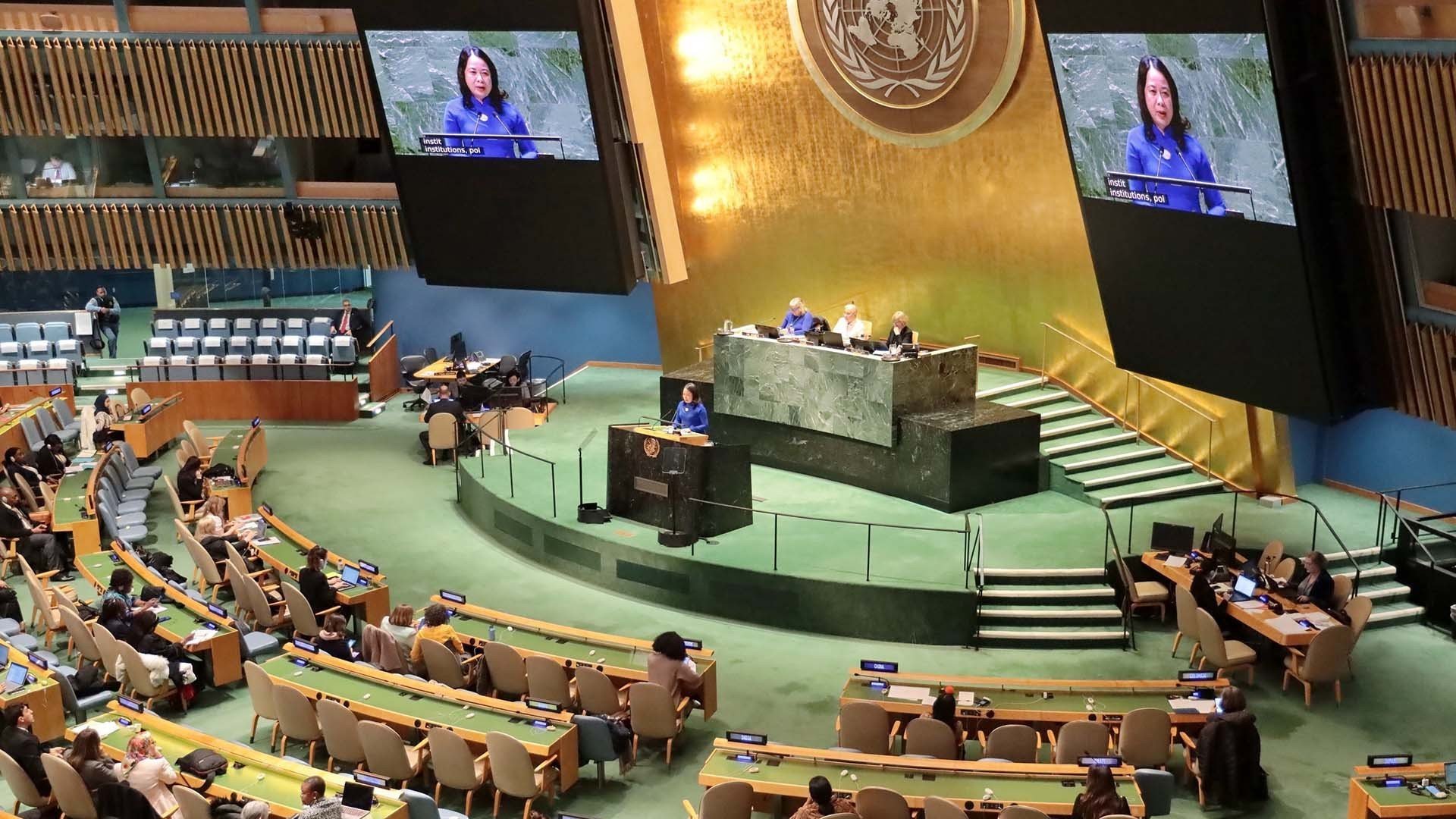
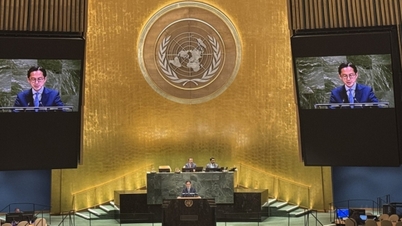
| Vice President Vo Thi Anh Xuan delivered a speech at the CSW68 session, emphasizing Vietnam's commitments to promoting gender equality and empowering women, on March 11. (Source: VNA) |
This year's 68th session of the United Nations Commission on the Status of Women (CSW) is themed: “Promoting gender equality and empowering all women and girls through addressing poverty, strengthening institutions and financing gender awareness.” Ambassador, could you please elaborate on the significance of this session?
Gender equality and women's empowerment have become top priorities for the United Nations (UN) in recent decades. This stems from the shared understanding that sustainable development, peace , and security are impossible without the full and equal participation of women in all aspects of social life. Therefore, gender equality and the protection of women's rights are reflected in and integrated into most of the Sustainable Development Goals (SDGs), and are also a recurring theme in many processes shaping the future of the UN today.
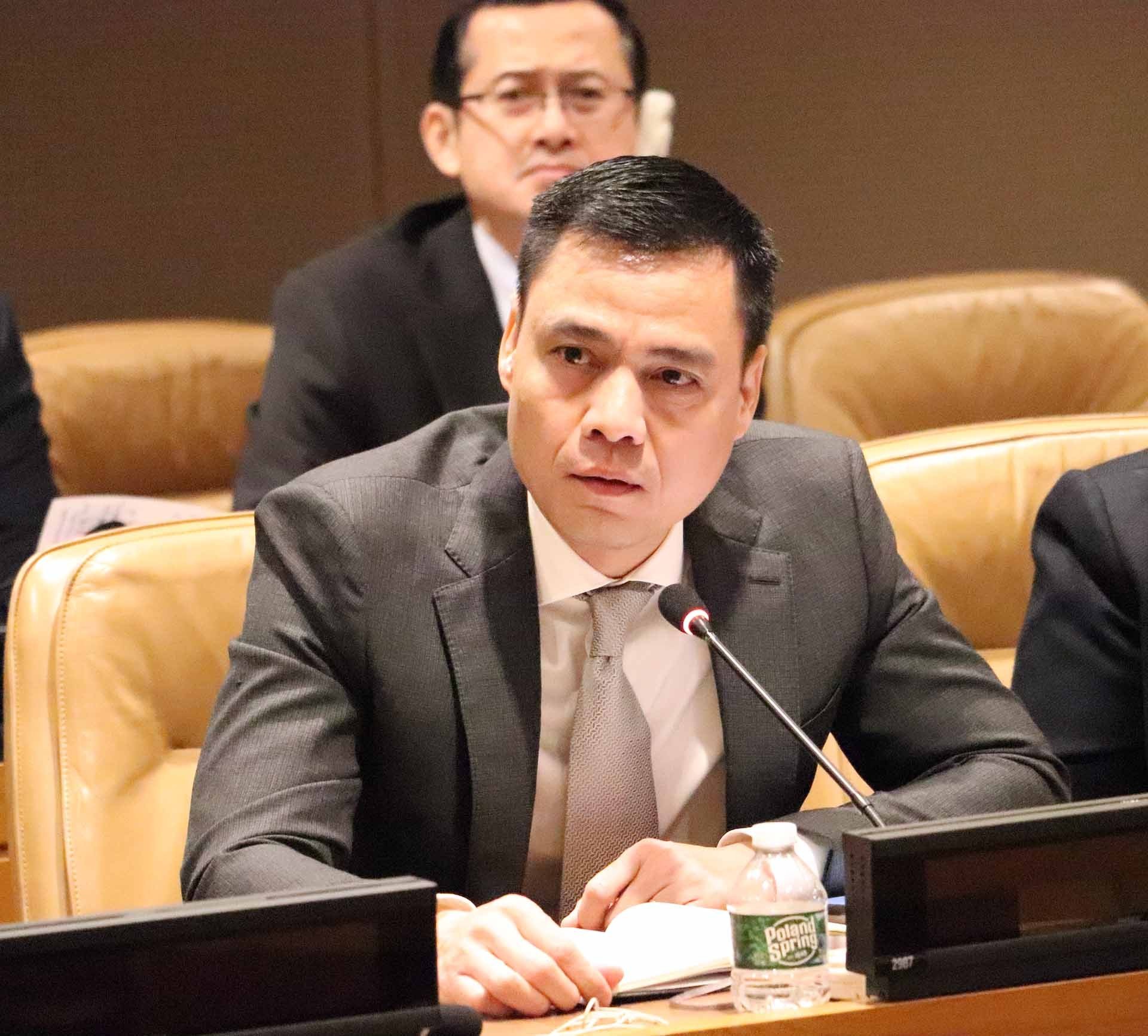 |
| Ambassador Dang Hoang Giang, Head of the Vietnamese Delegation to the UN. (Photo: International) |
As a key UN body promoting women's rights and shaping global norms on gender equality and women's empowerment, the annual CSW session is one of the most important multilateral events of the UN year, with high-level participation from countries and tens of thousands of delegates from around the world . Alongside the session, there are also more than 700 seminars and side events organized by countries and international organizations.
This year's CSW 68 session is particularly significant as it prepares to mark the 30th anniversary of the Beijing Action Plan, promoting the implementation of the SDGs, especially SDG 5 on achieving gender equality by 2030. The theme of CSW68 is "Accelerating the achievement of gender equality and empowering all women and girls by addressing poverty and strengthening gender-based institutions and finance."
This is a highly relevant and meaningful topic in the current international context, with many issues and challenges needing to be addressed to ensure women's rights and gender equality. Women face high rates of poverty, lack of access to education, healthcare services, and sustainable employment. Approximately 388 million women and girls lived in extreme poverty in 2022. Addressing structural barriers and discrimination that perpetuate poverty for women is urgent. The Covid-19 pandemic has exacerbated gender inequality and pushed many women into poverty due to its economic impact. Meanwhile, sufficient financial resources have not been mobilized to achieve gender equality goals globally.
Therefore, by addressing poverty through a gender lens and strengthening institutions to meet gender needs, while also increasing financing, this year's CSW 68 proposes concrete, practical measures to accelerate progress in implementing this important global agenda. The outcomes and recommendations of the CSW sessions contribute to shaping policies and programs at the global, regional, and national levels.
With the participation of Vice President Vo Thi Anh Xuan, what were the messages and initiatives that Vietnam emphasized at this session, Ambassador?
Attending CSW-68, Vice President Vo Thi Anh Xuan delivered an important speech in the General Debate, conveying a message about Vietnam as a peaceful and proactive country that values and promotes multilateral cooperation; demonstrating Vietnam's strong commitment at a high level to ensuring gender equality and women's rights, and highlighting our multifaceted participation and contributions to this priority area.
On this occasion, the Vice President also shared with the international community four proposals aimed at accelerating and effectively implementing goals in the field of gender equality and women's rights.
Firstly , it is necessary to promote women's participation in political, economic, cultural, and social decision-making mechanisms, especially policies supporting women in poverty alleviation, livelihood security, entrepreneurship, and innovation. Priority should be given to allocating resources to support women and girls in areas experiencing humanitarian crises.
Secondly , it is important to enhance the empowerment and access of women and girls in science, technology, and digital transformation, while simultaneously preventing discrimination and violence in cyberspace.
Thirdly , it is important to enhance the role of women in building a peaceful, stable, inclusive, and sustainable international environment, addressing non-traditional security challenges, especially responding to climate change.
Fourth , we will promote partnerships for sustainable development; strengthen financial support and institutional and policy advice for developing countries; and share, disseminate, and promote effective models to enhance the role of women in the economic, social, and sustainable development sectors.
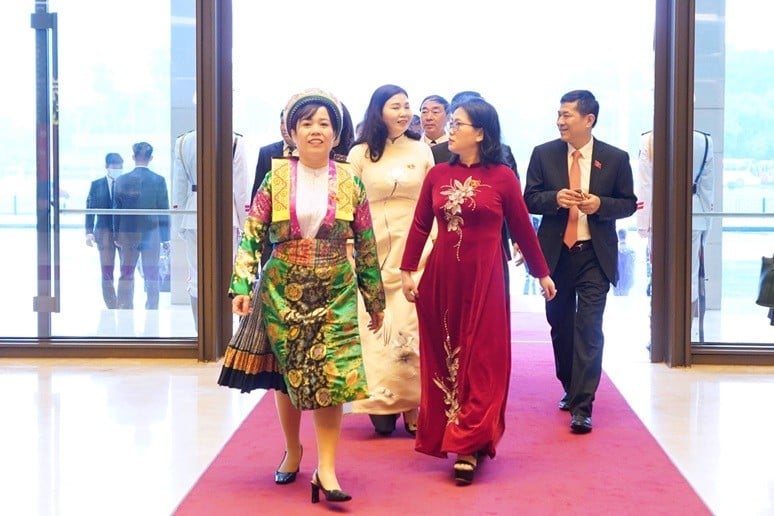 |
| Vietnam has a 30.3% rate of female National Assembly deputies; the rate of ministries and ministerial-level agencies with key female leaders reaches 59%. (Source: quochoi.vn) |
Ambassador, could you please share your assessment of Vietnam's efforts at the United Nations in promoting global gender equality?
Gender equality and the protection of women's rights have always been issues that Vietnam values and actively participates in, contributing to not only at the national and regional levels but also at the global level. Vietnam was one of the first countries in the world to sign and ratify the Convention on the Elimination of Discrimination Against Women (CEDAW) on July 29, 1980, and November 27, 1981; and has fully fulfilled its obligation to report regularly to the Convention Committee.
At UN forums, Vietnam has actively participated in discussions, shared experiences, and contributed with other countries to building cooperation frameworks and common global standards for promoting gender equality. Vietnam is also a member of the Friends of Gender Balance Group, which aims to promote women's participation in UN positions, especially leadership positions.
Throughout this process, Vietnam has made practical and significant contributions to promoting gender equality at the global level. For example, regarding the UN Women, Peace and Security Agenda, during its 2008-2009 term as a member of the UN Security Council, Vietnam chaired the Open Debate on the Women, Peace and Security Agenda, and introduced and advocated for Resolution 1889 (October 2009) – the first Security Council resolution focusing on addressing the needs of women and girls in the post-conflict period. Building on these achievements, during its second term as a member of the UN Security Council (2020-2021), Vietnam and the United Nations successfully organized the Global Conference on Action for Global Commitments on Women, Peace and Security (December 2020), which led to the adoption of the Hanoi Declaration with the participation of numerous UN member states.
Furthermore, Vietnam has proactively increased its participation in peacekeeping activities, deploying many female soldiers and police officers to work in UN peacekeeping missions. Currently, Vietnam is one of the leading countries in terms of the percentage of women participating in peacekeeping activities, with a rate of 16% (the general rate for most countries is around 10%); and is striving to increase this rate to 20% by 2025.
At the national level, Vietnam has also recently adopted the National Action Program on Women, Peace and Security for the period 2024-2030 with many specific goals such as strengthening the full, equal, and meaningful participation of Vietnamese women in the fields of politics, foreign affairs, defense, security, and addressing and responding to non-traditional security challenges of the nation, as well as in maintaining international peace and security.
Strengthening women's participation and policy-making in social life, and eliminating violence against women and girls, is not just a commitment but has become a vibrant practice in Vietnam. In the current context, given the achievements in gender equality, what experiences can Vietnam share with the international community?
The consistent policy of the Vietnamese Party and State is to always maximize the role and immense potential of women in the cause of national construction and defense, to enhance women's status, and to promote gender equality in all areas of politics, economics, culture, and society. These major orientations have been institutionalized in the Constitution, the Law on Gender Equality, and many documents in the Vietnamese legal system. There are strategies and plans for socio-economic development from now until 2030, contributing to strengthening women's contributions to achieving the goal of making Vietnam a modern industrialized nation by 2045.
Vietnam's efforts have also been recognized by the international community and are considered one of the top 10 countries in achieving Goal 5 on promoting gender equality and empowering all women and girls within the UN's Sustainable Development Goals.
Vietnam is among the top one-third of countries in the world in terms of the proportion of female National Assembly representatives and the percentage of women participating in the labor force. Specifically, the percentage of female National Assembly representatives is 30.3%; the percentage of ministries and ministerial-level agencies with key female leaders is 59%; the percentage of female business owners is 28.2%; and the percentage of female PhD holders is 28%. Notably, Vietnam has nearly equal Human Development Index scores for men and women; women earn 81.4% of the estimated income of men.
These are highly significant results demonstrating Vietnam's commitment and efforts to share lessons and experiences with international friends in order to promote gender equality and empower women and girls, thereby contributing to building a peaceful, cooperative, and sustainable world.
Source































































Comment (0)