

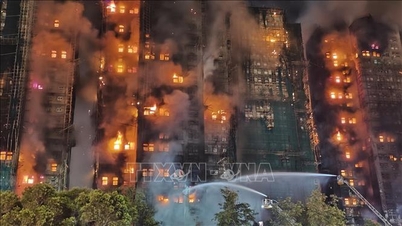
Regarding the fire at the mini-apartment building in Hanoi on September 13th, Associate Professor Dr. Dao Xuan Co – Director of Bach Mai Hospital (directly supervising the emergency response for the victims) stated that the hospital is currently treating 24 patients, most of whom suffered carbon monoxide poisoning. In addition, some patients jumped from the building, resulting in multiple injuries. The patients are receiving emergency treatment at various departments and centers within the hospital.
Mr. Nguyen Van Chi, former Director of the Emergency Center at Bach Mai Hospital, also stated that in this fire disaster, there were two major groups of casualties, including a group of patients who inhaled a large amount of smoke containing toxic carbon monoxide (CO).
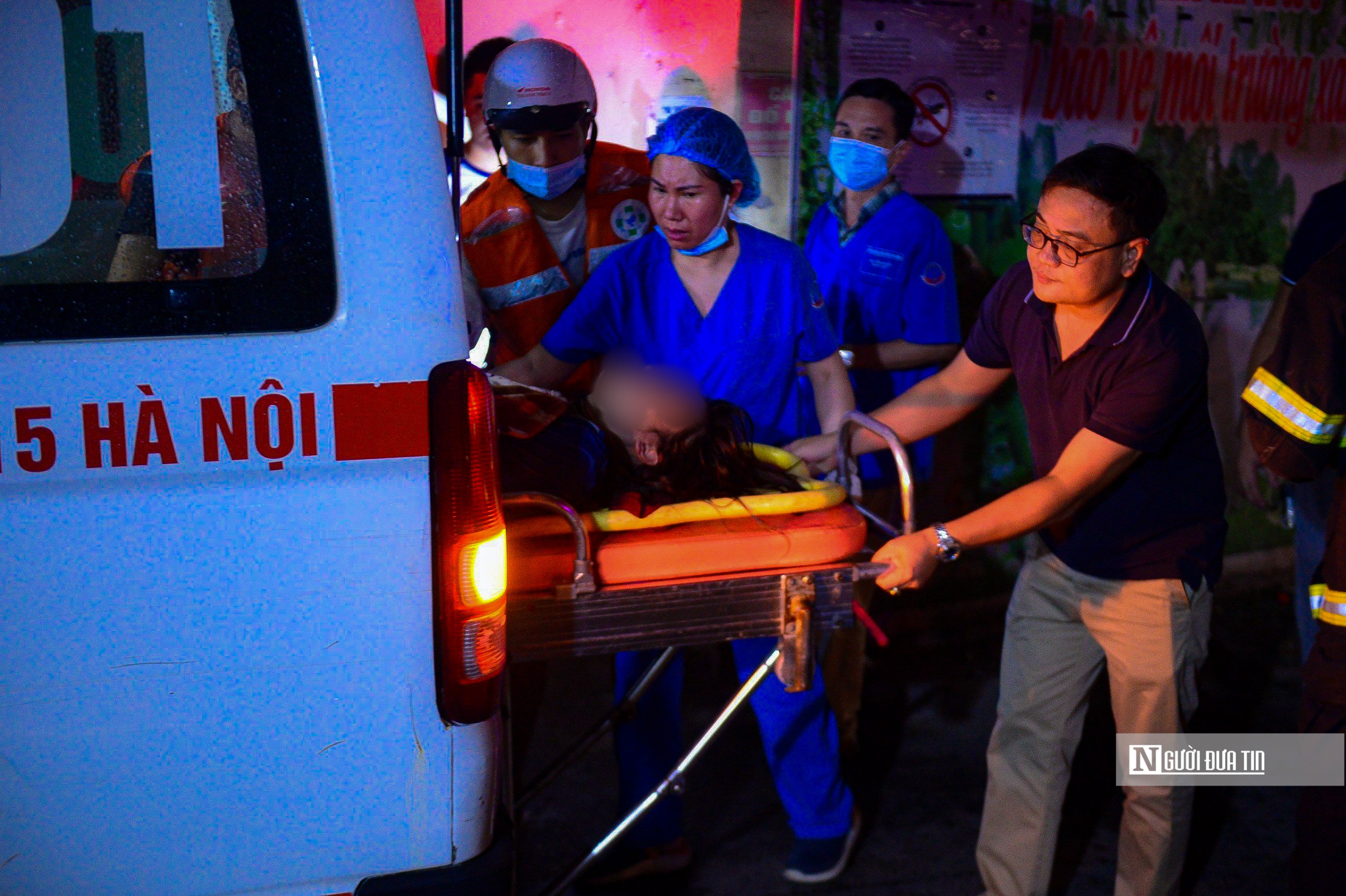
Most patients suffer from carbon monoxide poisoning.
Speaking to Nguoi Dua Tin (The Informer) , Dr. Nguyen Huy Hoang, head of the Vietnam-Russia Hyperbaric Oxygen Center, Vietnam-Russia Tropical Center, Ministry of National Defense , said that carbon monoxide poisoning is a common cause of death worldwide as well as in Vietnam.
Carbon monoxide (CO) is produced when organic compounds are incompletely burned in an oxygen-deficient environment. However, its danger lies in the fact that it is non-irritating, colorless, and tasteless. Therefore, if the victim is unconscious, asleep, intoxicated, or unresponsive, they may die before they even realize what is happening.
According to Dr. Hoang, acute carbon monoxide poisoning commonly occurs in two situations in daily life:
Firstly, when it's cold, warming ourselves in enclosed rooms with gas stoves, charcoal stoves, or burning firewood increases CO levels, which can be fatal. Similarly, using generators or running car engines in enclosed spaces also produces a lot of CO, causing the victim to gradually suffer from carbon monoxide poisoning.
Secondly, in most fires, victims are primarily suffocated by carbon monoxide (CO). The mechanism of CO poisoning is that upon entering the respiratory tract, it immediately binds to hemoglobin in red blood cells, forming a very stable compound called carboxyhemoglobin, which cannot transport oxygen, causing the body to suffer from oxygen deficiency.
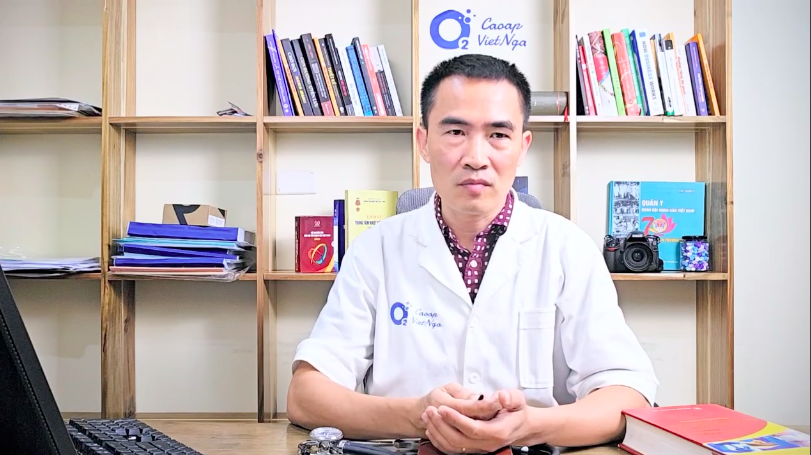
Dr. Nguyen Huy Hoang provided further information on how to handle carbon monoxide poisoning.
According to Dr. Hoang, in patients with acute carbon monoxide poisoning, CO entering the body causes neurotoxicity, especially in central nervous system cells in the brain, leading to symptoms of neurotoxicity and cerebral edema.
Carbon monoxide (CO) and carboxyhemoglobin compounds inhibit cellular respiration, preventing the body from producing energy.
"The severity of symptoms depends on the level of carbon monoxide poisoning; when the hemoglobin level is below 25%, the symptoms are usually mild. However, in patients with cardiovascular or coronary artery disease, even a very small amount of CO can cause severe cardiovascular symptoms."
"When the amount of hemoglobin invaded by CO, forming carboxyhemoglobin compounds greater than 25%, the symptoms will worsen, with severe chest pain, drowsiness, rapid pulse, and a dangerous drop in blood pressure. When the poisoning increases to 50%, the condition becomes extremely dangerous, leading to hypotension, metabolic acidosis, coma, and death if not treated promptly," said Dr. Hoang.
In addition, Dr. Hoang also added that carbon monoxide poisoning can have other symptoms such as: abdominal pain, loss of consciousness, weakness in the limbs, sphincter dysfunction… and there may also be psychiatric and neurological symptoms, but these usually appear later, after a few days or even weeks.
Regarding the treatment of carbon monoxide poisoning, Dr. Hoang stated that the first step is to cut off the patient's exposure to the carbon monoxide source by moving them to a well-ventilated area.
Next, the patient should be given 100% oxygen immediately, which reduces the half-life of CO to 1-2 hours. If breathing in a hyperbaric oxygen environment, half of the CO will be eliminated after only 20-30 minutes, thus significantly increasing the elimination rate.
On the afternoon of September 14th, representatives from the Hanoi Department of Health stated that patients from the mini-apartment building fire were being treated at Bach Mai, Saint Paul, Ha Dong, Hanoi Medical University, and Military Hospital 103. Of these, six cases were severe and critical, all due to carbon monoxide poisoning, and were continuing treatment at Bach Mai Hospital; the remaining patients were in moderate to mild condition.
Among them, nine children were hospitalized at three hospitals: Ha Dong, Saint Paul, and Bach Mai, and a pregnant woman was being treated at Saint Paul. The patients mainly suffered from smoke inhalation, carbon monoxide poisoning, respiratory failure, multiple injuries, burns from heat, fractures, and spinal injuries.
Director of the Department of Medical Examination and Treatment Management, Luong Ngoc Khue, requested that hospitals focus all resources, mobilize skilled doctors, and ensure sufficient medicine, equipment, and facilities for emergency treatment and rescue of victims.
The immediate focus is on providing medical treatment; no fees are being collected yet. Attention is being paid to the health and psychological well-being of the victims and their families to help them overcome the crisis .
Source

















































































Comment (0)