

90% of global trade is impacted by non-tariff measures, which restrict trade three times more effectively than tariffs.
This information was provided at a training course on specialized knowledge and skills in international economic integration, import-export operations, e-commerce, and logistics, organized by the MLC Technical Assistance Project Management Board ( Ministry of Industry and Trade ) for businesses, state management agencies, research institutions, etc.
Vietnam is among the top 15 countries with the largest trade flows in the world.
According to Ms. Phung Thi Lan Phuong, a senior expert at KTP Investment Consulting and Free Trade Agreement Leverage Company, Vietnam is one of the most open economies , with 16 free trade agreements (FTAs) already in effect with 56 trading partners.
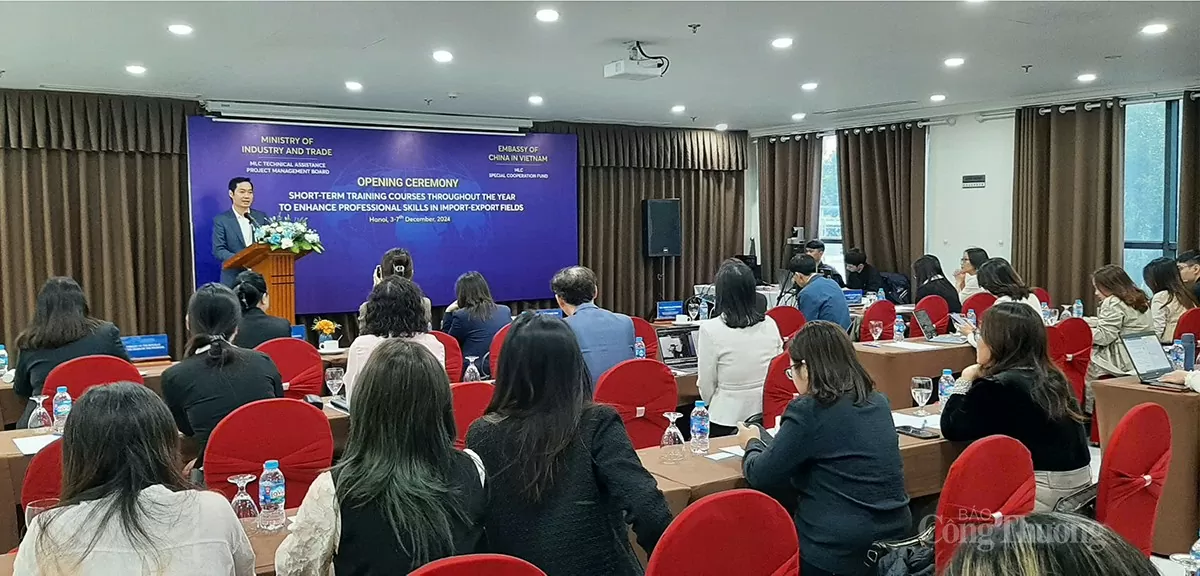 |
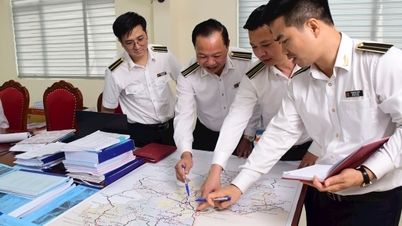
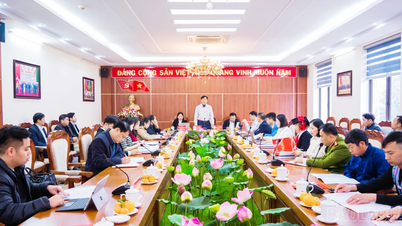
| A short-term training course under the Technical Assistance Project, funded by the Special Fund within the framework of the Mekong-Lancang Cooperation (MLC) Initiative, was organized by the Ministry of Industry and Trade on the morning of December 3rd in Hanoi. (Photo: Nguyen Hanh) |
Other countries in the Mekong-Lancang River basin have also participated in dozens of free trade agreements, and are also members of numerous free trade agreements within the ASEAN framework with partner countries.
According to Ms. Phung Thi Lan Phuong, in FTAs, commitments related to transparency, equal treatment, or more favorable customs procedures, rules of origin, intellectual property, environment, labor, etc., may initially increase costs for Vietnam; however, in the long run, it will be beneficial for businesses as Vietnam's standards gradually approach those of the world.
For each business, we will find unique opportunities and challenges in each agreement; however, overall, FTAs are helping Vietnam build a more favorable investment, business, and import-export environment for enterprises.
Many factors have contributed to Vietnam's trade and investment success in recent years, but Free Trade Agreements (FTAs) are a key contributor. In 2004, Vietnam, a country with a low ranking in international trade, has now risen to 15th place in imports and 11th in exports. Vietnam is also among the top 15 countries with the largest trade flows in the world.
Despite the achievements, challenges and limitations remain in leveraging FTAs. According to Ms. Phung Thi Lan Phuong, although Vietnam has strong export performance, over 70% of exports are from FDI enterprises. The rate of granting preferential Certificates of Origin (C/O) for all FTAs remains low at only 37.4% in 2023, including CPTPP (6.3%) and RCEP (1.26%). In many cases, exporting businesses do not meet or are unable to obtain preferential C/Os.
Vietnam's level of participation in global value chains is relatively low. Its involvement in global value chains (GVCs) remains limited to low-value-added production or assembly segments. The domestic value-added content in Vietnam's total exports has decreased significantly across all sectors, falling from 69% in 2000 to just 52% in 2020, compared to the ASEAN average of 69% and China's 84%.
Although Vietnam's total export turnover has been growing continuously, it is heavily dependent on foreign raw materials and components, and FDI enterprises. Therefore, any fluctuations in the global raw material market have a significant impact on domestic businesses.
Furthermore, countries participating in FTAs are increasing non-tariff barriers for imported products. These barriers relate to standards, ranging from simple ones like product labeling and rules of origin to more complex ones such as combating deforestation and reducing carbon footprints. “Notably, while tariffs have been gradually reduced from 13% (in 1999) to 7% (currently), non-tariff measures have simultaneously increased from 53.4% (in 1999) to 71.97% (currently),” said Ms. Phung Thi Lan Phuong.
Unpredictable non-tariff measures are a major barrier to international trade. Statistics show that 90% of global trade is governed by non-tariff measures; in other words, non-tariff measures are replacing tariffs as the primary determinant of international trade. Non-tariff measures are approximately three times more restrictive than tariffs, which increases trade costs. Developing and least developed countries are most affected by these measures.
Agricultural products are the most tightly regulated across the country, with 90% to 100% of imported products affected by non-tariff barriers. Developed countries tend to have more regulations than developing and least developed countries. While least developed countries apply an average of 7 non-tariff barriers per imported agricultural product, developed countries apply an average of 13 non-tariff barriers.
With the reduction of tariffs due to free trade agreements, non-tariff barriers have become the primary tool for countries to regulate trade. Non-tariff barriers can significantly impact trade flows and are emerging as major obstacles to exports, especially for least developed and developing countries.
Enhancing the integration capacity of businesses.
At the training session, experts stated that the commitments under FTAs are becoming increasingly deep and complex, requiring managers in this field, as well as associations and businesses, to be trained to maximize the benefits from these agreements.
Mr. Nguyen Phuc Nam, Deputy Director of the Asia-Africa Market Department (Ministry of Industry and Trade), said that this is the first in a series of four short-term training courses of the Technical Assistance Project funded by the Special Fund within the framework of the Mekong-Lancang Cooperation Initiative (MLC).
These courses are designed to enhance the professional skills of officials, civil servants, researchers, and businesses involved in the import-export sector, focusing on topics including: updates on trends in economic integration, trade, investment, FTAs and non-tariff barriers; import-export operations; comprehensive logistics and supply chain management; the development of regional and global e-commerce; and new trends and commitments in Vietnam's FTAs…
Ms. Phung Thi Lan Phuong stated that organizing this event will provide the business community, management agencies, and researchers involved in import and export between countries such as Laos, Cambodia, Myanmar, Thailand, China, and Vietnam with more opportunities to share knowledge, skills, and exchange best practices. Through this, the training course will contribute to enhancing the professional knowledge and skills of officials from management agencies, associations, businesses, institutes, and universities in the Mekong-Lancang region.
In addition, the training course will help enhance the professional knowledge of international commitments, domestic policies and regulations for the participating staff, helping trainees improve their management capacity as well as strategic planning and policy making in the production and business activities of enterprises in a more optimal and effective way, thereby helping to improve competitiveness and expand access to international markets for enterprises, especially micro, small and medium-sized enterprises.
The course will run until December 6th and will focus on four topics: Updates on economic integration trends, trade and investment, FTAs, and non-tariff barriers to international trade; Import and export operations, international purchasing and payment; Logistics and comprehensive supply chain management in the current context; and the development of e-commerce in the region and the world, new trends, and e-commerce commitments in Vietnam's FTAs.
Source: https://congthuong.vn/90-thuong-mai-toan-cau-bi-tac-dong-boi-cac-bien-phap-phi-thue-quan-362234.html























































Comment (0)