

My father loved books. He had a private library full of books and was always adding to it. He often took me to bookstores, instilled in me a reading habit, and even taught me how to wrap books and read them.
During his vacations or holidays, he loved taking the family to visit historical and cultural sites in Hanoi or other provinces. From the age of 11, he took me to visit Co Loa Citadel. My impression and understanding of the value of this ancient citadel remain to this day. During Tet (Vietnamese New Year), he took the whole family cycling to visit the Temple of Literature, explaining the stone steles there to me. He took me to the Hai Ba Pagoda, Dau Pagoda, Truong Yen – the capital of Hoa Lu, Pac Bo… My love for the country and its history was instilled through these trips.
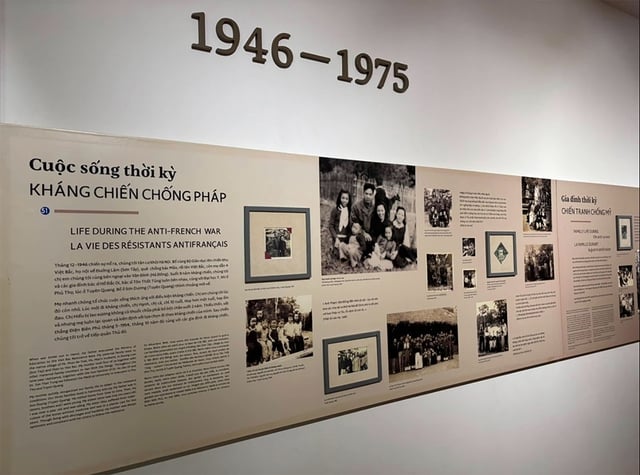
The family stories were recounted by Associate Professor Dr. Nguyen Van Huy at the Nguyen Van Huyen Museum.
PHOTO: GĐCC
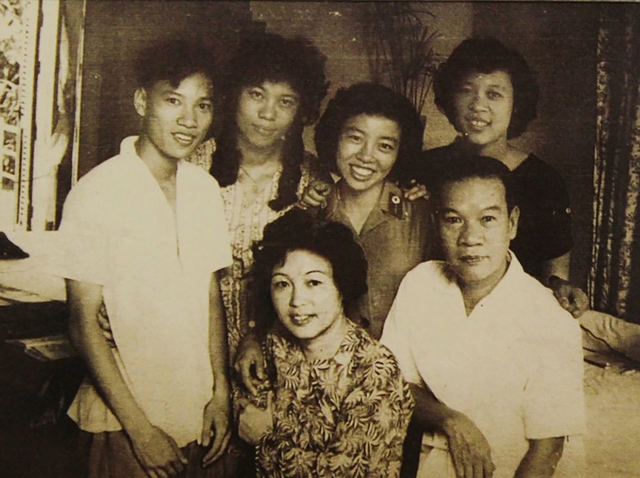
The family of Professor Nguyen Van Huyen
PHOTO: GĐCC
My father wanted me to see the world through very subtle educational methods. He encouraged me to collect stamps. He received many letters from both domestic and international sources, and despite his busy work schedule, he would still cut the corners of stamps or occasionally bring home stacks of empty envelopes for me to soak in water to clean the adhesive behind the stamps. He guided me, and I independently figured out how to classify stamps and stamp sets.
Stamp collecting is fascinating. I learned so many stories about geography, history, culture, and nature from those stamps. My father understood the value of stamp collecting and passed this passion on to me. Even now, when I hold my old stamp book, I still feel emotional. Stamp collecting truly gave me my first lessons about classification methods and the value of classification. Those lessons have helped me ever since, when working in museum exhibitions, I always encounter issues of classification, categorization of information, documents, and artifacts.
The trips I took with my mother and father in my childhood instilled in me, without me even realizing it, a love for science , a passion for practical application, the joy of fieldwork, and a rudimentary understanding of scientific methodology.
My mother often allowed me to visit her laboratory at the Department of Parasitology, Medical University. At that time, the laboratory was under the direct leadership of Professor Dang Van Ngu, and my mother was his invaluable assistant. The laboratory was always quiet; everyone worked silently, moving around and exchanging information softly. What impressed me most was how incredibly clean and tidy the laboratory was.
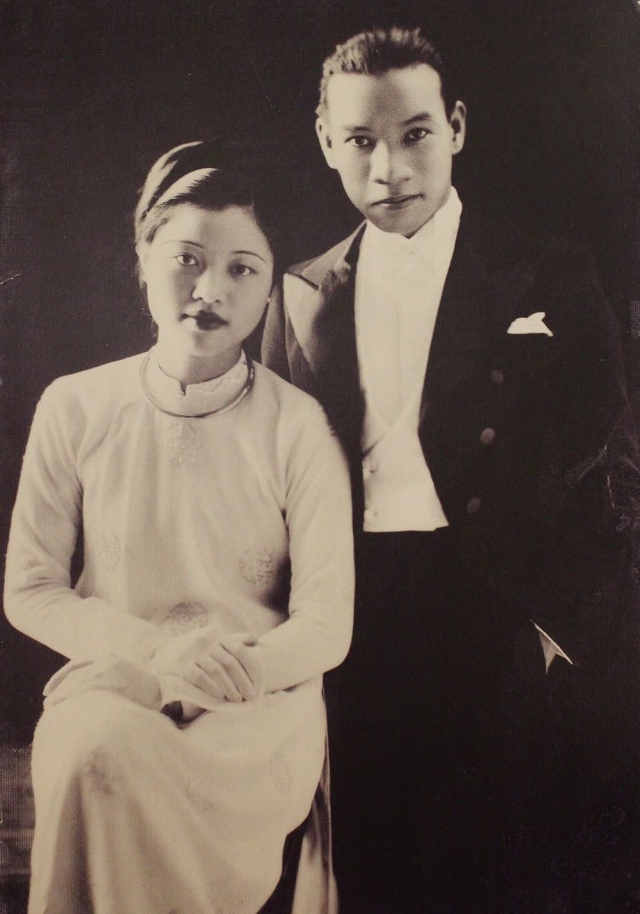
Mr. Nguyen Van Huyen and his wife, Mrs. Vi Kim Ngoc
PHOTO: GĐCC
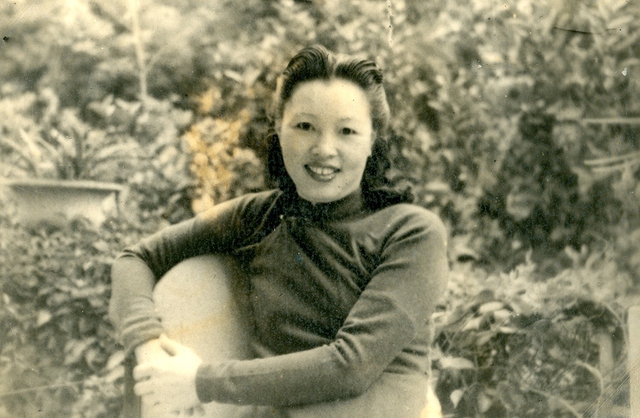
Ms. Vi Kim Ngoc
PHOTO: GĐCC
From a young age, I saw my mother meticulously drawing mosquitoes and worms under a microscope. She wasn't afraid of getting dirty because detecting parasites required analyzing human feces. She explained to students how to identify various parasites, malaria-carrying mosquitoes, filarial worms, and tapeworms from her drawings or under a microscope. Recently, hundreds of my mother's drawings from that time have been collected and preserved by the Center for the Heritage of Scientists.
She often recounted her field trips investigating mosquitoes in the outskirts of Hanoi, Lang Son, and Bach Long Vi Island… There, she let mosquitoes bite her to catch them for specimens. She even said she went to the remote monkey island in Ha Long Bay to catch mosquitoes. In particular, she once took me along to Dai Tu commune (Hanoi) to see how the mosquito investigation team worked. Cycling to Dai Tu back then was a long way. She didn't mind, staying overnight with the farmers; searching for mosquitoes in nooks and crannies, water tanks, stagnant ponds, buffalo sheds, and pigpens… The results of these mosquito and malaria investigation trips were later published in a book she co-authored, with vivid illustrations.
The trips I took with my mother and father in my childhood instilled in me, without me even realizing it, a love for science, a passion for practical application, the joy of fieldwork, and a rudimentary understanding of scientific methodology.
Respect your children's choices.
I understood from the beginning that my parents' educational approach was to respect their children's choices. They never interfered or forced their children to follow their wishes, from choosing a field of study to selecting a future career. My decision to enroll in the History Department at the University in 1963 was entirely my own.
I chose this field because of my academic abilities and interests, and also because of the influence of my parents' lives, as we have a specialized library at home. My parents support me.
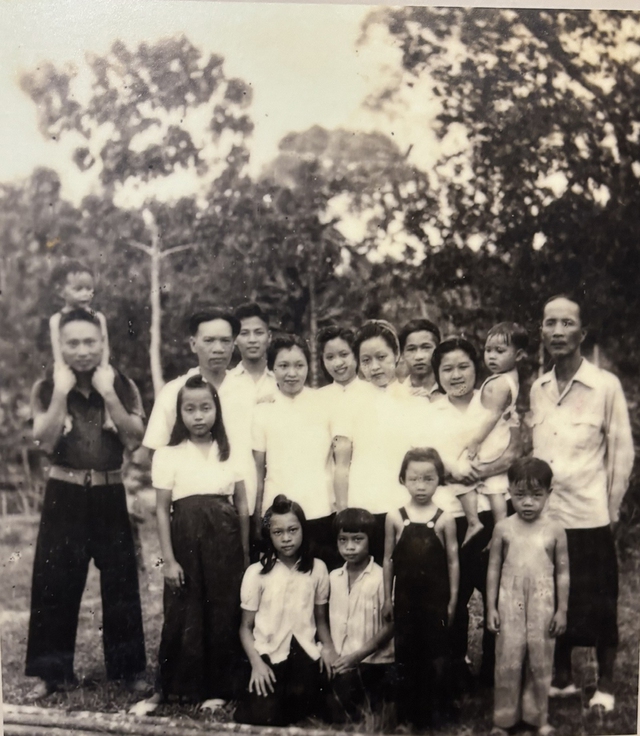
The three families of Mr. Nguyen Van Huyen, Mr. Ton That Tung, and Mr. Ho Dac Di in Phu Tho in 1948.
PHOTO: GĐCC
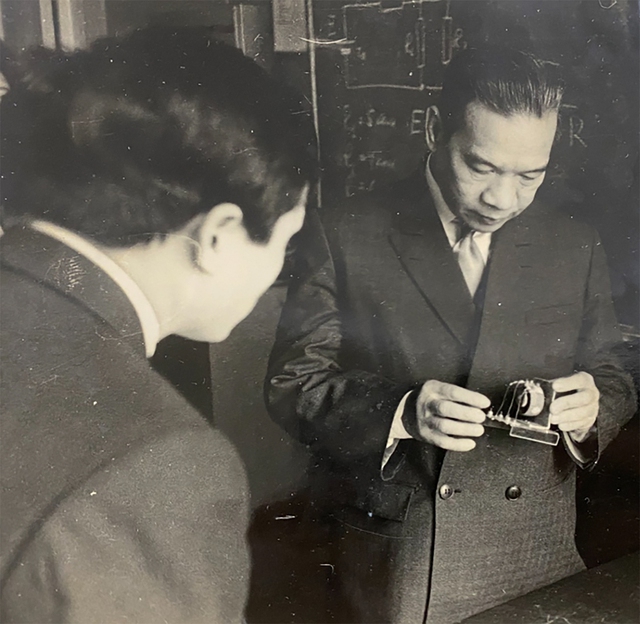
Minister Nguyen Van Huyen while learning about education in the Soviet Union.
PHOTO: GĐCC
When I was in my fourth year of university, starting my major, I asked my father whether I should pursue ancient history, modern history, archaeology, or ethnology. He simply said that each major had many important and interesting issues, but you had to be passionate about it. The key was to love science, cultivate yourself, and strive to think deeply. "Choosing which major is up to you and your professors. You should ask for their opinions," he said. And so I decided to choose ethnology. I also know that whenever I had the chance to meet Professor Bui Van Hach, the head of the department, and Professors Tran Quoc Vuong, Vuong Hoang Tuyen, and Phan Huu Dat, my father would ask about my progress.
I don't see any problem with overcoming my father's "shadow." Perhaps his "shadow" is the key to ensuring I do everything well and never make any mistakes that would tarnish his reputation. That warm "shadow" has helped me maintain/uphold myself in the past, present, and future. That is the value of family.
* Associate Professor Dr. Nguyen Van Huy is a renowned ethnologist and museologist. He is the son of Minister of Education Nguyen Van Huyen (1905 - 1975) - a famous scholar before 1945; a historian, ethnologist, educator, and researcher of Vietnamese culture.






























































Comment (0)