

In 2024, many economic experts believe that there is ample room for fiscal policy to support economic growth. Vietnam should consider continuing to pursue a counter-cyclical fiscal policy, focusing on increasing spending and maximizing tax and fee exemptions.
Positive results from support packages
According to many economic experts, in 2023, despite remaining difficulties in promoting economic growth, the positive effects of fiscal and monetary policies were somewhat evident.
Accordingly, the State Bank of Vietnam's monetary policy has been managed firmly, proactively, and flexibly, making a significant contribution to controlling inflation, stabilizing the macroeconomy, and supporting economic growth at 5.05%, among the highest in the region and the world . Regarding fiscal policy, support packages such as value-added tax (VAT) reductions, tax and fee exemptions, and land lease fee reductions have proven quite effective, helping businesses overcome difficulties, recover, and develop production and business activities.
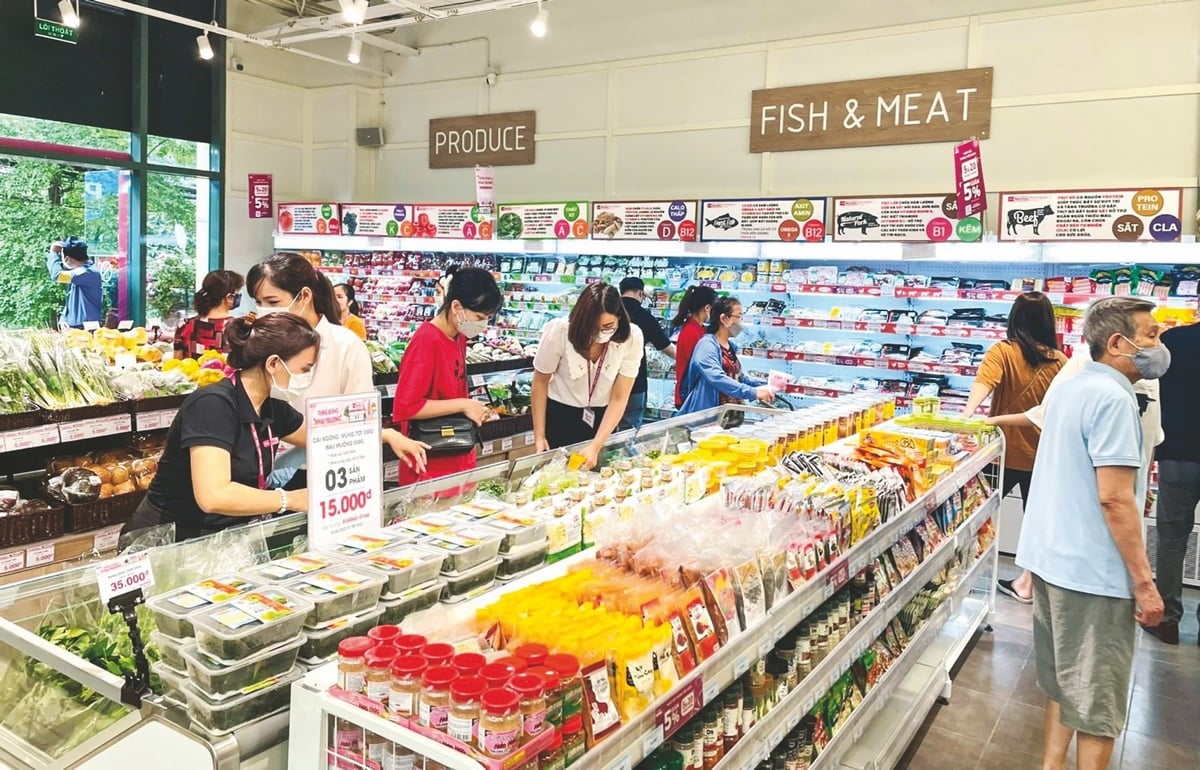 |
| Reducing VAT will stimulate consumption, thereby boosting production. |
Mr. To Hoai Nam, Vice President of the Vietnam Association of Small and Medium Enterprises (SMEs), believes that the support packages to reduce VAT, special consumption tax, and environmental protection tax on gasoline and diesel fuel over the past year have directly helped restore the production and business activities of many enterprises. “The total value of the fiscal support packages last year was approximately 200 trillion VND. The policies were issued and implemented promptly, creating a large source of support and were highly appreciated by the business community,” Mr. Nam stated.
Sharing the same view, Dr. Vo Tri Thanh - an economic expert - believes that the tax and fee reduction policy implemented last year was one of the most effective policies in terms of immediate results. This is because these policies were quickly put into practice, without going through implementation stages, and brought direct benefits to businesses.
According to Mr. Thanh, although some support policies, such as the 2% loan subsidy package from the 40,000 billion VND budget, have not had a high disbursement rate, they have basically had a positive effect in some sectors and industries.
In particular, according to many experts, the good coordination between Vietnam's fiscal and monetary policies over the past year has helped improve financial market liquidity, eased pressure on interest rates and exchange rates, and especially led to a recovery in the bond and real estate markets, thereby making an important contribution to controlling inflation and stabilizing the macroeconomy.
Frederic Neunamni, Head of Asian Economic Research at HSBC, said that Vietnam's inflation control in 2023 was largely due to the State Bank of Vietnam's four interest rate cuts, which went against the monetary policy trends in many countries around the world. Simultaneously, tax deferrals, reductions in certain taxes and fees, and restructuring of maturing loans helped businesses reduce input costs, thereby lowering product prices and stimulating consumer spending.
Expectations from extending the fiscal support channel.
According to experts, the economy in 2024 will still face many difficulties due to the impact of external headwinds. Meanwhile, the room for maneuver in monetary policy is quite limited. Therefore, to achieve the growth target of 6-6.5%, more reliance on fiscal policy is needed. According to the macroeconomic research group of the Ho Chi Minh City University of Banking, this year, although the real estate and corporate bond markets will continue to face difficulties, fiscal policy will have ample room to become the key to boosting domestic demand. Specifically, adjustments to wage policy will significantly impact GDP growth. Public investment in 2024 will also accelerate.
"Temporary tax deferrals and reductions in environmental tax and value-added tax will also bring positive impacts to households and businesses," commented Associate Professor Dr. Nguyen Duc Trung, Rector of the Ho Chi Minh City University of Banking.
Sharing further insights on the positive aspects of the economy in 2024, Associate Professor Dr. Nguyen Khac Quoc Bao, Deputy Director of the University of Economics Ho Chi Minh City, stated that the extension of the VAT reduction policy this year will have a positive impact on many businesses. Increased consumer spending will stimulate domestic "aggregate demand," thereby contributing to reducing inflationary pressure and continuing the economic recovery momentum seen in the early months of the year.
According to Mr. Bao, the forecast for 2024 indicates a decrease in global inflation, reducing the pressure of price increases on monetary policies. Inventory levels in major markets like the US and EU peaked at the end of 2023 and are expected to decrease in the near future, creating opportunities for exports. Furthermore, while public investment remains challenging, capital will still be injected strongly because 2024 is a pivotal year in the 2021-2025 period. This is in addition to the fact that legal frameworks related to the real estate market and infrastructure development, such as the 2023 Housing Law, the 2023 Real Estate Business Law, and the draft Land Law soon to be passed by the National Assembly, have all been amended and supplemented in many positive ways.
From a recommendation perspective, IMF experts suggest that, during the 2022-2023 period, amidst declining business confidence and weakened corporate borrowing demand, Vietnam effectively implemented counter-cyclical fiscal policies. Fiscal support policies in 2024 should continue to focus on increasing public investment spending, minimizing taxes and fees, and reforming administrative procedures and investment processes to stimulate aggregate demand.
In the long term, Vietnam should focus on perfecting the legal framework for the development of the digital economy, green economy, circular economy, energy transition, carbon credit market, etc. Meanwhile, on the business side, in addition to proactively restructuring operations, controlling cash flow risks and diversifying sources of capital, the supply of goods also needs to develop roadmaps for adopting green production, green consumption and investing in technology, digital human resources, and digital data to increase competitiveness.
Source link


![[Photo] Prime Minister Pham Minh Chinh holds a phone call with the CEO of Russia's Rosatom Corporation.](/_next/image?url=https%3A%2F%2Fvphoto.vietnam.vn%2Fthumb%2F1200x675%2Fvietnam%2Fresource%2FIMAGE%2F2025%2F12%2F11%2F1765464552365_dsc-5295-jpg.webp&w=3840&q=75)

![[Photo] Closing Ceremony of the 10th Session of the 15th National Assembly](/_next/image?url=https%3A%2F%2Fvphoto.vietnam.vn%2Fthumb%2F1200x675%2Fvietnam%2Fresource%2FIMAGE%2F2025%2F12%2F11%2F1765448959967_image-1437-jpg.webp&w=3840&q=75)







































![[OFFICIAL] MISA GROUP ANNOUNCES ITS PIONEERING BRAND POSITIONING IN BUILDING AGENTIC AI FOR BUSINESSES, HOUSEHOLDS, AND THE GOVERNMENT](https://vphoto.vietnam.vn/thumb/402x226/vietnam/resource/IMAGE/2025/12/11/1765444754256_agentic-ai_postfb-scaled.png)













































Comment (0)