

Over seven million applications and six consecutive rounds of screening.
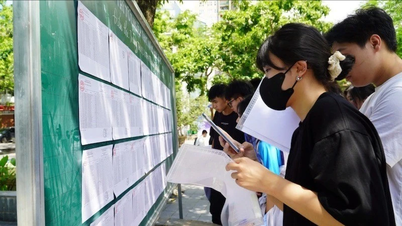
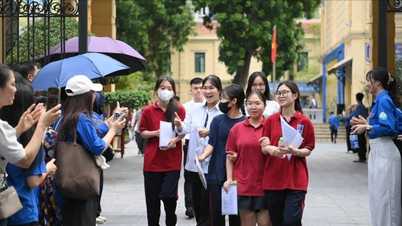
In 2025, Vietnam's university admissions system continued to record a record number: over 7.6 million applications were registered by nearly 900,000 candidates nationwide. On average, each student registered for 8-9 preferences, ranging from top-tier universities to local institutions. This figure not only reflects the cautious mindset of candidates in the context of fierce competition, but also shows the increasing pressure that society places on the admissions process.
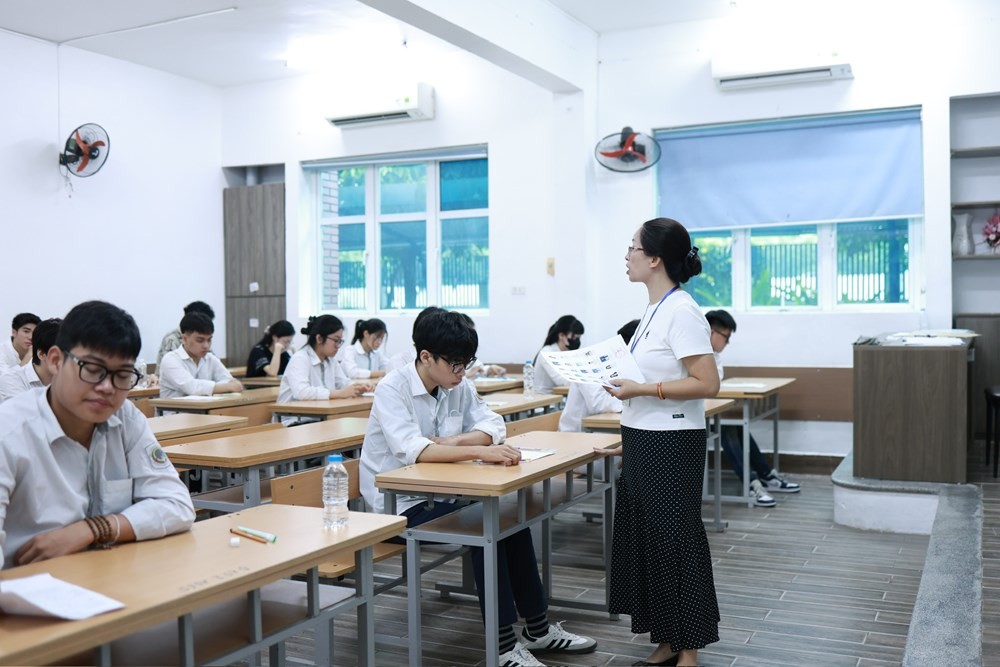
To process this massive amount of data, the Ministry of Education and Training implemented a centralized virtual filtering process, which took place continuously in six rounds, from August 13th to August 20th. The virtual filtering mechanism operates on the principle of prioritizing the highest-ranking nguyện vọng (preference): if a candidate is eligible for admission to their first preference, the remaining preferences are automatically eliminated; if they are not admitted to their first preference, the system considers their second preference, and so on until the last preference. This ensures that each candidate receives only one admission result, while also limiting the situation where a student is accepted by multiple universities simultaneously.
The so-called "virtual" admissions phenomenon refers to applicants submitting multiple applications and being accepted into several schools, but ultimately enrolling in only one, leaving unplanned vacancies. Previously, this situation put many schools in a passive position, forcing them to open additional admission rounds, resulting in wasted time, increased costs, and damage to their reputation. With a centralized filtering mechanism, the problem is solved scientifically , data is synchronized across the entire system, and schools are more proactive in finalizing their admission lists.
The virtual filtering process is not arbitrary intervention, but is based on a standardized algorithmic system, closely monitored by the governing body. This reassures candidates and parents that the final results do not depend on "favoritism" or "personal calculations" of individual schools, but are entirely based on objective data.
Transparency in admissions and the pressure behind the university gates.
However, despite its many benefits, the virtual filtering process has not completely eliminated the pressures inherent in the admissions process. Many candidates, especially those in remote areas, have limited access to information about the admissions and virtual filtering process. Some register their preferences based on intuition or follow their friends' advice, leading to early elimination and missed opportunities. Conversely, some students are admitted but don't truly love their chosen field of study, simply because they applied to too many programs to secure a place at university.
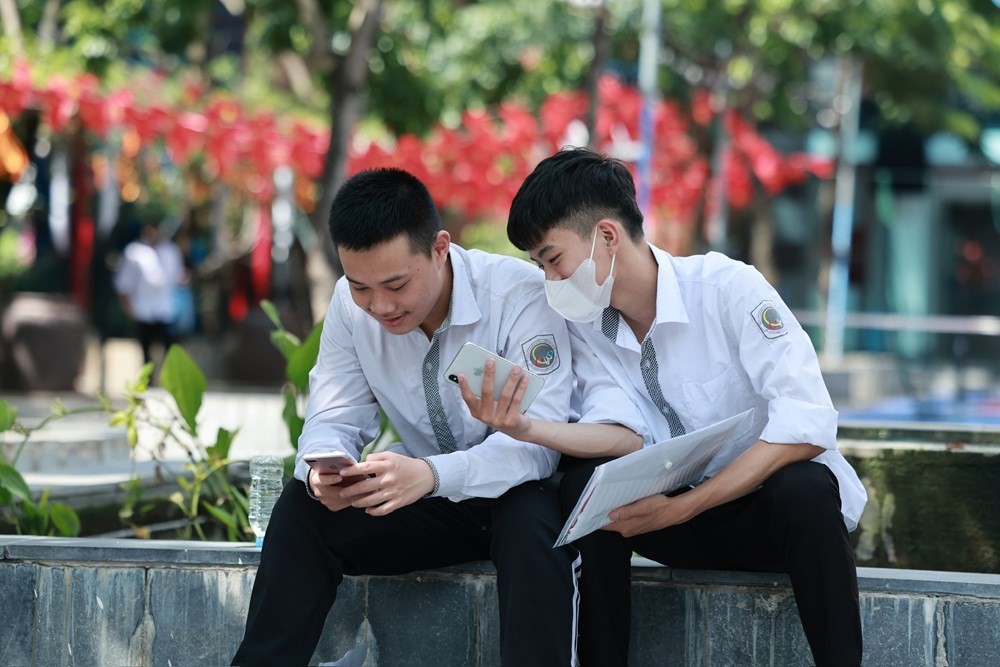
Another issue is the gap between the transparency of the process and the intensity of competition. As the admission scores for top universities continue to rise, the academic pressure weighs heavily on high school students. While filtering out ineligible candidates helps ensure transparency, it cannot replace career guidance, which helps students choose the right major and the right university. This is the crucial factor in avoiding the situation where students study just to get a degree but struggle to find employment after graduation.
It's also important to recognize that virtual filtering is merely a technical tool to solve data-related problems, not a "magic wand" that can eliminate all shortcomings in the admissions process. In reality, the fairness, reasonableness, and effectiveness of the entire system still depend on many other factors: how schools announce their admission criteria, regional preference policies, and even the uniformity of the quality of general education .
Nevertheless, in the current context of university admissions, the virtual filtering process is still considered an important step to ensure a more orderly and transparent enrollment season. Behind the dry statistics are hundreds of thousands of family stories and millions of student hopes. Each round of virtual filtering is not just about sifting through data, but also about refining dreams, so that ultimately each student can find the door that best suits them.
Source: https://baolaocai.vn/chat-loc-uoc-mo-mo-canh-cua-giang-duong-post879737.html


![[Photo] The courage of new recruits of Brigade 144 on the training ground.](https://vphoto.vietnam.vn/thumb/1200x675/vietnam/resource/IMAGE/2026/05/27/1779881651341_anh-man-hinh-2026-05-27-luc-18-32-52.png)
![[Photo] General Secretary and President To Lam and his wife begin their official visit to Thailand.](https://vphoto.vietnam.vn/thumb/1200x675/vietnam/resource/IMAGE/2026/05/27/1779881249412_anh-man-hinh-2026-05-27-luc-18-10-51.png)










































![[Photo] The courage of new recruits of Brigade 144 on the training ground.](https://vphoto.vietnam.vn/thumb/402x226/vietnam/resource/IMAGE/2026/05/27/1779881651341_anh-man-hinh-2026-05-27-luc-18-32-52.png)
























Comment (0)