


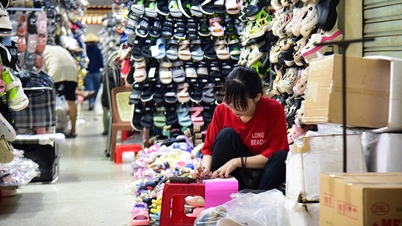
A livestream sales session at Ben Thanh market, Ho Chi Minh City - Photo: PQ
Emphasizing the need to develop infrastructure for traditional market systems, Mr. Linh said that the Ministry of Industry and Trade is currently developing and submitting to the Government important policies related to traditional retail channels, especially the amendment of Decree 60/2024 of the Government on market development and management.
Upgrading and restructuring markets
* Recently, you shared about the mechanism to facilitate the conversion and promotion of 7,000 traditional markets into shops and shopping malls. So what is the specific plan, why is it necessary to convert, sir?
- By the end of 2024, the country will have 8,248 markets. If classified by location, there will be 2,162 urban markets and 5,743 rural markets.
If classified by market class, there are 227 class 1 markets, 867 class 2 markets, 7,068 class 3 markets and 86 unclassified markets. If classified by construction nature, there are 3,966 permanent markets and 3,963 semi-permanent and temporary markets.
In many localities, markets are degraded or in a state of disrepair and lack of customers. With the current state of the market network, we need to continue to review, amend and supplement regulations to effectively exploit public assets, encourage socialization, reduce the burden on the state budget, and enhance the proactive and responsible role of localities.
Therefore, the Ministry of Industry and Trade is coordinating with the Ministry of Finance and relevant ministries and branches, and the People's Committees of provinces to study, review, and evaluate the overall market infrastructure assets to consider solutions, including continuing to invest in maintenance and renovation according to the plan; upgrading or taking measures to handle according to regulations.
This implementation aims to ensure the principle of proper authority according to the Law on Organization of Local Government; in accordance with the provincial planning, the provincial socio-economic development plan, and other relevant plans; ensure political , defense, and security factors; ensure publicity and transparency; ensure social security; in accordance with the provisions of the Law on Management and Use of Public Assets.
I affirm that this plan does not aim to eliminate traditional markets but focuses on upgrading and restructuring existing markets to meet the new situation.
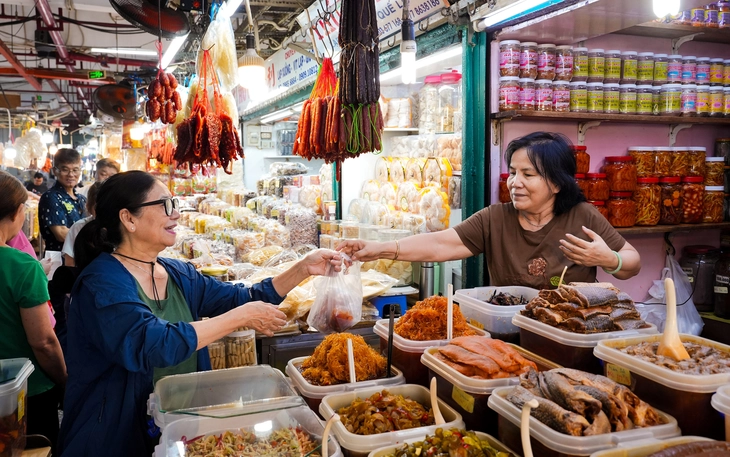
Traditional markets are increasingly affected by modern technology as products are delivered to homes. In the photo: Chau Doc fish sauce specialty sold at An Dong market (HCMC) - Photo: HUU HANH
* The conversion requires a lot of resources. Not to mention the fact that there are markets that have been converted to shopping malls but are sluggish and not very effective?
- The Ministry of Industry and Trade has determined that the implementation of upgrading and restructuring markets must combine multiple sources. In addition to the state budget for private markets that are not interested in investment (border areas, ethnic minority and mountainous areas, difficult and especially difficult socio-economic areas), it is necessary to prioritize socialization and capital mobilization from the private sector in other forms such as public-private partnerships.
Therefore, to implement this, the Ministry of Industry and Trade is coordinating with the Ministry of Finance, relevant ministries and branches, and the People's Committees of the provinces to continue to research and review to report to the Government for consideration and amendment of legal regulations related to public asset management, and issues that are being raised in Decree 60/2024 of the Government on market development and management in order to make appropriate adjustments, amendments, and supplements.
Improving competitiveness for small traders
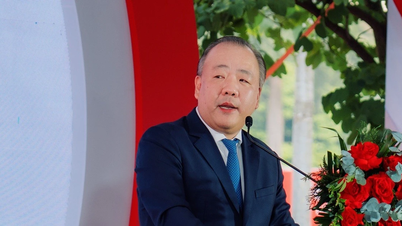
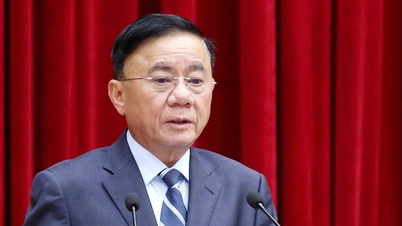
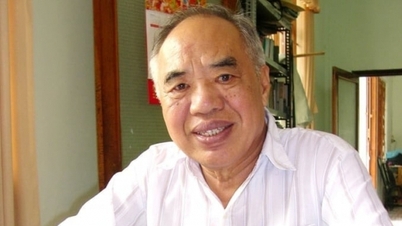
Mr. Tran Huu Linh
* Traditional markets are facing big challenges and fierce competition with other retail channels. With the transformation program you mentioned, how can this problem be solved?
- It is necessary to improve the competitiveness of traditional markets by professionalizing the business activities of small traders, instead of just trying to pursue the goal of transforming into a modern model.
Currently, in Vietnam, traditional sales channels still account for a large proportion (about 70 - 75% of market share). Professionalization will help solve the modernization goal while still maintaining the economic, cultural, historical, social and tourism values of traditional markets.
In terms of economics, the cost of improving the competitiveness of a business household will be lower than the cost of investment in construction. Besides, it has the core meaning of creating a sustainable livelihood. This ensures that the business household not only survives but also develops in the long term, especially in the face of competition from modern and online channels.
Therefore, the Ministry of Industry and Trade will also focus on improving the competitiveness of business households with specific goals, which are professionalizing business activities (origin of goods, food hygiene and safety, service style, use of modern payment methods).
Build programs to help businesses and small traders at the market expand their customer base in a multi-channel manner, applying digital technology (online sales via social networks, livestream, e-commerce trading floors).
Along with that is the investment in upgrading and renovating the market area (drainage system, garbage treatment, lighting, fire prevention and fighting) to create a cleaner, safer and more civilized shopping environment, attracting customers to return.
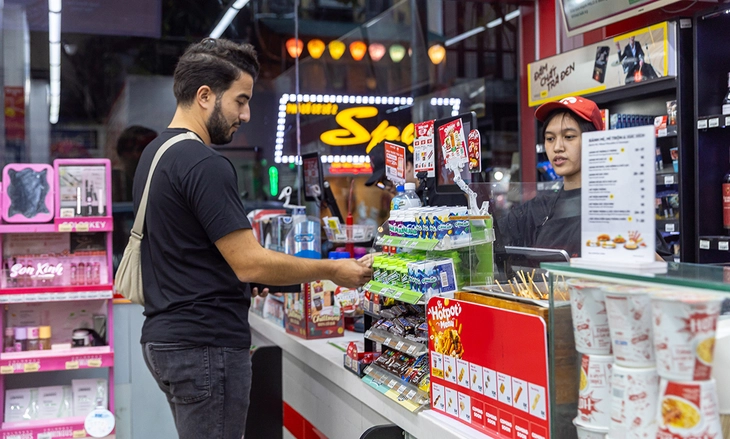
The rapid development of convenience store chains is creating great pressure, forcing traditional markets to "transform" to survive - Photo: QUYNH TRANG
* You mentioned the amendment of Decree 60 on market management and development. So what are the main directions to improve the competitiveness of traditional markets, to transform without losing their identity?
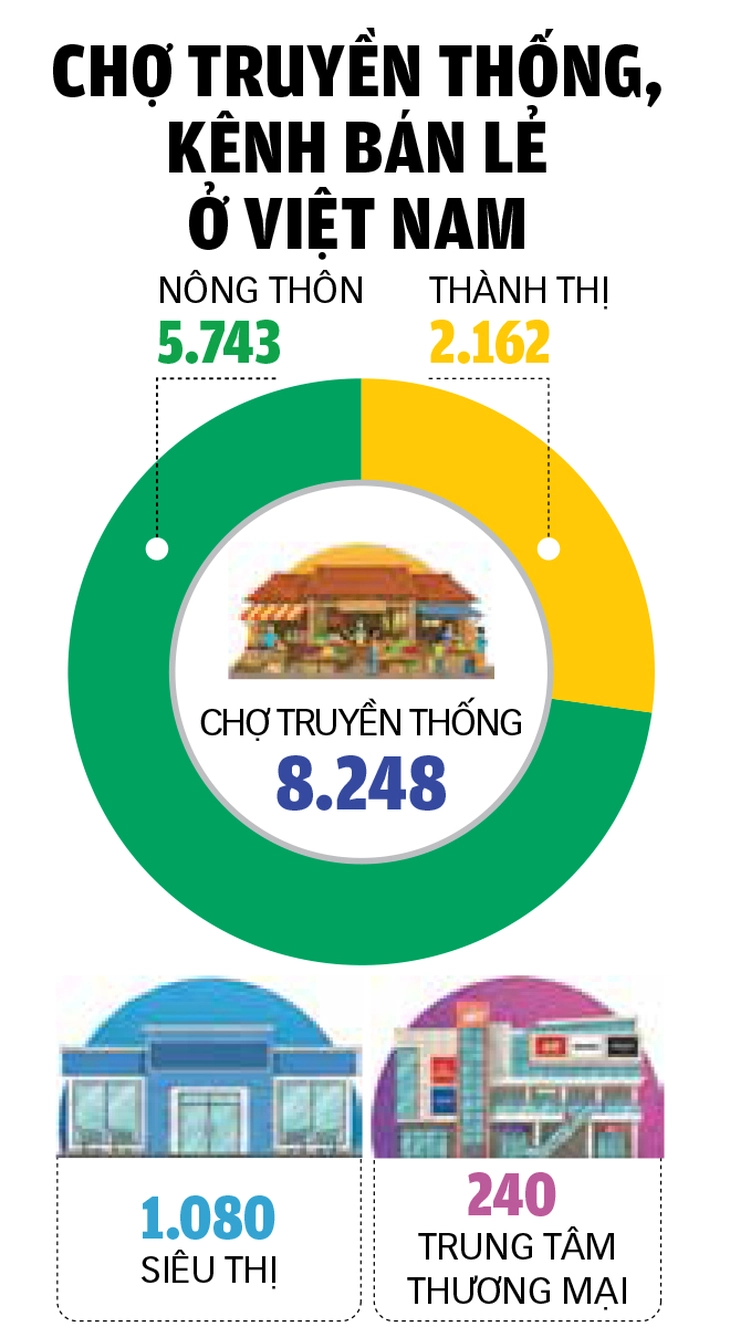
Data: N.AN - Graphics: TUAN ANH
- First of all, it must be affirmed that the development of traditional markets is not about elimination but about modernization and professionalization on the basis of promoting inherent advantages, helping traditional markets exist in parallel and compete effectively with modern retail channels and e-commerce.
This viewpoint has been clearly expressed in Decision No. 2326 of the Prime Minister dated October 21, 2025 approving the Strategy for developing the Vietnamese retail market to 2030, with a vision to 2050, which the Ministry of Industry and Trade recently consulted and submitted to the Prime Minister.
Accordingly, in the process of amending and recommending policies, the ministry will focus on developing a combination of modern retail business models, multi-channel models, e-commerce with traditional retail models; investing in developing comprehensive commercial and service areas with traditional markets as the core combined with commercial streets, both modern and preserving traditional business culture.
In the period from now to 2030, the retail trade infrastructure system needs to be synchronously developed. In the immediate future, it is necessary to harmoniously and reasonably combine modern and traditional structures, in accordance with the nature, level, scale, and development prospects of each locality and market area.
Promote the role of state management in the retail market, focusing on perfecting policies and enhancing the role of state management in developing the retail distribution system, including attracting investment resources, regulating relationships between market participants, training human resources, market management, and management of cross-border e-commerce.
* Many people are concerned about the feasibility of traditional markets as they are a part of Vietnamese culture, creating jobs and livelihoods for many people and small traders. So is the above plan appropriate?
- We affirm that upgrading and restructuring of current markets must first comply with the authority prescribed in the Law on Organization of Local Government.
Along with that, the conversion must be consistent with local socio-economic conditions, provincial planning, provincial socio-economic development plans, and other relevant plans.
This process must ensure political, defense, security, and social security factors; ensure publicity and transparency; and comply with the provisions of the Law on Management and Use of Public Assets to ensure requirements are appropriate to the practical situation of each locality and bring about the highest efficiency.
Mr. Duong Van Chien (Chairman of Vietnam Market Development Association):
Attracting resources from businesses to develop traditional markets
Converting traditional markets into convenience stores or shopping malls is possible, but the mechanisms and policies must be truly transparent because of the different nature of operating models.
In particular, when the people's market (traditional market) has certain limitations, it currently does not meet the requirements according to regulations on market infrastructure, security and order, traffic safety, urban landscape, food safety and hygiene, environmental sanitation, business culture - commercial civilization, especially fire prevention and fighting...
In fact, traditional markets are facing a big challenge because e-commerce channels such as Zalo, TikTok, FB, Shoppe, Lazada... are dominating 50-60% of the customers of traditional markets. Now, each kilo of meat and fish sold online is brought to each house. Therefore, traditional markets are affected and the market culture is gradually fading in the era of technology 4.0, 5.0.
However, the traditional market cannot be lost with its unique feature of serving daily necessities and necessities for the local community, solving the self-production and self-consumption needs of the people while small-scale agricultural production still exists.
Vietnamese people cannot abandon traditional markets, every household will still need traditional markets to serve their daily needs. Especially those with difficult conditions, 70-80% still need to go to traditional markets for even fish and vegetables.
Therefore, for traditional markets to exist, develop and ensure criteria, they must attract investment resources from businesses and have special priority policies.
In particular, the State needs to have policies to create conditions for organizations and economic sectors such as enterprises, cooperatives, traders, and private individuals to invest, manage, and do business according to the socialized model to ensure: regulations on market infrastructure, security and order, traffic safety, urban landscape, food safety and hygiene, environmental sanitation, business culture - commercial civilization, especially fire prevention and fighting... to contribute to strengthening the development of people's markets in the current new context.
Source: https://tuoitre.vn/chuyen-cho-truyen-thong-thanh-cua-hang-trung-tam-thuong-mai-ra-sao-2025120408452918.htm









































































Comment (0)