

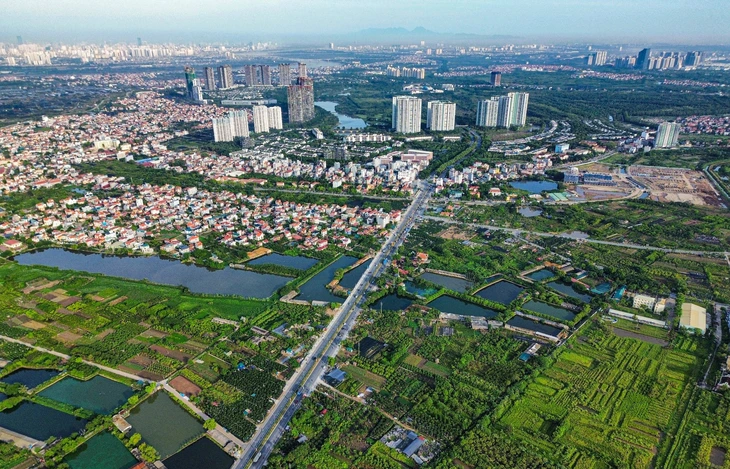
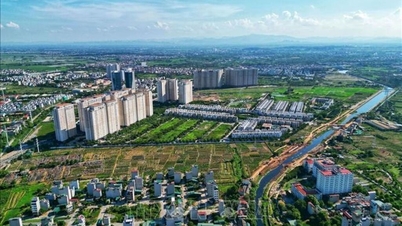
Excessively high land use fees will make it difficult for people who need to convert agricultural land to residential land. (In the photo: A plot of land along the main road connecting Hung Yen and Ninh Binh - Photo: HONG QUANG)
This view was expressed by Dr. Nguyen Ngoc Tu, a tax expert, in an interview with Tuoi Tre newspaper regarding the proposed policy of collecting land use fees when individuals and businesses need to convert agricultural land to residential land.
In some cases, it is necessary to buy at a price higher than the market price.
* Sir, what is the basis for establishing the land use fee for organizations and individuals who wish to convert agricultural land to residential land?
- According to the 2013 Land Law, land users who wish to convert agricultural land to residential land must pay 40% of the difference. However, the land prices previously established by localities (land price tables - PV) based on the government- issued land price framework were very low compared to the actual market prices.
Typically, land prices in local price lists are only 10% of market prices, and a household wishing to convert 200-300 square meters of agricultural land to residential land only has to pay a few hundred million dong in land use fees, less than 1 billion dong. This fee level is within the financial reach of most people, making the transfer of land use rights very convenient.
However, since the enactment of the 2024 Land Law, two issues have emerged: land prices have risen to very high levels, close to market prices (the State adjusts the land price list annually according to the market - PV), increasing by 7-10 times compared to before, and in some exceptional cases, by several tens of times.
Furthermore, we have abolished the regulations on exemptions and reductions in land use fees, so households needing to transfer land use rights must pay 100% of the land use fee to the State. This has led to situations where some households have to "buy back" their own land.
In some cases, people have to buy land at prices higher than the market value because local land valuations are very high and unrealistic. Therefore, amending and supplementing regulations to make them more appropriate is essential.
Develop a land price list that is appropriate to the income of the majority of the population.
* So, is it reasonable to collect land use fees equal to 30% of the difference between the price of residential land and agricultural land?
- The proposal to collect 30% of the difference between current residential and agricultural land prices is lower than the previous 40% collection rate.
Reducing the land use fee rate combined with calculating land use fees based on the local residential land quota is appropriate at this time. This regulation will limit the exploitation of the policy allowing the conversion of agricultural land to residential land for speculative profit, while also preventing irrational land use.
Over the years, to maximize land use efficiency, all provinces and cities have issued land use limits for residential land in the context of large populations and limited land resources. For individuals and organizations needing to convert agricultural land to residential land exceeding the permitted limit, they must pay higher land use fees, or even 100% of the difference, meaning they must buy the land back from the State, which is reasonable.
However, this rational approach must be accompanied by other land management measures, including the establishment of land price tables that are appropriate to the income of the majority of the population.
However, if we continue to apply the 2024 Land Law as it is, even if we reduce the land use fee rate to 30%, because the land price list is adjusted upwards too much to closely match market prices, the actual land use fee that people have to pay will be very high, exceeding the financial capacity of many people. Therefore, the land price list needs to be recalculated.
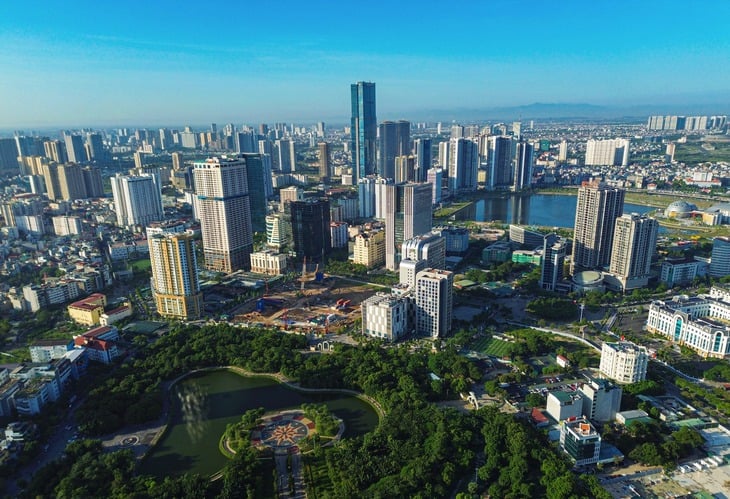
Appropriate land prices and input costs will contribute to lowering housing prices - Photo: B. NGOC
* Recent experience shows that even though the State imposes a 30% fee on the difference in land use conversion, many people still cannot afford to pay it. What solutions do you think are needed to alleviate this difficulty for the people?
- In cases where multiple households share a piece of land inherited from their ancestors, if they wish to separate into different households or subdivide the land, they should be divided into two groups when applying for the land transfer.
For households with sufficient financial resources, they are encouraged to pay 30% of the difference immediately. For households facing financial difficulties, the State may allow them to pay a portion of the land use fee, with the remainder being deferred. For those who cannot afford to pay, the State may allow them to defer payment of 100% of the land use fee.
The debt will always be reflected on the land use right certificate, and people will still have the right to build houses and establish residences on their land, and the right to transfer ownership to their children. They will only have to repay the debt to the State when they sell the land and have money.
This approach will harmonize land use fee policies, allowing the State to manage land effectively and for the right purposes, while ensuring that people have land to build houses and guaranteeing the people's right to housing as stipulated in the Constitution.
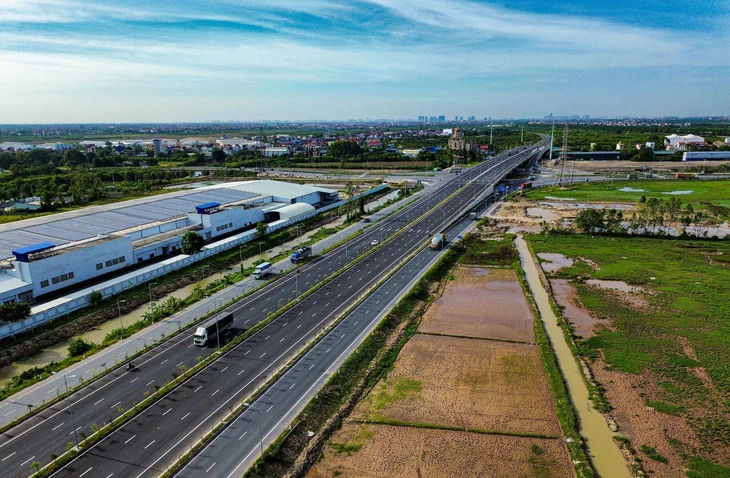
Experts recommend harmonizing interests in land use fee collection - Photo: HONG QUANG
Establishing land price tables: many localities are very confused.
According to Dr. Nguyen Ngoc Tu, the 2024 Land Law stipulates the construction of land price tables that closely reflect market prices, but there are no guiding documents on what constitutes "close to market prices," causing confusion in many localities.
In reality, current land prices on the market are inflated, sometimes even artificially high. Therefore, the land price list to be applied from January 1, 2026, needs to be calculated and developed in a fundamental way. Government ministries and agencies need to sit down together to guide localities on how to determine land prices according to market value.
In recent times, many experts have suggested that market-based land prices should be the average selling price over the past five years. For example, the market price in the 2026 land price list would be the average selling price of land plots in the same area during the 2021-2025 period. This method is more reasonable and should not use the price of a few specific land plots to construct the land price list.
The most important thing right now is that the annual land price list at the local level must be calculated at a reasonable level, avoiding causing shock to businesses and the public.
Mr. Pham Duc Toan (Director of EZ Real Estate Investment and Development Joint Stock Company):
The proposal to collect 30% of the price difference is appropriate.
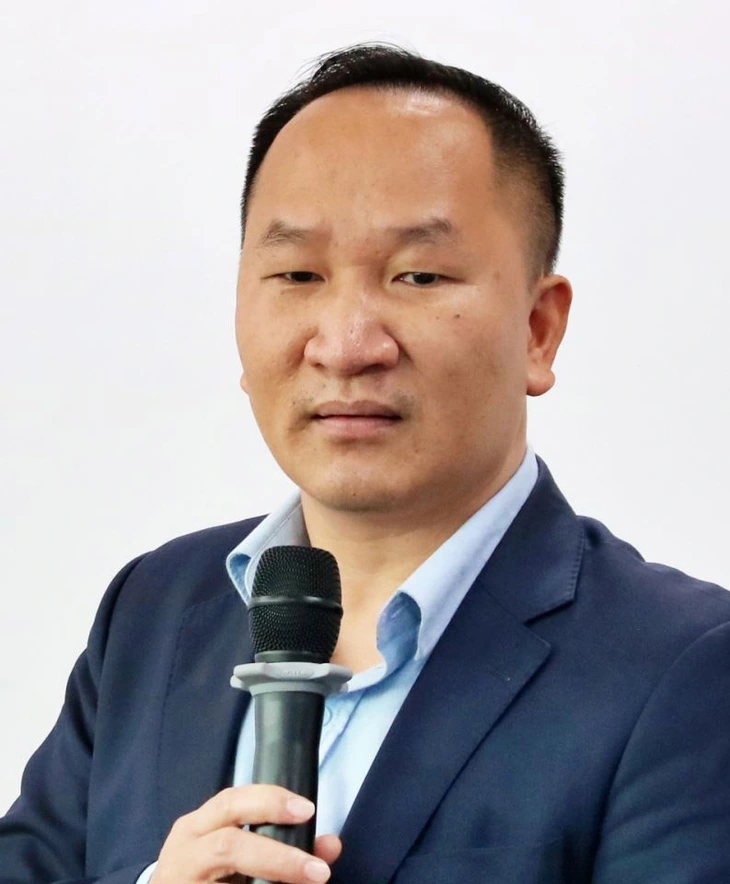
The need to convert garden land, rice paddies, and interspersed land into residential land is a frequent need of people and businesses, and the 30% fee for the price difference is appropriate.
With the proposed conversion limit, the regulations on land use fees should differentiate between land conversion for residential and commercial purposes. Simultaneously, a progressive tax based on the converted area is appropriate and ensures fairness in the implementation of land policies.
Clearly, when people convert agricultural land to residential land exceeding the permitted limit, it's a conversion beyond their residential needs. They may be converting it for the purpose of buying and selling residential land for greater profit, so it's only natural that they have to pay higher land use fees.
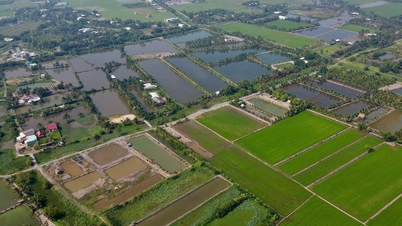
For example, someone inherits a 1-acre (3,600 m² ) plot of land in their hometown, but in reality, only 500 m² is residential land. The need to build a house on only 200 m² is sufficient, leaving the remaining 3,100 m² as garden land or land for perennial crops. The land still belongs to the person, but the intended use differs.
If people want to convert 3,100 square meters of agricultural land to residential land, thereby changing the land use purpose and increasing its commercial value, they will have to pay more land use fees to the State.
If the residents do not wish to convert the land use rights, they will retain the right to use the 3,600 m² of land, but the remaining 3,100 m² will only be designated for agricultural use. In this case, the land remains the residents' property; the State will not reclaim it.
If the State allows people to freely convert land without paying progressive land use fees, it could lead to a situation where people convert land en masse, resulting in an excess of residential land but a shortage of land for production and business.
Land use fees have surged.
In 2025, despite the recent recovery of the real estate market, land-related revenues are expected to skyrocket.
According to the General Statistics Office ( Ministry of Finance ), in the first 10 months of 2025, land use fee revenue in Hanoi reached 89,000 billion VND, an increase of 167% compared to the same period last year. In Ho Chi Minh City, the tax authorities also recorded a surge in land use fee revenue, reaching 49,712 billion VND, an increase of 269% compared to the same period last year.
Mr. Le Hoang Chau (Chairman of the Ho Chi Minh City Real Estate Association):
There should be fair, reasonable, and controlled policies.
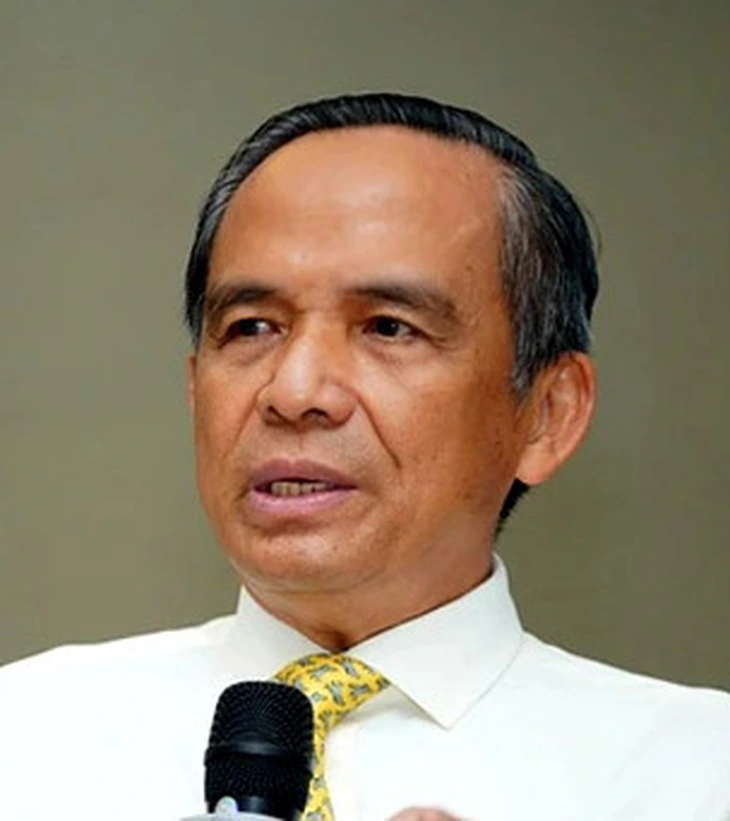
I believe that in cases of changing the land use purpose from garden land, pond land, or agricultural land within the same plot of land containing residential land in a residential area not recognized as residential land to residential land; or changing from land originally garden land or pond land attached to residential land but separated by the land user for transfer of land use rights, or due to the surveying unit separating it into separate plots when surveying cadastral maps before July 1, 2004, to residential land, the land use fee should be calculated at a rate of 20% of the difference between the price of residential land and the price of agricultural land.
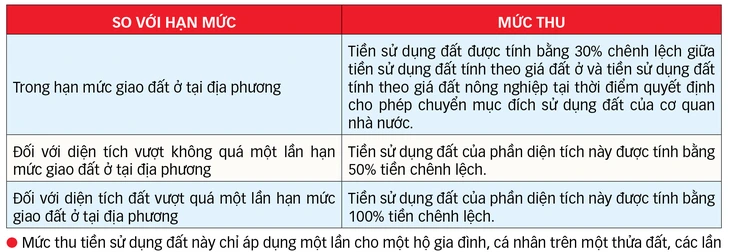
As for land area whose purpose is changed within the local residential land allocation limit, a fee of 30% of the difference should be collected if the area exceeds the limit by no more than one time the local residential land allocation limit, and 100% of the difference should be collected for land area exceeding the limit by more than one time the local residential land allocation limit.
The reason for this proposal is that, nationwide, especially in the southern provinces, the common origin of land use is from land created and inherited by households and individuals over many generations, not land allocated by the State. Furthermore, many households with multiple generations live together, cultivate the land, and have a need to change the land use purpose to divide it among family members to create separate plots.
This includes the need to transfer or sell a portion of residential land to fund housing construction and cover expenses, so a reasonable and fair policy is needed, but it must still be strictly controlled to prevent cases where "unscrupulous land speculators and businesses masquerading as households or individuals" apply to change the purpose of agricultural land use to "exploit the policy" for illicit profit.
Three levels of fees for converting agricultural land to residential land.
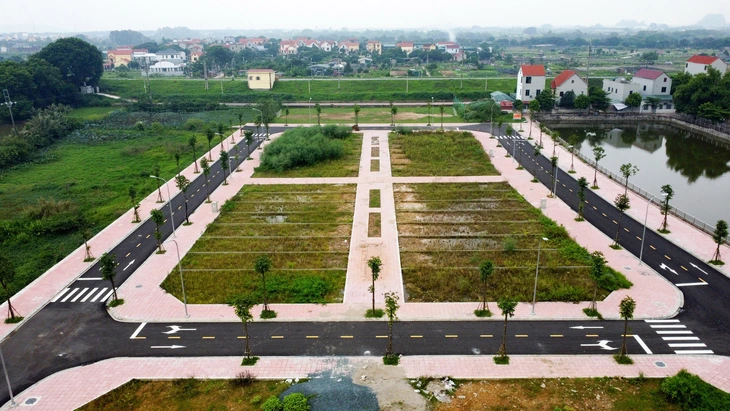
Excessively high land use fees will be a burden for many people who need to convert agricultural land to residential land to establish a place to live - Photo: D. TUAN
Multiple households sharing a single plot of land will have their plots subdivided, and a land allocation limit will be determined for each household.
According to the draft government decree, in cases where a household or individual owns multiple plots of land (including multiple plots of land within the boundaries of multiple provinces and centrally-governed cities) and is permitted to change the land use purpose as stipulated in this resolution, that household or individual may choose one plot of land to apply the land use fee calculation according to the regulations.
For the second and subsequent plots of land, 100% of the land use fee will be collected.
In cases where multiple households or individuals share the right to use a single plot of land, if the competent state agency permits the subdivision of the land for each household or individual, the area within the allocated limit for calculating land use fees will be determined for each plot of land for which a certificate of land use rights and ownership of assets attached to the land has been issued. The principle is that each household or individual granted the right to subdivide the land will only have the land area within the allocated residential land limit determined once for calculating land use fees.
Source: https://tuoitre.vn/chuyen-doi-tu-dat-nong-nghiep-sang-dat-o-hoa-giai-ganh-nang-tien-su-dung-dat-cach-nao-20251211083301028.htm
































































Comment (0)