

According to experts from EY, one of the Big 4 global auditing and consulting firms, students should not follow trends when choosing a field of study or a career, but should remain steadfast in their own interests.
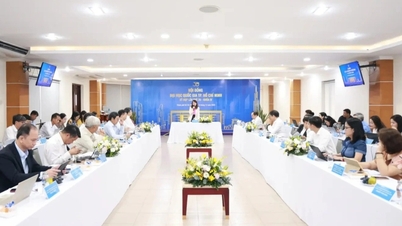
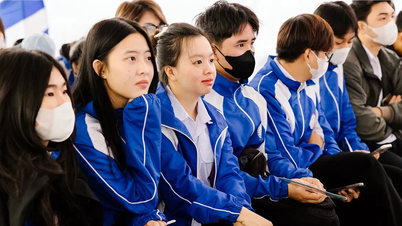
Today, October 28th, a seminar on the topic "Shaping the Future: Learning, Adapting, Leading" was held at the National Economics University. The event was organized by the university in collaboration with Ernst & Young Vietnam Co., Ltd. (EY Vietnam).
The seminar was held in the context of many changes in the future of employment, and students need guidance to prepare themselves while still in university.

The seminar "Shaping the Future: Learning, Adapting, Leading" helps students gain direction regarding employment in a rapidly changing world.
What will the future of work look like?
According to Mr. Nguyen Viet Long, Deputy General Director of EY Vietnam, Vietnam is currently undergoing a behavioral transformation in society, with 63% of market transactions taking place online and smartphone usage reaching 80%. These behavioral changes will impact future employment. WEF forecasts for the period 2023-2027 indicate that 23% of jobs worldwide will be changed due to technology and geopolitical factors; 12.3% of jobs will be lost; and 10.2% will be created.
"The labor market has never changed as rapidly as it is now, and it will continue to change dramatically in the future," Mr. Long said.
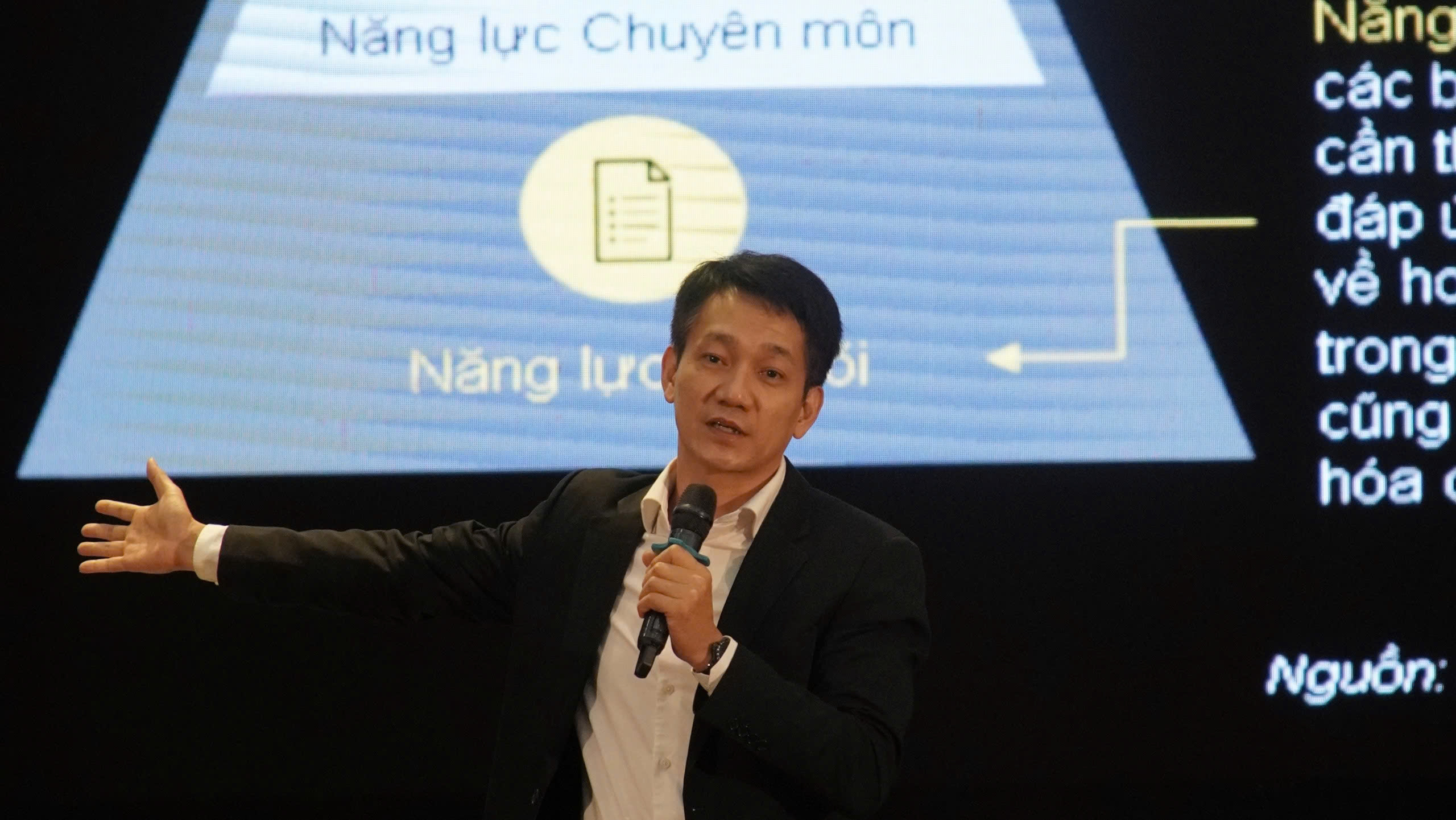
Mr. Nguyen Viet Long stated that the job market will undergo many changes in the future.
Data from LinkedIn shows that the most frequently recruited positions recently are: Human Resources (Talent), Sustainable Development Analyst, and e-commerce-related sales. Macroeconomic changes impacting employment include the rapid development of digital technology, especially AI, as well as the demand for green development. Mr. Long advises: "Students should pay attention to the potential job opportunities arising from these trends."
According to Mr. Long, it's important to note that in addition to the knowledge and skills learned at school, students must cultivate additional knowledge and skills that the market demands, such as in-depth research and analysis, and skills related to digital technology and AI (especially generative artificial intelligence). Furthermore, students should also focus on developing critical thinking, interpersonal skills, and emotional intelligence.
Learn today to use for the next 30 years.
Also at the seminar, Mr. Tran Phu Son, General Director of EY Vietnam, shared a memory from his early days studying abroad in Australia at Monash University (Master of Practical Accounting program). He was delighted to only have to study 4 subjects (whereas at the National Economics University, where he studied undergraduates, students had to study 52 subjects), but the Vietnamese student was "shocked" when he received the textbook for the introductory accounting course – a 752-page book, already in its 22nd edition.
After researching, Mr. Son learned that the first edition of the book was approximately 650 pages long. With each subsequent edition, the authors added some new examples (to illustrate the lesson content). However, the basic content of the textbook remained unchanged. Now, after 30 years working in accounting and auditing, Mr. Son finds that the principles presented in that 752-page textbook are still as valuable as ever.
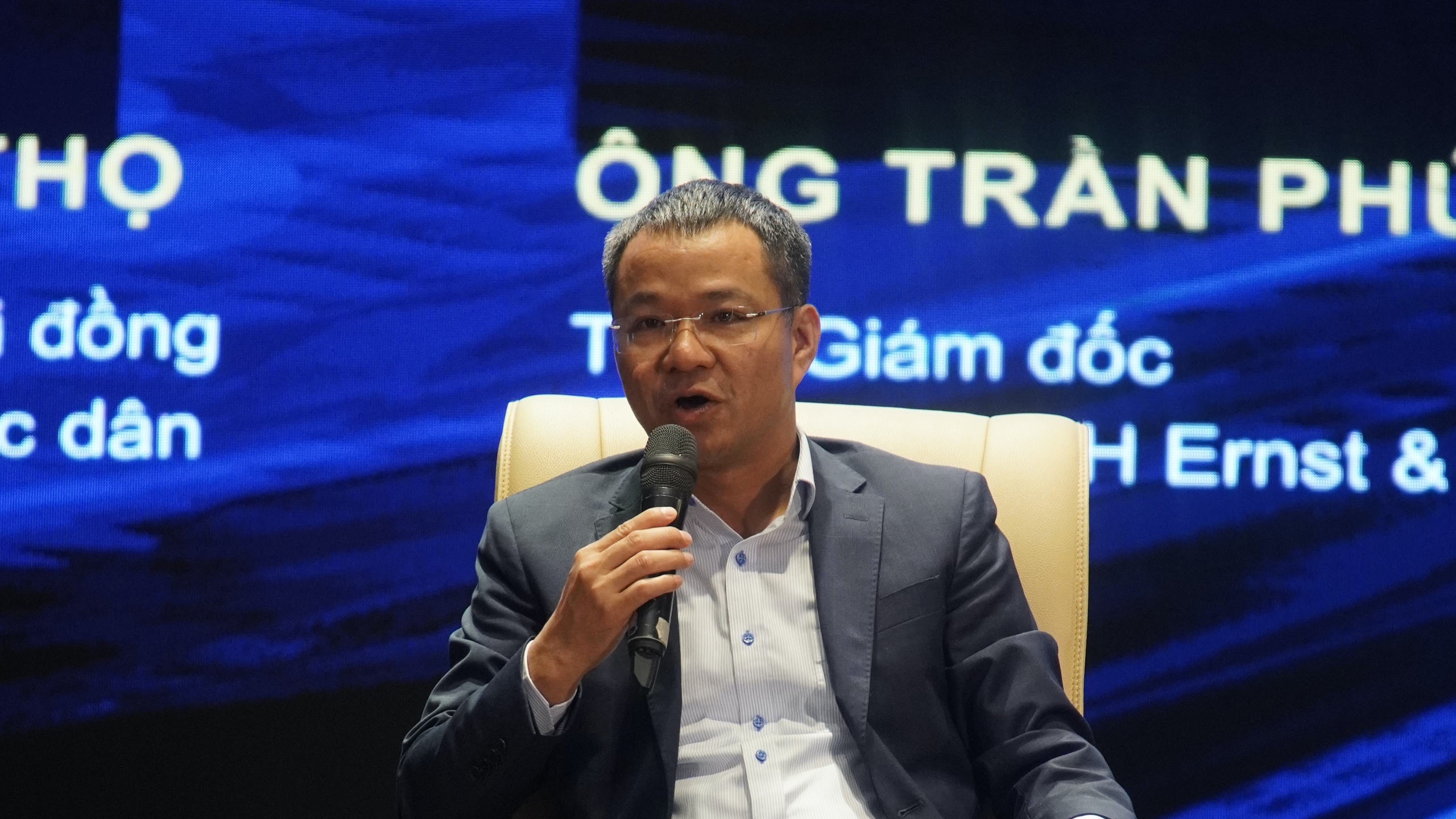
Mr. Tran Phu Son believes that what students learn at university today has fundamental value and will be helpful for their future work for many decades to come.
"Our learning is like that textbook. First, there's the foundational knowledge learned at university, then there are subsequent editions with added practical knowledge. What you learn today will be helpful to you for many decades to come. However, over time, you need to continue updating and building upon your knowledge," Mr. Son said.
Mr. Son further shared: "If we dedicate 15 minutes each day to truly learning, by the age of 30, when we are relatively mature, we will have accumulated approximately 1,000 hours of learning. 1,000 hours of learning is a truly significant number, helping us to learn something very thoroughly."
Sharing this view, Mr. Nguyen Viet Long said: "From my personal experience in studying and working, I recommend that students in each field spend 10-15 minutes recording what they have learned, what they have accomplished, and what they haven't yet accomplished. This is a very important habit. Writing in a notebook is like writing knowledge into your brain. This helps you think deeply and remember what you have learned."
How to reduce confusion when choosing a path?
Addressing the concerns of many students about career choices after graduation, Mr. Nguyen Viet Long advised them to remain steadfast in their chosen major and not be pressured by peer pressure (following the crowd) or change their minds about what they think is better. In reality, trendy and popular fields only experience job demand for a limited time.
Five years ago, marketing was the industry for real estate or securities companies. But recently, the market declined, and many people lost their jobs. Lately, there's been a surge in people studying data or IT-related fields. But now, there are signs that the IT job market is stagnating. "I think we shouldn't rush to follow trends. Let's be confident, persistent, and delve deep into the path we've chosen to become professionals," Mr. Long expressed.
Mr. Tran Phu Son also noted that people often suffer from the "grass is always greener on the other side" mentality. In reality, even highly successful people, known globally, such as Tim Cook, CEO of Apple, wrote a career plan for the next 25 years while studying for his MBA at Stanford University. But it turned out that the career Tim built was completely different from that plan.
"This goes to show that, in reality, it's impossible to clearly define what the long-term goal is and to be 100% certain of the time. Therefore, if we haven't yet figured out the future, there's nothing wrong with that, nothing to worry about," Mr. Son shared.
Source: https://thanhnien.vn/chuyen-gia-big4-khuyen-sinh-vien-chon-viec-lam-khong-chay-theo-trao-luu-185241028201015712.htm



















































































Comment (0)