


In the process of the "60 peak days and nights" plan to support business households in implementing the transformation, Hanoi City Tax is the unit that deploys very early and synchronously implements solutions towards the goal of reducing administrative procedures, reducing risks and helping business households to understand, implement and comply easily. This is an important foundation for a modern management method that focuses on taxpayers as the center of service, database management and risk management.
Check data on goods delivery and input invoices
According to the leader of Hanoi City Tax, the whole city has 356,737 active business households and individuals (an increase of 122,244 business households and individuals, an increase of 52.1% compared to the end of 2024). After identifying and cleaning the data, the capital's tax sector has put 154,708 organizations, enterprises, business households, and business individuals with e-commerce activities under management, with the total budget payment expected in 2025 to be 36.3 trillion VND, an increase of 15.5% compared to 2024. At the same time, Hanoi City Tax is the only unit in the country to establish a separate database (website) to manage e-commerce activities.
Up to now, the Hanoi tax authority has synchronously deployed solutions to prevent missing households according to Project 420, thereby adding 69,782 new business households. The solution of recording at the site alone has detected and put 20,545 households under management. The tax authority has compiled a list of 18,157 key business households along 1,397 streets, and updated the database to reach 95% of the total number of households in the area.
Measures to review COD delivery data, input invoices, cash flow and e-commerce data have helped increase revenue by more than VND1,237 billion/year. Of which, COD review alone contributed VND249.1 billion and e-commerce household review increased revenue by VND889.5 billion. Key monitoring work also recorded 658 high-risk households being inspected, contributing to an increase in revenue of VND50.1 billion.
On a national scale, digital transformation has been continuously promoted, creating a solid foundation for modern tax management: the Tax sector has actively integrated all tax management activities in the digital environment; effectively deployed applications providing electronic tax services such as eTax Mobile, electronic invoices generated from cash registers, automatic personal income tax refund process; continued to operate well the Electronic Information Portal for foreign suppliers, Electronic Information Portal for households and individuals doing business via e-commerce and digital platforms.
The Tax Department has coordinated with the Ministry of Public Security to deploy electronic coordination regulations in exchanging information on temporary suspension of exit to handle tax debts, contributing to improving the efficiency of debt management, preventing revenue loss and ensuring a healthy and transparent business environment. Continuing to innovate management methods for business households and businesses on digital platforms in accordance with the direction of Resolution No. 68 of the Politburo, along with increasing the application of Big Data, connecting with ministries and branches (Ministry of Public Security, State Bank...) in cash flow management, invoice control, non-cash payments... has contributed to gradually changing the method of revenue management, aiming at the goal of 100% of business households using Etax Mobile to declare and pay taxes.
Increase revenue from potential sources
The Tax Department said that, in addition to supporting taxpayers, the industry has resolutely implemented solutions to manage revenue, prevent revenue loss, collect tax debts, promote management and increase revenue from revenue sources with room for growth and potential (such as: business on digital platforms, e-commerce, real estate transfer, chain business, resource and mineral exploitation, etc.); expand the revenue base and prevent revenue erosion.
The implementation of the policy on merging new administrative units has created development space, thereby creating a positive effect on the real estate market, along with the good implementation of the Prime Minister 's Official Dispatch No. 124/CD-TTg, contributing to increasing revenue from land and real estate, and promptly mobilizing resources from land into the state budget.
The industry focuses on removing barriers and bottlenecks in the business environment, resolutely cutting cumbersome administrative procedures, reducing costs and compliance time, taking people and businesses as the center of service, thereby contributing to building a favorable, fair and transparent investment and business environment.
During the remaining period of 2025, the entire Tax sector will continue to improve the effectiveness and efficiency of management associated with restructuring the apparatus, administrative units and organization of two-level local governments, focusing on perfecting laws and transparent and synchronous tax processes; strongly, drastically and with clear results in simplifying tax administrative procedures, digitizing work processes, expanding online services, reducing direct contact, and increasing transparency. This is an urgent task that needs to be proactively and effectively implemented to ensure stable and sustainable revenue sources and create momentum for economic growth. Research and advise the Ministry of Finance on selective tax support policy packages for businesses and people, with clear objectives, focusing on industries and fields with great influence, high resilience and significant contributions to growth.
The tax exemption, reduction and extension policies in the past with the total scale of exemption, reduction and extension will be carefully reviewed and evaluated for effectiveness to continue supporting businesses and people, ensuring both supporting the right subjects and nurturing long-term revenue sources.
In addition, the Tax sector continues to review, research, submit to competent authorities for consideration, amendment, supplement and perfect tax legal documents and documents guiding the Law on Tax Administration in the direction of covering all revenue sources, improving tax management capacity for tax collection agencies, preventing fraud, tax evasion, tax losses and tax arrears, and implementing electronic tax management. Review and standardize tax registration information (business locations, business lines, etc., before and after the merger), organize the assignment of administrative area codes to decentralize tax management agencies by area to each provincial and commune level according to regulations. Continue to amend, supplement and perfect appropriate tax management procedures after restructuring the apparatus, administrative units and organization of 2-level local governments to improve the effectiveness and efficiency of tax management.
Entering 2026, with a strong breakthrough in digital transformation, improving tax management (first of all, continuing to expand the use of electronic invoices, especially deploying the electronic invoice system initiated from cash registers to each household and individual business, especially in areas such as retail, food and beverage, accommodation); focusing on promoting the application of artificial intelligence (AI), big data analysis to analyze risks, detect fraud and optimize monitoring capacity; building a mechanism for connecting interconnected data between ministries, branches, and relevant agencies to enhance the sharing of comprehensive and timely data and information, especially data on banking transactions, real estate transactions, e-commerce activities, business on digital platforms, digital payments, etc., the entire Tax sector will perfect the centralized tax management system, integrate national data towards a tax management system on digital data, automatic control; Moving towards transforming the management model from administrative management to information data management.
Source: https://nhandan.vn/chuyen-tu-quan-ly-hanh-chinh-thue-sang-quan-ly-du-lieu-thong-tin-post928767.html


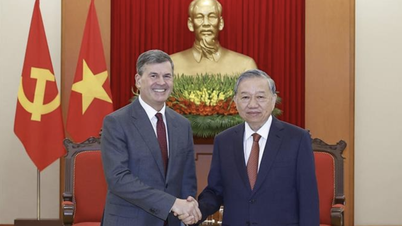
![[Photo] General Secretary To Lam receives the Director of the Academy of Public Administration and National Economy under the President of the Russian Federation](/_next/image?url=https%3A%2F%2Fvphoto.vietnam.vn%2Fthumb%2F1200x675%2Fvietnam%2Fresource%2FIMAGE%2F2025%2F12%2F08%2F1765200203892_a1-bnd-0933-4198-jpg.webp&w=3840&q=75)



























































































Comment (0)