

At the meeting, a representative from the Da Nang Department of Agriculture and Environment stated that from 7 PM on October 26th to 1 PM on October 28th, Da Nang experienced moderate to heavy rainfall, with very heavy rain in many areas.
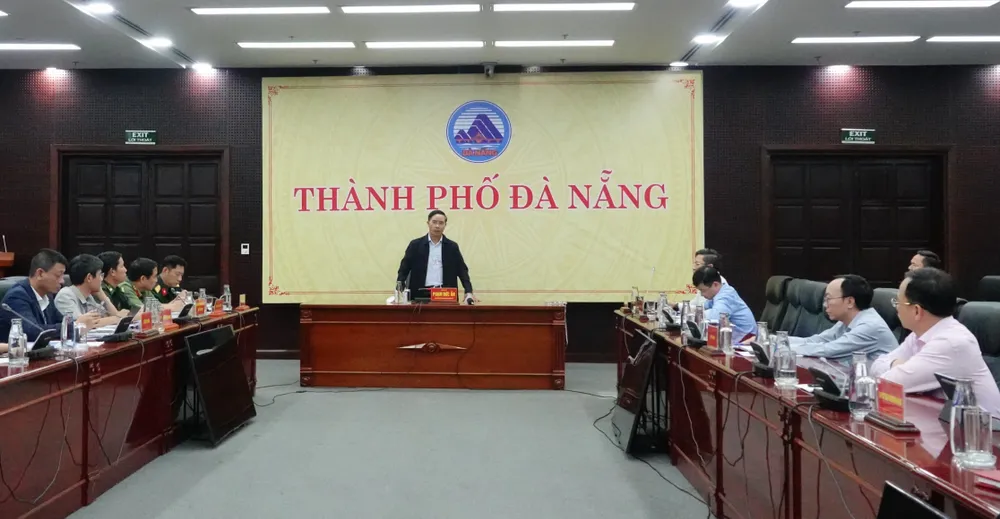
Heavy rain is forecast for the next 24 to 48 hours. Total rainfall in lowland communes and wards will generally be 150-300mm, with some areas exceeding 350mm; in mountainous communes and wards, it will generally be 200-350mm, with some areas exceeding 450mm. There is a warning of the risk of heavy rainfall exceeding 150mm/3 hours in mountainous areas. The level of natural disaster risk due to heavy rain is level 1 in lowland areas and level 2 in mountainous areas.
Due to heavy rain, several communes and wards in the city were flooded, affecting 65,097 households. The communes and wards organized evacuations for 1,429 households/5,674 people.

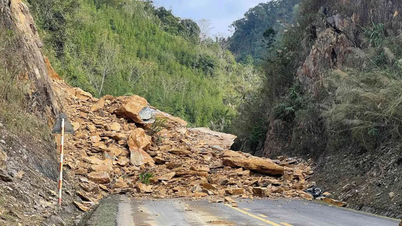
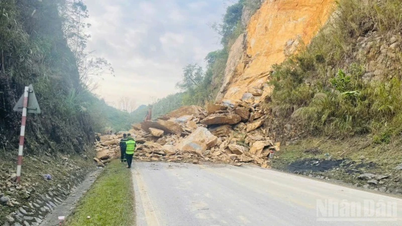
According to statistics, 10 houses collapsed and 44 houses were damaged. Regarding transportation, 1,880 meters of road were damaged; landslides and rockfalls totaled 32,845 cubic meters . In addition, coastal erosion occurred in Hoi An Tay and Hoi An Dong wards, affecting 3,450 meters of coastline and encroaching 25-30 meters.
At the meeting, Mr. Tran Nam Hung, Vice Chairman of the Da Nang City People's Committee, stated that the city had agreed on a clear assignment of specific tasks. The Department of Construction will act as the coordinating body for handling landslides, in collaboration with the 5th Military Region and local authorities. Ensuring the safety of the construction workforce is a top priority.

Regarding coastal erosion in Hoi An, the city has directed inspections and temporary remedial measures, and assigned the Department of Agriculture and Environment to coordinate with scientific units to propose long-term solutions that are scientifically sound and sustainable. Major erosion sites and high-risk areas have been closely monitored using drones to proactively relocate affected areas when necessary.
Mr. Tran Nam Hung suggested that relevant sectors continue to review reservoir operation procedures and assess flood regulation to ensure scientific accuracy and downstream safety. At the same time, a long-term orientation should be "adapting to natural disasters," promoting the relocation of residents in landslide-prone areas, and designing infrastructure projects in a climate-adaptive manner. In particular, it is necessary to strengthen communication and provide official information to ensure people are well-informed, avoid complacency, and not follow unreliable sources of information.

According to Mr. Pham Duc An, Chairman of the Da Nang City People's Committee, relevant units will continue to monitor the developments of rain and floods, avoiding complacency and preparing response plans for the worst-case scenarios. The Department of Construction will urgently declare a state of emergency for traffic routes affected by landslides to implement temporary technical solutions, ensuring the early restoration of traffic flow and absolute safety for the people. Functional agencies need to assess and review the risk of landslides in hilly areas, and develop sustainable resettlement plans, especially for households living in high-risk areas.
"It is necessary to quickly develop and submit to the City People's Council a comprehensive resettlement program to avoid the need for annual emergency response," Mr. Pham Duc An emphasized.
In addition, Mr. Pham Duc An also suggested that relevant sectors research and re-evaluate the model of production forest planting and orient the development of suitable tree species to limit landslides, while protecting the environment and ensuring livelihoods for the people.
Source: https://www.sggp.org.vn/da-nang-trien-khai-cong-tac-ung-pho-voi-mua-lu-sat-lo-dat-post820442.html






















































































Comment (0)