

The real estate bubble fueled by vested interests.
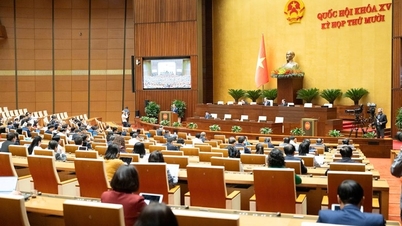
On the morning of October 28th, during the discussion in the National Assembly hall regarding the Report of the Supervisory Delegation and the draft Resolution of the National Assembly on the results of the thematic supervision on "the implementation of policies and laws on real estate market management and social housing development from 2015 to the end of 2023," delegate Ta Van Ha ( Quang Nam Delegation) pointed out that the reality of the real estate market experiencing sudden and sharp price increases, in addition to institutional and policy obstacles, shows signs of manipulation, price inflation, and the creation of a real estate bubble by a group of vested interests.
A delegate from Quang Nam province stated: "It is necessary to accurately and precisely assess the issue, and from there identify specific and fundamental solutions. The draft Resolution has assessed the limitations, but these are mainly limitations in policies and laws. However, there are still unusual factors, such as sudden price increases of 2-3 times, which are inconsistent with the general situation and the needs of the people."
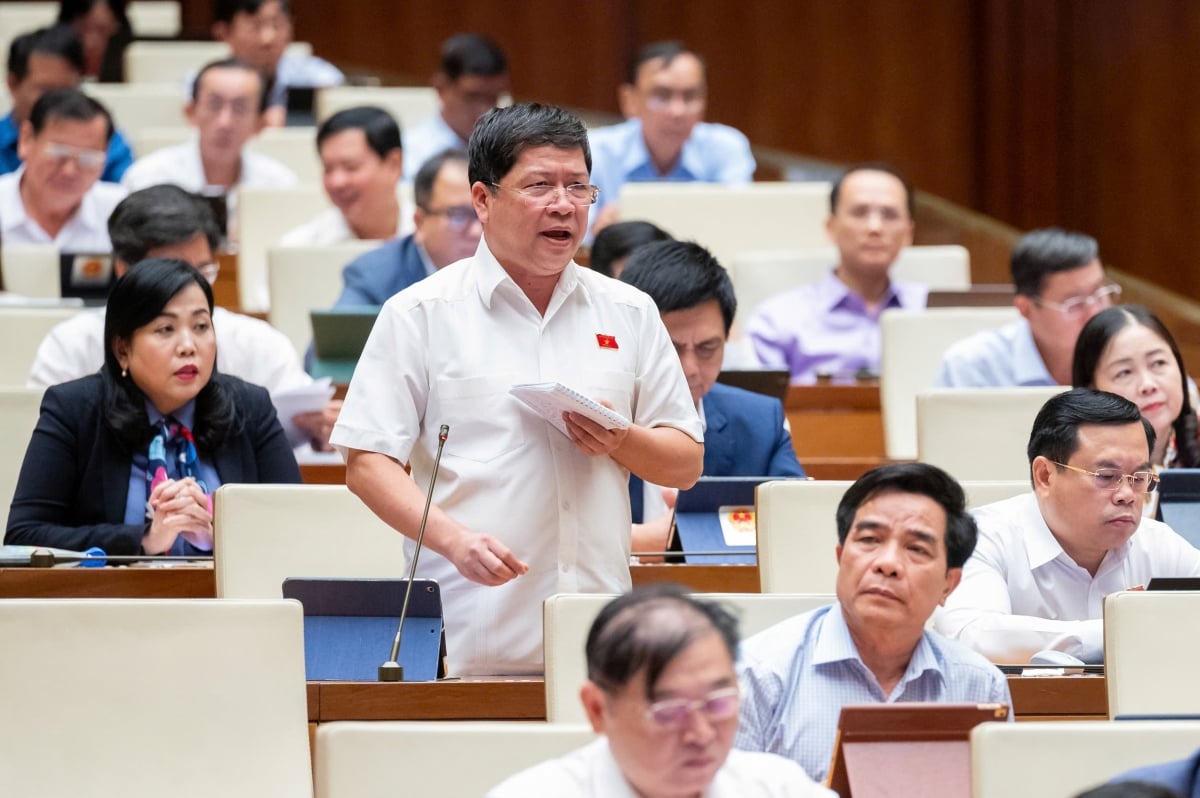
According to Mr. Ha, one solution to reduce real estate market prices is real estate bonds. However, currently, real estate bonds are issued with interest rates of 12-15%, plus about 3% issuance fees. Therefore, the goal of issuing real estate bonds and the outstanding debt in this sector facing maturity are under immense pressure. If not strictly controlled to recover and develop the real estate market, the issuance of bonds will be ineffective. Paying such high interest rates for about three years easily creates a burden on the State and the people. It could even lead to an increase in bad debt and potentially default.
"Therefore, the real estate market is unlikely to cool down in the near future, and people will not have the opportunity to access the market. Thus, it is necessary to study solutions and conduct thorough inspections and reviews to fundamentally restore and develop the real estate market in a healthy and proper direction," suggested delegate Ta Van Ha.
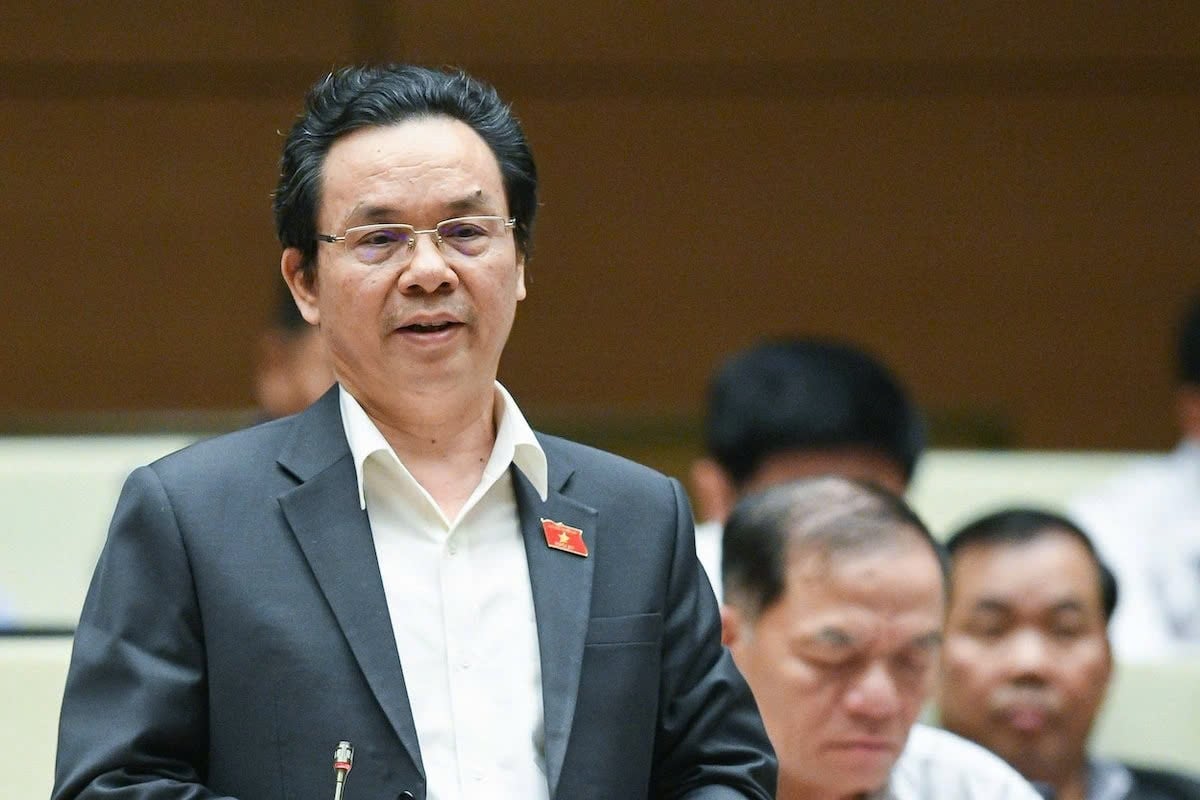
Highly appreciating the Supervisory Delegation's report on "the implementation of policies and laws on real estate market management and social housing development from 2015 to the end of 2023," delegate Hoang Van Cuong (Hanoi Delegation) also suggested that a professional real estate exchange management mechanism should be established.
According to delegate Hoang Van Cuong, the unusually high real estate prices are due to the increased number of people buying real estate for accumulation, causing a large flow of money to be directed into real estate instead of into business and production; the supply of real estate is becoming increasingly scarce; and in addition, market forces such as brokers and auctioneers intentionally push prices up to make profits.
"The most prominent issue is that real estate prices in major cities are very high and constantly rising, exceeding the affordability of the vast majority of people in need of housing, while income from real estate is low compared to the initial investment cost," Mr. Cuong commented.
Removing institutional "bottlenecks"
After reviewing the Monitoring Report, delegate Dang Bich Ngoc (Hoa Binh delegation) emphasized that, in order to promptly remove institutional bottlenecks and definitively resolve legal issues with projects, many policies and laws managing the real estate market have been issued, contributing to creating a legal framework for the development of the real estate market and social housing.
Representative Dang Bich Ngoc stated that the report also pointed out that the funding from the State budget for preferential social housing credit programs is still low, the lending process and procedures through the Social Policy Bank are still complex and overlapping; the maximum loan amount for social policy beneficiaries is low and not in line with socio-economic conditions…
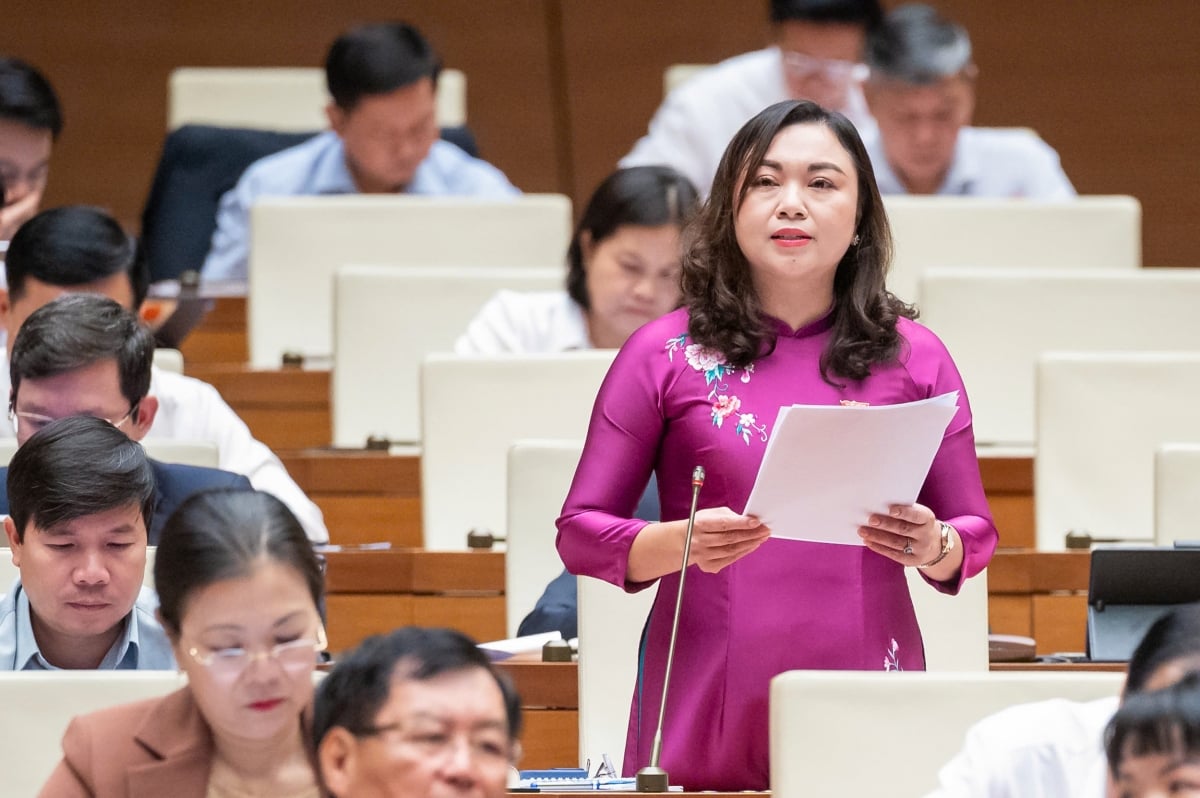
Given these shortcomings, Representative Dang Bich Ngoc argued that the National Assembly's supreme oversight of the implementation of policies and laws on real estate market management and social housing development is extremely necessary and timely, especially in identifying institutional "bottlenecks" that need to be addressed in the future.
Therefore, the delegates suggested that the Government continue to thoroughly review the shortcomings and limitations of policies and laws in managing the real estate market and developing social housing.
"Besides the 22 remaining policy and legal issues and shortcomings after the promulgation of the Law on Real Estate Business, the Law on Housing 2023, and the Law on Land 2024, it is necessary to continue reviewing and researching to promptly and comprehensively propose solutions to quickly remove institutional bottlenecks, appropriately resolve and definitively address real estate projects facing difficulties, legal obstacles, and stagnation due to prolonged implementation processes and changes in laws over time, meeting the requirements for sustainable development of the real estate market and social housing," Ms. Ngoc suggested.
At the same time, according to the Hoa Binh delegation, the institutional inadequacies and overlaps pointed out in the monitoring report are extremely important grounds for drafting agencies to update, research, and amend draft laws starting from this session, especially the laws on urban and rural planning and the Law on Public Investment. In particular, it is necessary to study regulations aimed at promoting decentralization and delegation of power to localities to strengthen the role, initiative, and responsibility of local governments in accordance with their capabilities and linked to resource allocation.
Sharing his views on continuing to effectively implement institutional solutions, delegate Duong Khac Mai (Dak Nong delegation) argued that policies and laws on real estate market management and social housing development have not kept pace with the rapid development of the market. Some regulations lack consistency and uniformity between real estate business laws and related regulations such as land and housing laws…
Furthermore, the state's responsibility for managing real estate business is lacking and unclear, affecting the effectiveness of management. The practice of declaring land transfer prices lower than the actual value to evade taxes remains common. Regulations regarding eligibility for social housing policies and the land investment process for social housing development still have shortcomings…
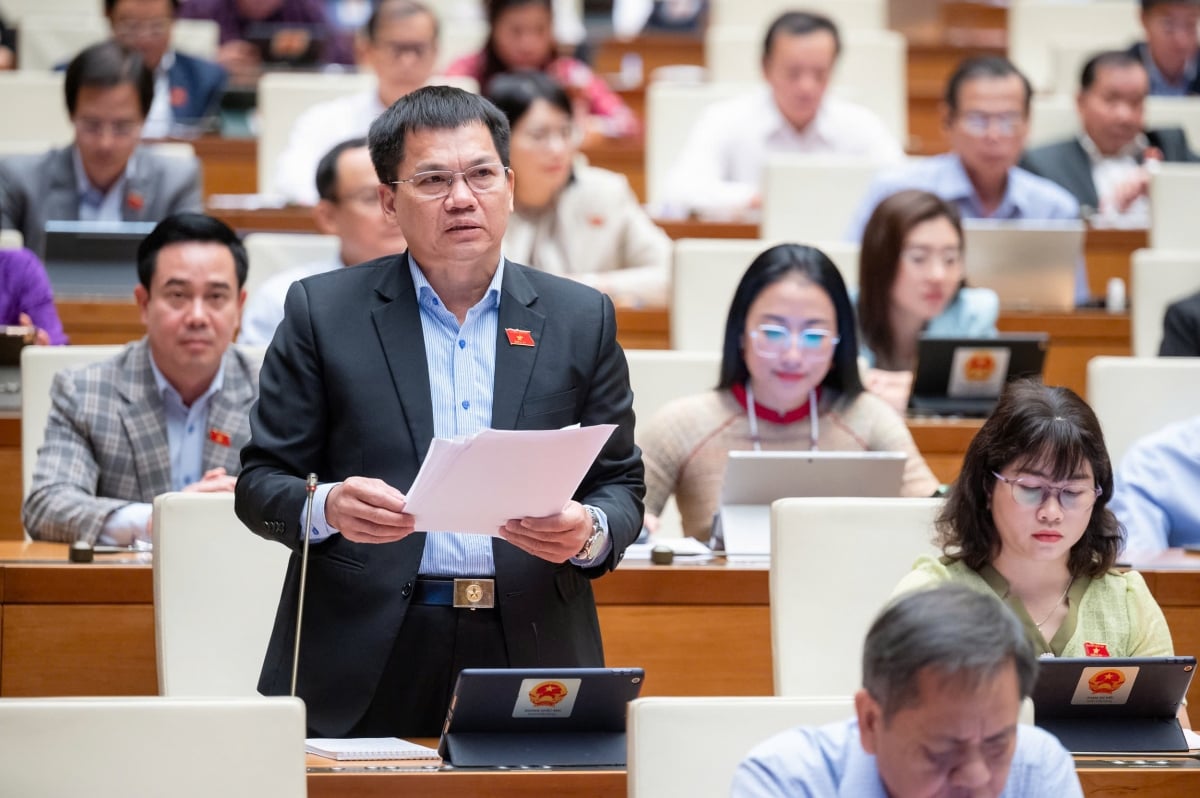
According to the delegates, the reasons for these shortcomings and limitations are due to the lack of comprehensive forecasting of market conditions and the inability of advisory staff to assess and analyze legal regulations. The real estate structure is unsuitable, and there are no unified regulations on the proportion of land allocated for social housing and high-end apartments. Implementing the monitoring and declaration of prices during notarization and actual real estate transaction prices is very difficult.
Based on the above situation, delegate Duong Khac Mai proposed: “It is necessary to continue implementing the group of institutional solutions effectively in the coming time. Continue reviewing, amending, and perfecting relevant laws such as the Land Law, the Housing Law, the Real Estate Business Law… Build a transparent and easily accessible real estate market information system so that people can clearly understand land prices, in order to limit speculation and price inflation. Along with that, the delegate proposed assigning the Ministry of Construction to advise on the issuance of mechanisms and policies to strictly manage investors of social housing projects; and at the same time coordinate the assessment and review of difficulties and obstacles in preferential credit policies for social housing.”
Source: https://vov.vn/chinh-polit/gia-bat-dong-san-cao-bat-thuong-do-nguoi-mua-bat-dong-san-de-tich-luy-tang-cao-post1131459.vov


























![[Photo] Prime Minister Pham Minh Chinh holds a phone call with the CEO of Russia's Rosatom Corporation.](/_next/image?url=https%3A%2F%2Fvphoto.vietnam.vn%2Fthumb%2F1200x675%2Fvietnam%2Fresource%2FIMAGE%2F2025%2F12%2F11%2F1765464552365_dsc-5295-jpg.webp&w=3840&q=75)
















































Comment (0)