

World rubber prices are differentiated between markets.
Opening the trading session on December 8, rubber futures prices differed between Asian markets:
Thailand: Rubber futures price for December 2025 decreased by 1.4% (1 baht) to 68 baht/kg.
Japan (OSE): December rubber futures rose 0.6% (2 yen) to 324 yen/kg.
China: January 2026 rubber futures fell 0.1% (10 yuan) to 15,105 yuan/ton.
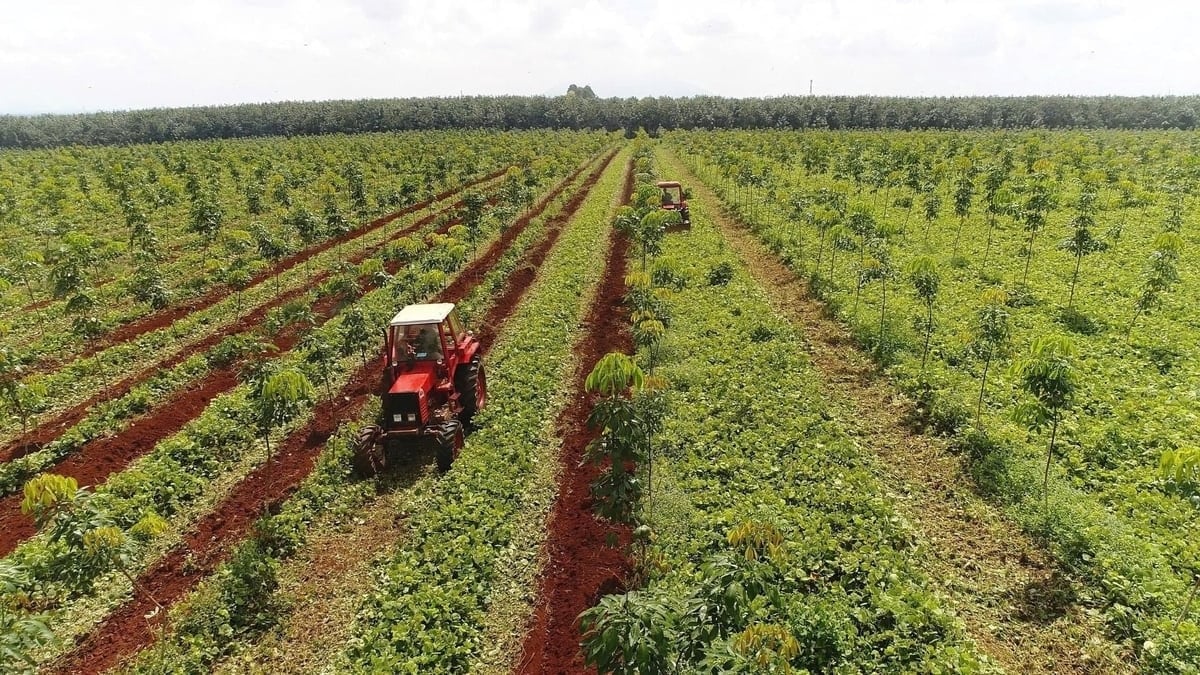
According to the Association of Natural Rubber Producing Countries (ANRPC), global natural rubber (NR) output in October, despite being the peak production month, increased more slowly than expected.
October output is estimated at 1.49 million tons, up 2.65% over the same period last year.
The ANRPC said the increase was lower than expected due to "unpredictable weather" and low selling prices that could reduce output.
The association warned that persistent adverse conditions were weakening the ability to meet demand, suggesting that the natural rubber market could tighten further. In addition to weather factors, ANRPC also cited insufficient investment in rubber tree regeneration and sudden changes in market sentiment.
Despite a slight increase in output, global rubber consumption in October fell sharply by 4.22% to 1.26 million tonnes.
The ANRPC said the decline reflected the double impact of US tariffs and anti-dumping measures on Chinese tyres, which reduced trade flows and led to a decline in tyre production in China.
These factors are putting “increasing pressure on demand” and highlighting the sensitivity of global supply chains to policy changes.
For the full year 2025, ANRPC forecasts global natural rubber production to rise 1.3% to 14.89 million tonnes. In contrast, demand is expected to rise by a “modest” 0.8% to 15.56 million tonnes, amid geopolitical uncertainties.
In China, the Shanghai Commodity Exchange (SHFE) reported that rubber inventories in monitored warehouses rose 8.54 percent from the previous week to 93,218 tonnes at the end of last week.
Domestic rubber prices are kept stable by businesses.
Domestically, raw rubber purchasing enterprises continue to stabilize prices.
Ba Ria Rubber Company quotes latex purchase price at 415 VND/TSC degree/kg (applied for TSC degree from 25 to under 30).
MangYang Company recorded the latex purchase price at about 403-408 VND/TSC (type 2-type 1).
Phu Rieng Company offers a stable purchase price for mixed latex at 390 VND/DRC, and a purchase price for latex at 420 VND/TSC.
Binh Long Company reported that the stable rubber purchase price at the Factory was at 422 VND/degree TSC/kg.
Source: https://baodanang.vn/gia-cao-su-hom-nay-8-12-2025-tang-cham-trong-thang-10-3314146.html

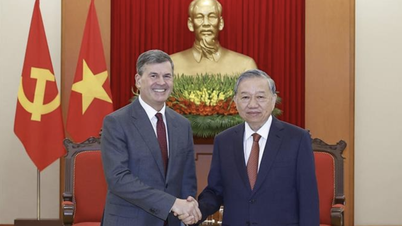
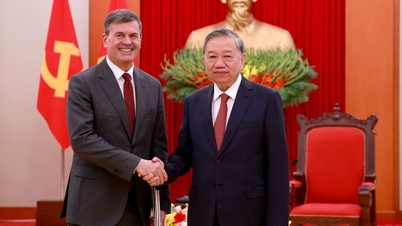
![[Photo] General Secretary To Lam receives the Director of the Academy of Public Administration and National Economy under the President of the Russian Federation](/_next/image?url=https%3A%2F%2Fvphoto.vietnam.vn%2Fthumb%2F1200x675%2Fvietnam%2Fresource%2FIMAGE%2F2025%2F12%2F08%2F1765200203892_a1-bnd-0933-4198-jpg.webp&w=3840&q=75)












































































Comment (0)