

In particular, he expressed his admiration for the leadership of the late General Secretary Nguyen Phu Trong.
 Professor Carl Thayer - from the Australian Defence College, University of New South Wales. Photo: VNA
Professor Thayer recalled that the late General Secretary Nguyen Phu Trong was first elected General Secretary at the 11th National Party Congress in 2011 and subsequently re-elected at the 12th (2016) and 13th (2021) National Party Congresses. The professor assessed that the late General Secretary Nguyen Phu Trong was successful in his leadership of the Communist Party of Vietnam, as Vietnam consistently maintained high growth rates, except during the COVID-19 pandemic in 2020-2021. Vietnam's economic growth rate averaged 5.5% from 2011 to 2023. Furthermore, the late General Secretary Nguyen Phu Trong demonstrated his leadership by pursuing the fight against corruption and negative phenomena, the Party building campaign, responding to the COVID-19 pandemic, and gaining international recognition for the key role of the Communist Party of Vietnam in foreign affairs.
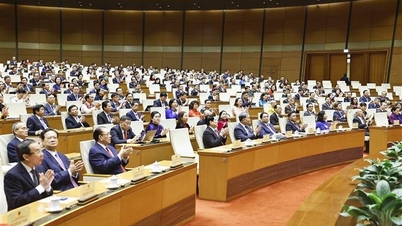
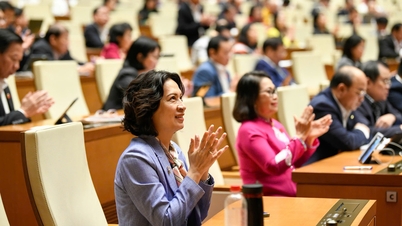
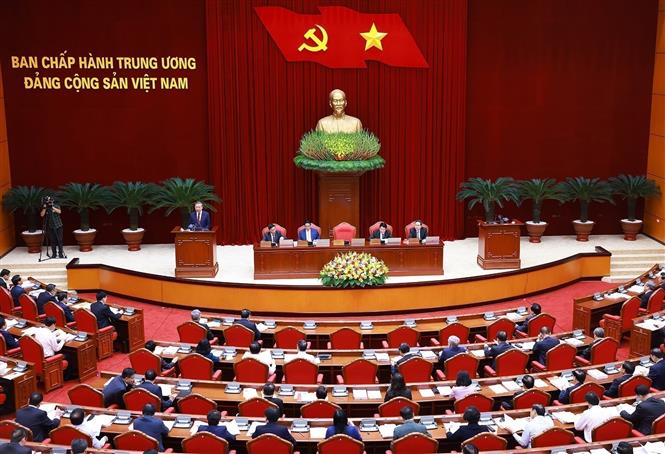 The 13th Central Committee meeting of the Communist Party of Vietnam opened on the morning of November 25, 2024. Photo: Duong Giang/VNA
The anti-corruption campaign led by the late General Secretary Nguyen Phu Trong has made significant progress, raising Vietnam's score on Transparency International's "Corruption Perception Index" from 2.9 in 2011 to 41 in 2023. The "Corruption Perception Index" ranks over 180 countries on a scale from 0 (high corruption) to 100 (very clean). Vietnam rose from 112th to 83rd place between 2011 and 2023.
According to Professor Thayer, corruption can be seen as rust corroding the power of the state by hindering its effectiveness and preventing foreign investment. The fight against corruption is necessary but not sufficient to achieve Vietnam's development goals. Vietnam needs to continue the fight against corruption while simultaneously streamlining the state apparatus to facilitate the modernization of production methods and leverage the Fourth Industrial Revolution, including technological innovation, digitalization, artificial intelligence, and quantum computing.
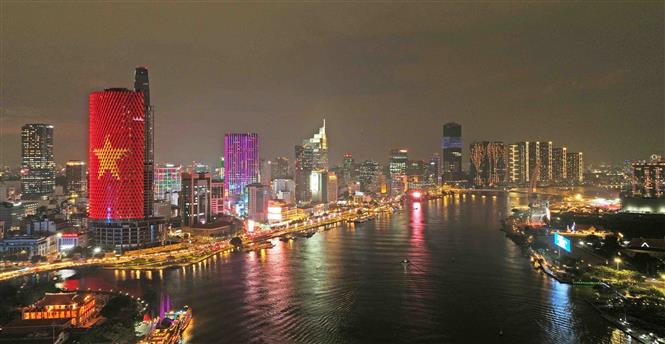 Over 95 years of leadership (1930-2025), the Communist Party of Vietnam has led the country through countless challenges and achieved many outstanding accomplishments in various fields. Entering a new era, the Party continues to lead the country towards digital transformation, innovation, and sustainable development, building a strong and prosperous Vietnam. (Photo: VNA)
The Communist Party of Vietnam has identified the country as standing at the threshold of a new era – an era of growth. Professor Carl Thayer argues that the targets Vietnam has set for 2030 and 2045 are necessary to prevent Vietnam from falling into the middle-income trap. The middle-income trap arises when a development strategy based on foreign investment has reached its limit, and a middle-income country is no longer able to compete internationally due to relatively high wages and low productivity. In other words, the factors driving Vietnam's current growth, such as labor-intensive production, are no longer sufficient to propel income and productivity higher.
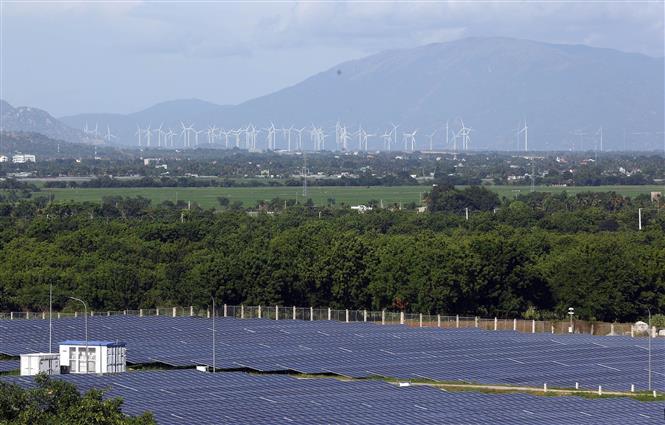 Vietnam is considered one of the countries with the greatest wind power potential in Southeast Asia. Wind power promises to become one of the pillars of the renewable energy sector in Vietnam, contributing to ensuring energy security and mitigating climate change. Photo: Huy Hung / VNA
According to Professor Thayer, Vietnam's current campaign to streamline its state apparatus will provide the country with the opportunity to develop the capacity to shift its production relations toward a high concentration of technology. This is an opportunity to develop Vietnam's middle class and encourage domestic consumption. At the same time, Vietnam has the chance to become a reliable link in the global supply chain for high-tech goods such as computer chips, solar panels, and electric vehicles. Vietnam also has the opportunity to leverage its growing network of comprehensive strategic partners and partners.
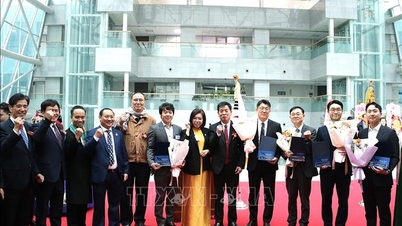
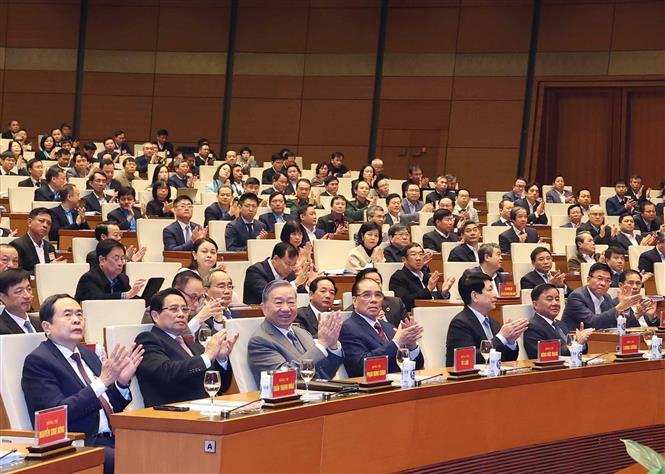 General Secretary To Lam, along with other Party and State leaders and former leaders, attended the National Conference on Breakthroughs in Science , Technology, Innovation, and National Digital Transformation, held on the morning of January 13, 2025, at the National Assembly building. Photo: Thong Nhat/TTXVN
Professor Thayer argues that Vietnam faces numerous challenges in streamlining its administrative apparatus, maintaining a unified commitment from the entire government to change, reforming bureaucratic structures to oversee commercial enterprises, labor relations and energy use, and seeking foreign investment to enhance its human resources for the new technological era.
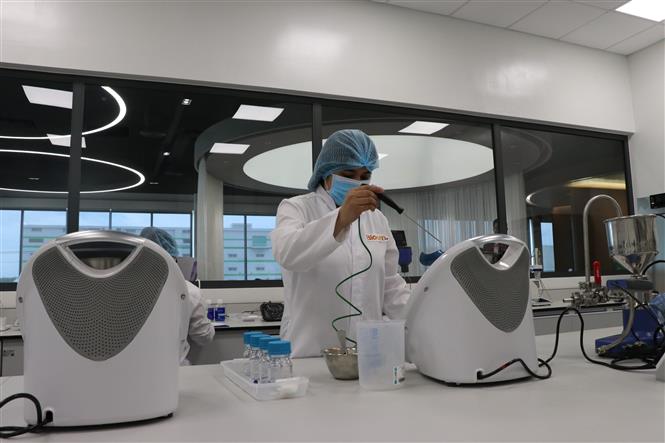 Staff at the Bloom Innovation Center, Vietnam's first global innovation hub, a collaboration between Tetra Pak and DenEast (Swedish investment), are researching innovative technologies. Photo: Duong Chi Tuong/VNA
Ultimately, Vietnam must develop a highly skilled and technologically savvy workforce; develop well-integrated domestic value chains; proactively deepen regional trade integration; shift from labor-intensive to high-value, technology-intensive manufacturing; and reduce carbon-intensive production activities in favor of low-carbon production.
Thanh Tú (VNA)














































































Comment (0)