

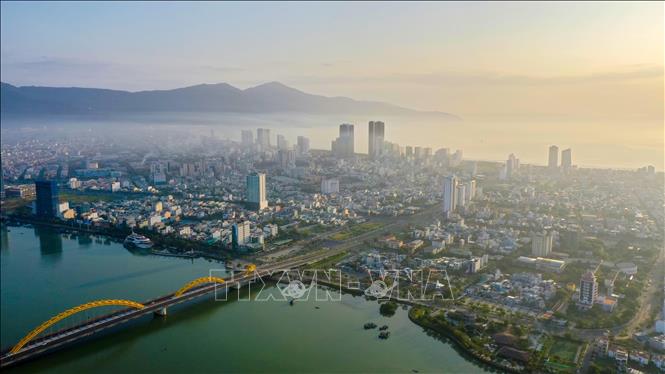
Accordingly, the Da Nang City People's Committee proposed two land price options to be applied from 2026. Option 1 was proposed by the consulting unit, while Option 2 represents a uniform 20% reduction compared to the increase in Option 1. The Da Nang City People's Committee proposed choosing Option 2.
Specifically, according to Option 2, the areas with the highest proposed land price increases are the communes of Ba Na (over 50%), Hoa Vang (over 49%), and Hoa Tien (over 49%). Meanwhile, central areas that already have high land prices are proposed to see only slight increases, such as the wards of Hai Chau (nearly 3%), Hoa Cuong (over 4%), and An Hai (over 6%). Notably, the road with the highest price is over 349 million VND/m2 (Bach Dang Street, the section from Le Duan to Nguyen Van Linh).
Regarding this issue, delegate Tran Thang Loi (Son Tra constituency) suggested maintaining the current land prices to allow more time to assess the impact on socio -economic life in the area. Da Nang City has adjusted its land price list several times, most recently in June 2025 and before that at the end of 2024. Previous adjustments were quite high, only lower than Ho Chi Minh City and Hanoi, bringing current land prices close to market value.
Mr. Tran Thang Loi also informed that when the new land price list was issued in 2024, there were many reactions from people and businesses. This is a lesson that needs to be taken into consideration, and a more cautious and thorough assessment should be made when deciding to issue new land prices.
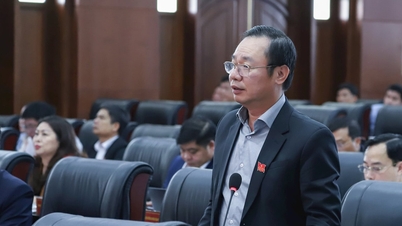
Meanwhile, delegate Vu Quang Hung (from the Hai Chau district delegation, a member of the Urban Affairs Committee of the Da Nang City People's Council) commented that the increase in industrial land prices in the city will directly impact the investment environment and growth prospects of Da Nang in the medium and long term. Delegate Hung argued that it is necessary to acknowledge the reality that land prices in Da Nang have been continuously increasing in recent years.
In 2025 alone, the city adjusted land price lists twice, in January and July, with an average increase of 10-12%. Some key urban areas have already approached 300-340 million VND/m². According to the next draft price list, many areas are proposed to see increases ranging from 7% to 82%. In this context, further price increases for industrial land within industrial zones will put significant cost pressure on businesses and directly impact Da Nang's competitiveness.
Furthermore, delegate Vu Quang Hung also stated that Da Nang is currently in the process of building an industrial-logistics-innovation ecosystem after the merger, and therefore needs to attract investors. The core objective of Da Nang is not to generate revenue from land prices, but rather to attract strategic investors, create new industries, high-quality jobs, boost import and export activities, facilitate technology transfer, and contribute to sustainable growth of the Gross Regional Domestic Product (GRDP).
Therefore, increasing land prices at this time could do more harm than good. Representative Vu Quang Hung suggested not increasing industrial land prices at this time, and focusing instead on maintaining stable production land prices to increase investment attractiveness; improving infrastructure, upgrading the investment ecosystem (logistics, seaports, on-site one-stop shop model, business support services, etc.).
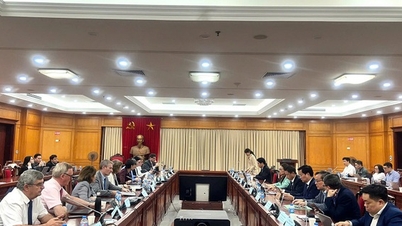
In the report reviewing the submission from the Da Nang City People's Committee at the session, Mr. Thai Hoang Vu, Head of the Economic and Budget Committee of the Da Nang City People's Council, also recommended that the City People's Council not approve the land price increase at this time. He suggested that the City People's Committee continue to review, calculate, and submit the proposal to the Da Nang City People's Council at another session.
Source: https://baotintuc.vn/bat-dong-san/da-nang-de-xuat-chua-dieu-chinh-gia-dat-de-danh-gia-tac-dong-kinh-te-xa-hoi-20251211153159513.htm
![[Photo] Closing Ceremony of the 10th Session of the 15th National Assembly](/_next/image?url=https%3A%2F%2Fvphoto.vietnam.vn%2Fthumb%2F1200x675%2Fvietnam%2Fresource%2FIMAGE%2F2025%2F12%2F11%2F1765448959967_image-1437-jpg.webp&w=3840&q=75)



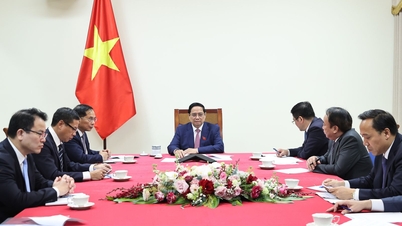
![[Photo] Prime Minister Pham Minh Chinh holds a phone call with the CEO of Russia's Rosatom Corporation.](/_next/image?url=https%3A%2F%2Fvphoto.vietnam.vn%2Fthumb%2F1200x675%2Fvietnam%2Fresource%2FIMAGE%2F2025%2F12%2F11%2F1765464552365_dsc-5295-jpg.webp&w=3840&q=75)































![[OFFICIAL] MISA GROUP ANNOUNCES ITS PIONEERING BRAND POSITIONING IN BUILDING AGENTIC AI FOR BUSINESSES, HOUSEHOLDS, AND THE GOVERNMENT](https://vphoto.vietnam.vn/thumb/402x226/vietnam/resource/IMAGE/2025/12/11/1765444754256_agentic-ai_postfb-scaled.png)








































Comment (0)