

In the journey of Hai Lang district's agricultural economy over the past half-decade, cooperatives have made a significant contribution. This is evidenced by the fact that Hai Lang district, once a low-lying area with many difficulties in agricultural production, has now become a "rice granary," a key agricultural production area of Quang Tri province, with annual rice production accounting for nearly half of the province's total rice output. The district's annual rice production of over 80,000 tons has contributed to ensuring food security and has gradually built the brand of high-quality "Hai Lang Clean Rice," which is well-received by the market.
Lesson 1: Changing the production mindset for farmers
Following the transformation under the 2012 Cooperative Law, cooperatives in Hai Lang district have focused on changing farmers' production mindsets. From traditional agricultural production and consumption methods based on "selling what they have," some cooperatives in the district have partnered with businesses to apply organic and safe agricultural production processes; negotiating and signing contracts for businesses to invest in production along the supply chain... This has helped cooperative members understand consumer needs, produce agricultural products according to market demands, and generate higher economic value.
"Single-crop fields"
Seen from afar, the fields of the Van Quy Production, Business and General Service Cooperative (hereinafter referred to as Van Quy Cooperative), Hai Phong commune, stretched out like a lush green carpet during the first days of the Year of the Snake (2015). This image makes it difficult for many to imagine that this is the "flood-prone" area of the district, where agricultural production is frequently affected by natural disasters.
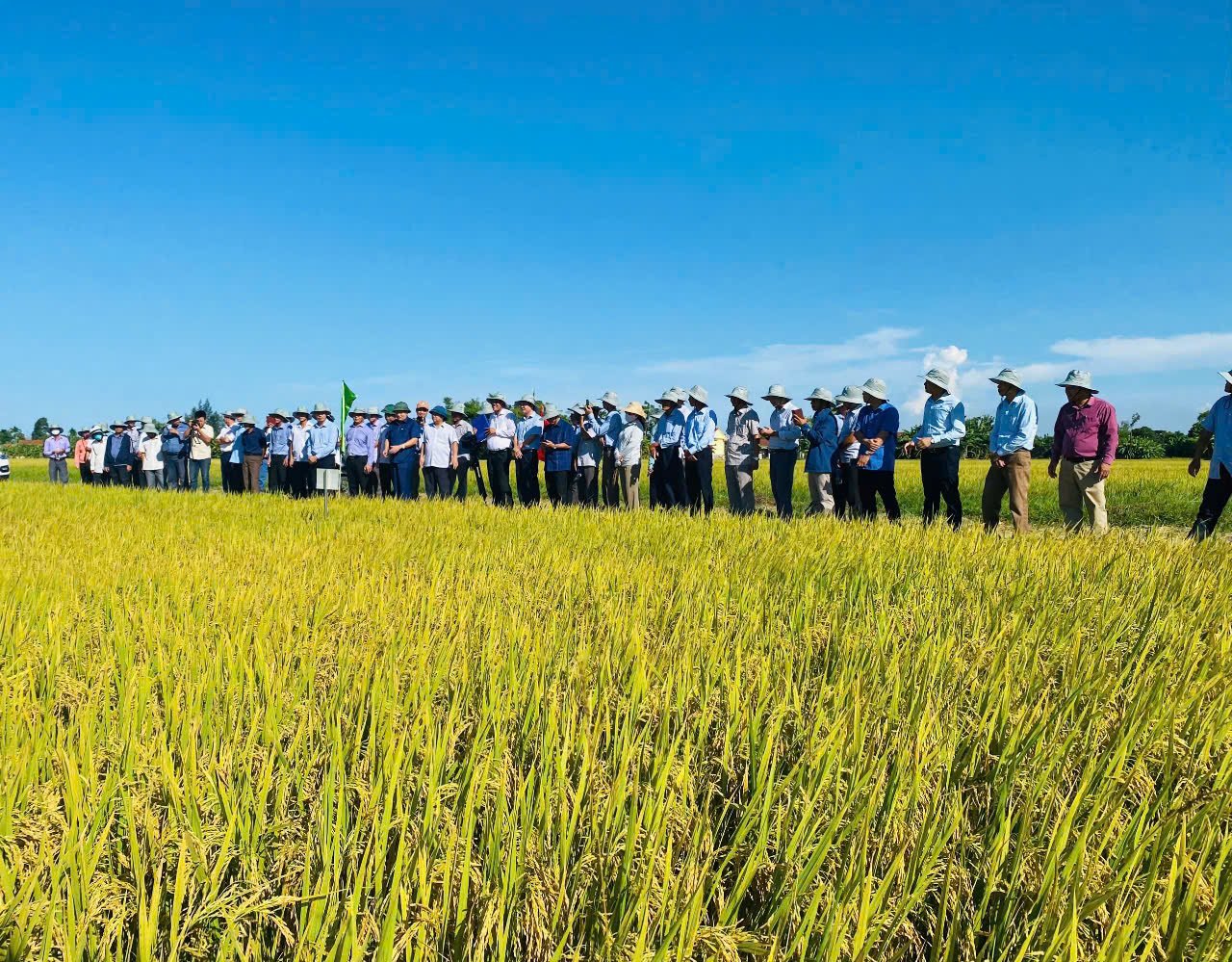
The organic rice fields of Van Quy Cooperative - Photo: LT
Mr. Nguyen Duc Toan, Director of Van Quy Cooperative, said that besides applying mechanization in plowing and harvesting, the biggest difference is that the cooperative has mobilized its members to work in the fields at the same time, cultivating only one or two rice varieties in a single field. Specifically, in this field, the rice variety is BDR57. Notably, in the 2024 summer-autumn crop, to shorten the growth and harvesting time of the rice to avoid early floods at the end of the season causing damage, the cooperative allocated 130 out of 135 hectares to this rice variety, accounting for 96.3% of the total rice area of the cooperative.
“Initially, many member households were hesitant, but thanks to effective communication and mobilization efforts, and the proven results, they trusted and boldly participated. The difference between this model and traditional rice production is that the application of the “3 reductions, 3 increases” process helps farmers reduce the amount of seeds sown, fertilizers, and pesticides, thereby increasing productivity, yield, and efficiency. This, in turn, increases the value per unit area and boosts income for members,” Mr. Toan said.
Since 2019, the Luong Dien Agricultural Service Cooperative in Hai Son commune has begun applying the "Single Variety Field" model. According to the cooperative's director, Le Van Phuoc, the entire cooperative has 169 hectares of rice fields divided into four zones, producing four varieties: DD2, Khang Dan, TBR97, and BDR57 (each variety covering approximately 40-50 hectares). These are rice varieties that the cooperative has surveyed from previous seasons and found to have high yields and suitability for the local soil.
The "Single Variety Field" model involves a standardized planting schedule across production areas, easy irrigation regulation, and efficient pest and disease management. Simultaneously, this model helps farmers transition from small-scale, fragmented production to large-scale, concentrated, and highly efficient commodity production. "The biggest advantage is the staggered rice harvesting method; a single day's harvest ensures a sufficient quantity of fresh rice in the field for supply to businesses and traders, making it very convenient," Mr. Phuoc explained.
In essence, the "Single-Vegetable Field" model is a form of agricultural production reorganization based on linkages between farmers and businesses, bringing together small-scale farmers to form large, shared areas. This facilitates agricultural mechanization, the application of new techniques and technologies, and ensures stable market access for farmers. The agricultural production orientation in Hai Lang is to implement the policy of land consolidation and exchange, accumulating farmland, and building large fields for the production of high-quality rice, specialty rice, and organic rice.
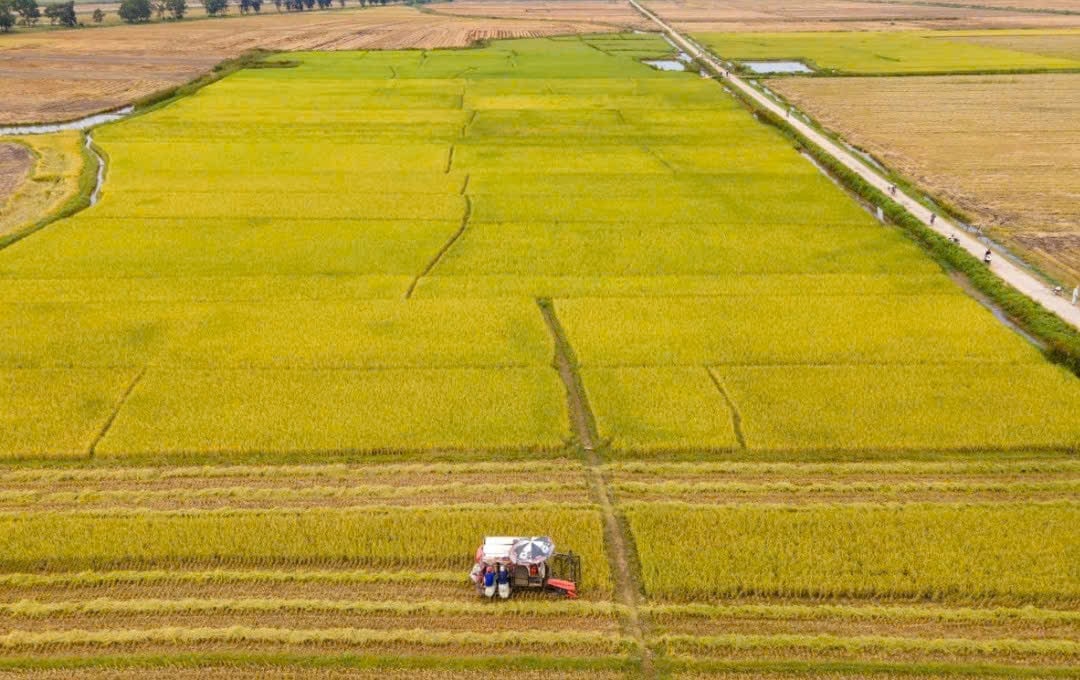
The "Single-variety field" model creates many advantages in the harvesting process - Photo: LT
Currently, the district continues to promote organic rice production with approximately 410 hectares, VietGAP rice production, and linked rice production and consumption with businesses on 467.1 hectares. In practice, farming on "Single-Variety Fields" has proven advantageous for farmers from cultivation and irrigation water regulation to the application of intensive farming methods and harvesting, especially the mechanization of production processes, reducing labor and costs. Mr. Dao Van Tram, Deputy Head of the Agriculture and Rural Development Department of Hai Lang district, stated: Cooperatives and farmers have synchronously applied advanced technical measures to production in "Single-Variety Fields".
This model offers multifaceted benefits, such as reducing production costs per hectare by approximately 800,000 VND, while achieving high yields, producing high-quality rice that is favored by the market, and increasing profits for producers by 20% - 25%. More importantly, it fosters a sense of community; participating households in the "Single Variety Field" program are linked, support each other, and share responsibility in all stages. Cooperatives have promptly supplied inputs, applied standardized farming techniques, reduced costs for land preparation, irrigation, planting, and harvesting services, promoted mechanization, and protected the environment. Post-harvest products are directly linked to the market, increasing competitiveness compared to before.
Manufactured to order for businesses.
This winter-spring season, Van Quy Cooperative is collaborating with Thai Binh Seed Company and the Provincial Agricultural Seed Center to produce rice seeds.
The cooperative was commissioned by the company to produce TBR95 rice seeds on an area of 60 hectares. The seeds were supplied by the company, and the cooperative was responsible for supplying agricultural materials to its members. According to the company's order, cooperative members had to sow the seeds on January 5th; strictly adhering to the three fertilizer applications: base fertilization, tillering fertilization, and top dressing as per the company's schedule.
Hai Lang district currently has 53 agricultural cooperatives and 1 cooperative union. The quality of operations of these cooperatives is constantly improving, playing a crucial role in agricultural production and contributing to the xây dựng nông thôn mới (new rural development) program. The average total revenue from services provided by a cooperative is over 2 billion VND, with a profit of over 180 million VND. Under the guidance of the cooperatives, farmers in the area have made many innovations in organizing production and accessing markets. |
“During the implementation process, the company regularly sends technical staff to coordinate with the cooperative, visit the fields, monitor the situation of pests and diseases, and provide technical guidance on rice cultivation to members. The company commits to purchasing fresh rice at the field at a rate of 58-60 quintals/hectare (however, the actual yield of the cooperative reaches 75-80 quintals/hectare, and this surplus can be used by cooperative members or sold to the company). Regarding prices, the contract between the cooperative and the company clearly states that there will be a negotiation 10 days before the rice harvest to determine the price according to the market,” Mr. Toan informed.
This model has created a closed loop in the production, harvesting, and consumption of agricultural products. As a result, members of the cooperative have access to modern rice production techniques and are assured of product output. With its responsiveness and flexibility in production management, Van Quy is one of five cooperatives in the province and the only agricultural cooperative in Hai Lang district selected to implement the New Cooperative Model Project for the 2021-2025 period.
The 2021-2022 summer-autumn crop season marked the first year that Kim Long Agricultural Service Cooperative in Hai Que commune collaborated with Quang Tri Trading Corporation to produce 17.5 hectares of organic rice. Through the cooperative's coordination, 100 member households received technical support from the company to produce organic rice.
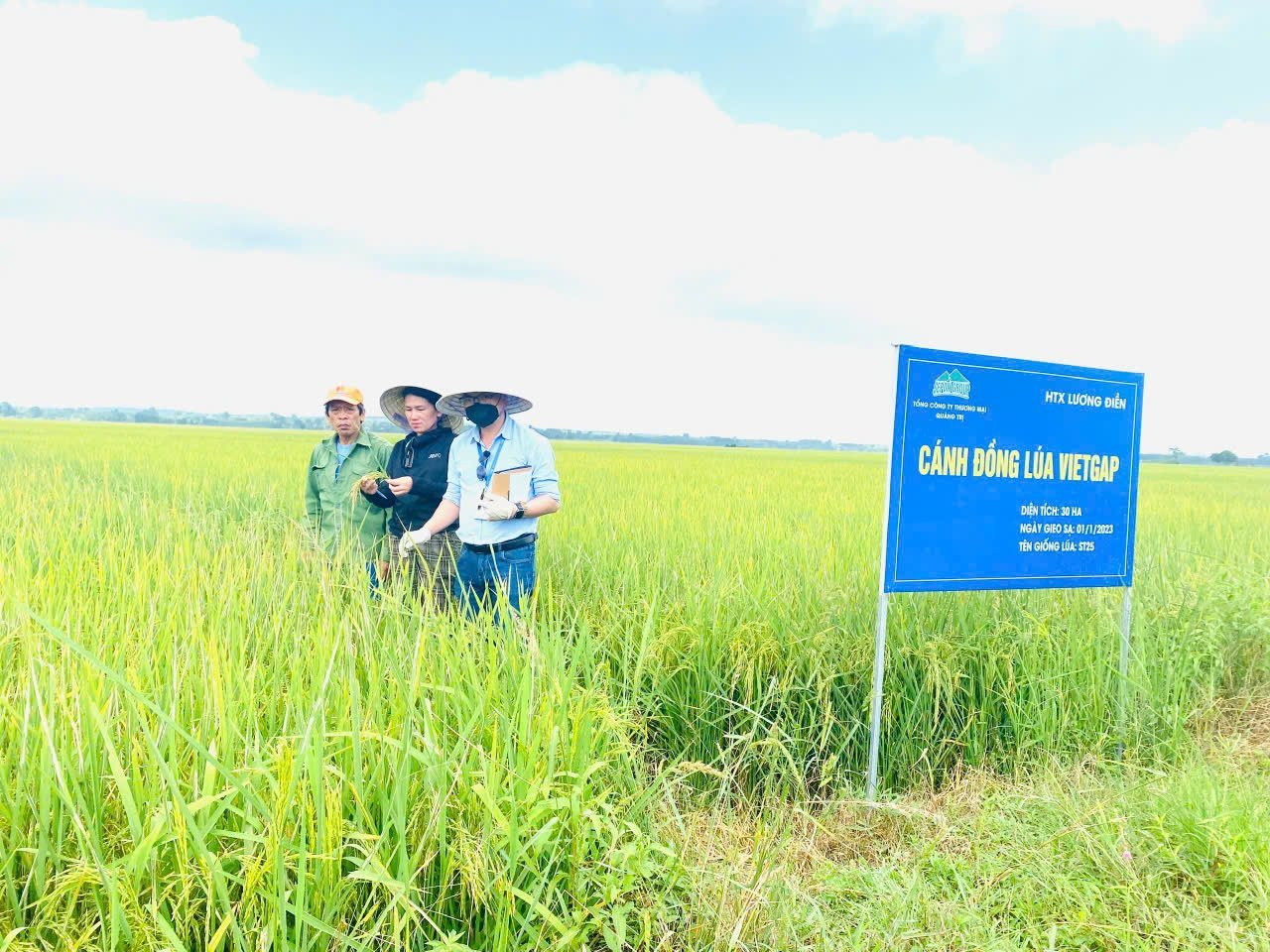
VietGap certified rice fields of Luong Dien Cooperative - Photo: LT
Mr. Nguyen Huu Phuoc, Director of Kim Long Agricultural Service Cooperative, shared that the process of producing organic rice is very different from traditional rice farming methods. For the ST25 rice production order placed by the company, cooperative members must strictly avoid using chemical fertilizers, herbicides, and pesticides. Instead, the company will use machinery to spray natural biological preparations such as fish emulsion, fermented plant stem water, eggshell calcium, ginger, garlic, and chili paste to provide nutrients and control pests and diseases for the rice plants.
“The most obvious benefit is that instead of manual labor, the fields are now supported by modern science and technology, from tray seedling cultivation and machine transplanting to drone spraying of pesticides and combine harvesters with straw balers… everything is done by machines, and farmers only need to weed. Throughout the rice plant's growth, the company's technical staff are regularly present in the fields, guiding farmers in keeping production diaries and caring for the rice.”
Before harvesting, company officials visit the fields to assess and test the rice grains, ensuring they meet organic standards before harvesting. This fosters good habits in farmers, encouraging them to adhere to the company's technical procedures. In return, after deducting costs, organic rice farmers earn a profit of 30 million VND/ha, which is 10-15 million VND/ha higher than conventional commercial rice production.”
Starting a pilot project in 2015 to convert small-timber forests into large-timber forests on an area of 10 hectares, the Phu Hung Cooperative in Hai Phu commune now has 176 hectares of forest meeting FSC standards. Planting internationally certified forests has become a trademark of this cooperative. In recent years, the cooperative has maximized local advantages in forest planting, harvesting 15-20 hectares of large-timber forest annually, with a yield of 3,000-4,000 tons.
In 2024 alone, the cooperative harvested 17 hectares of forest, yielding 2,443 tons of FSC-certified sawn timber with a selling price of over 2 billion VND (an increase of approximately 270 million VND compared to market prices). “The advantage of large timber forests is that when harvested, the timber is sold to factories that process it into planks, veneers, and flooring, so not only does the timber production increase, but its value also increases.”
Specifically, large timber forests yield 2-4 times more than small timber forests. The cooperative is closely linking with Quang Phu Resin Company, Binh Tri Thien Resin Company, Nghe An Container Company, Thua Thien Hue Forestry Company, Thanh Hoa Wood Import-Export Company, Cam Lo Energy Pellet Factory... to bring products to market at the best possible price, helping members and affiliated households increase their income,” shared Mr. Nguyen The, Director of Phu Hung Cooperative.
Lam Thanh
Article 2: Supportive policies are needed to enhance the role of cooperatives.
Source: https://baoquangtri.vn/hop-tac-xa-be-do-de-nong-nghiep-hai-lang-phat-trien-191969.htm


![[Photo] Prime Minister Pham Minh Chinh holds a phone call with the CEO of Russia's Rosatom Corporation.](/_next/image?url=https%3A%2F%2Fvphoto.vietnam.vn%2Fthumb%2F1200x675%2Fvietnam%2Fresource%2FIMAGE%2F2025%2F12%2F11%2F1765464552365_dsc-5295-jpg.webp&w=3840&q=75)




































































Comment (0)