

Sturdy roofs in the mist
Following the winding slopes amidst the jagged rocks of northern Tuyen Quang province, Can Ty emerges as a strip of villages clinging precariously to the mountainside. In the morning, thick layers of mist gather, with only the barking of dogs echoing from the wooden houses hidden in the clouds. Few would imagine that this was once a region with a poverty rate exceeding 64%, with over 1,200 poor households out of a total of 1,886. A border commune with 5.7km of border, steep terrain, and a dry climate lasting 6-7 months each year, all contributed to persistent poverty.
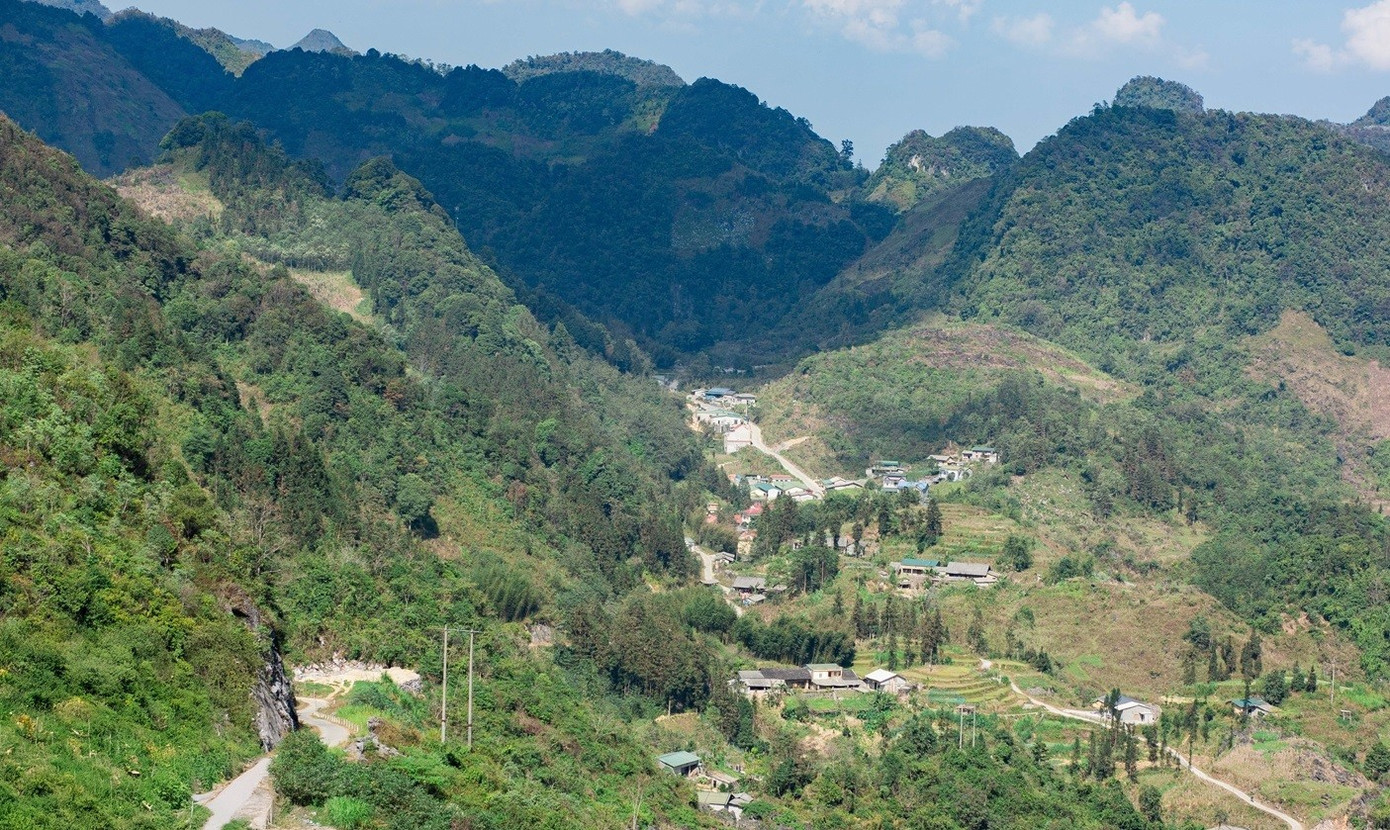
However, stepping into villages like San Tro, Na Quang, and Dau Cau today, one can clearly feel a new vitality spreading from the livelihood models, from the newly built sturdy houses, and from the spirit of "not waiting for support" and self-transformation among the people.
From 2022–2025, Can Ty commune received over 10.9 billion VND from the National Target Program for Sustainable Poverty Reduction. Specifically, the Livelihood Diversification Project received 4.1 billion VND, implemented across 9 community models involving 399 households. Commune officials divided households into groups based on the conditions of each village, selecting models that were practical and suitable to the customs of the Mong and Dao ethnic groups.
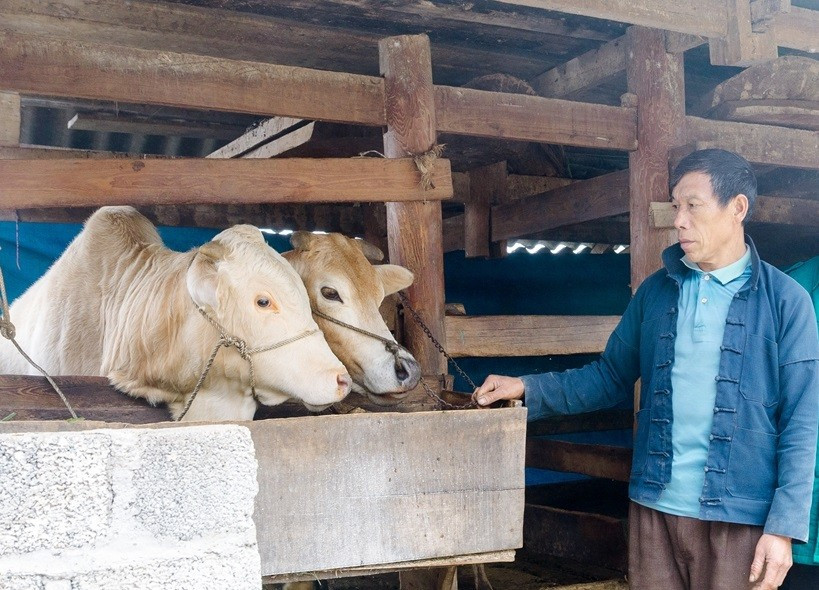
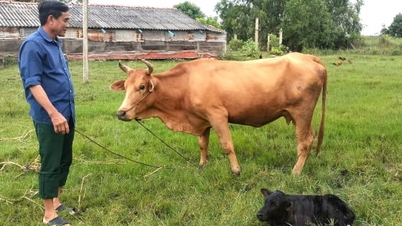
In the early morning in San Tro village, Mr. Giang Nhia Pao was inspecting his cow shed, a valuable asset his family had recently acquired. Having received healthy breeding cows and guidance from veterinary officers on everything from composting straw to dealing with the early winter cold, he said he felt relieved to have finally gotten rid of his long-standing poverty worries. Previously, he only dared to raise a few pigs. Now that the cows have given birth to their first calves, he's keeping them to increase his herd. With the cows, Mr. Pao feels more secure, has savings, and is more prepared when he needs capital.
In a village with steep slopes, severe cold, and scarce irrigation water, cattle farming is considered a suitable model: low risk, easy to care for, and quickly scalable. Each household has become accustomed to sharing experiences and supporting each other in growing more grass and building warm shelters for their cattle to survive the cold season.
The most striking aspect of Cán Tỷ in recent times has been the transformation of individual houses. With 6.65 billion VND from government support policies, the commune has built 111 new houses and repaired 81 dilapidated ones. Solid, sturdy houses have appeared in Đầu Cầu 2, Xín Suối Hồ, Sủa Cán Tỷ… becoming new homes for hundreds of families.
Mr. Mua Mi De, from Dau Cau 2 village, is still not used to the feeling of living in his newly built house. Standing on the porch, looking at the corrugated iron roof still smelling of fresh paint, he said with tears in his eyes: "The old house was roofed with bamboo slats, and it leaked when the wind blew. I was afraid it would collapse at night during the rain. Now that I have a sturdy house, I can finally feel at ease this Tet."
In the highlands, a sturdy house is not just material support. It's a source of spiritual strength, giving people the confidence to plan for the long term: investing in farming, providing their children with a good education, and no longer living in constant anxiety every time there's a strong wind or hailstorm.
Choose the right direction – "hit the mark, be right, and be timely."
According to Mr. Vi Ngoc Tinh, Chairman of the People's Committee of Can Ty commune, the program was implemented according to the motto "hit the mark, right, and timely": meeting the needs, targeting the right people, and being timely according to the seasons. As a result, the people have significantly changed their awareness, from a wait-and-see attitude to proactively learning techniques and calculating effectiveness.
"Many models have ended their state support, but the people are still developing further on their own. This is a very encouraging sign," Mr. Tinh shared. The biggest impact of the program, according to him, is not in the number of cows or new houses, but in the fact that people have started to cooperate in production, share techniques, help each other care for their herds, and expand their pastures.
If the cattle farming model helps people accumulate savings, then the bamboo, a hollow-stemmed, drought-resistant plant, opens up a sustainable path forward on the water-scarce slopes of Cán Tỷ.
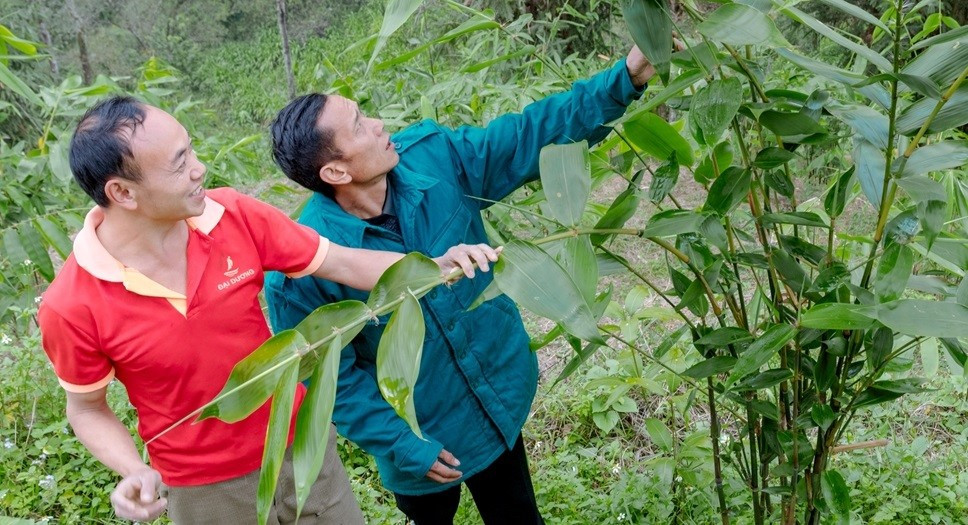
In the middle of San Tro village, Mr. Thao Chong Xieng is tending to his newly planted bamboo garden. Previously, his family only grew upland corn, which yielded low returns. At the end of 2024, seeing that several households had planted bamboo and earned good income, he boldly converted 2 hectares of sloping land to plant 2,000 bamboo trees. Bamboo thrives in the soil and requires less labor than corn. It can withstand even the harshest sun.
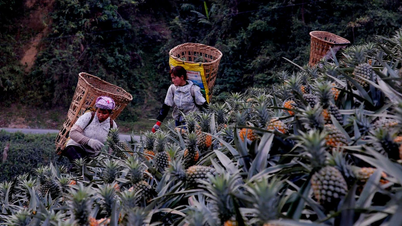
Lá giang (a type of wild leaf) is becoming the "green gold" of the border region. Market prices range from 7,000 to 25,000 VND per kilogram. A diligent worker can harvest 30-100 kg per day, earning 200,000-700,000 VND, depending on the time of year. Previously, people mainly harvested leaves from the wild. Now, with declining forest resources, the shift to concentrated cultivation is creating a more sustainable source of income.
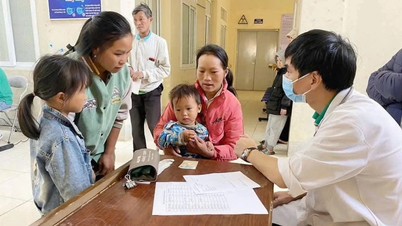
Cán Tỷ now has nearly 140 hectares of bamboo in the villages of Mố Lùng, Sán Trồ, and Na Quang. The government provides training and guidance on planting, harvesting, and preserving the leaves. Many young people also participate in the model, increasing their income and helping them stay connected to their hometown instead of working far away. Training sessions held right in the villages, visits by officials to each household to guide livestock care to protect them from the cold, and new models such as beekeeping and raising hybrid pigs are helping the villages escape from long-standing poverty.
However, to date, much work remains to be done to reduce poverty and promote prosperity in Can Ty. Inter-village roads are still steep and difficult to navigate, there is a shortage of clean water during the dry season, and appropriate support for seedlings and livestock is still needed. But most importantly, there needs to be a shift in the mindset of each household. Many families consider the support payments merely as "seed capital," while their own efforts to improve their lives are the deciding factor. New houses, growing cattle, and lush bamboo gardens yielding steady harvests all inspire confidence that this border region can overcome poverty through its own hard work.
The chairman of Can Ty commune, Vi Ngoc Tinh, affirmed: "We will expand the area for growing bamboo, find stable markets, and combine it with many other models. The ultimate goal is for people to become economically self-sufficient and completely escape the worry of hunger."
In the afternoon, standing on the mountainside overlooking the village, the newly built roofs gleamed in the sunlight. Children chased each other in the yard, and cows called for their mothers in the pasture. Can Ty, a once-difficult border region, is overcoming challenges day by day through simple models and the indomitable spirit of its people. Amidst the mountain mist, a sustainable poverty reduction journey is clearly emerging, with each village, each household, and each hillside turning green again.
Source: https://tienphong.vn/huong-giam-ngheo-ben-vung-tu-nhung-suon-doc-o-can-ty-post1803519.tpo





























































Comment (0)