

Regarding this issue, Hue Today Online reporter had an interview with Mr. Nguyen Van Hung, Director of Hue City Hydrometeorological Station, to clarify the current situation and give warnings in the coming days.
 |
| Mr. Nguyen Van Hung, Director of the City Hydrometeorological Station |
Sir, according to the latest monitoring data, how has the rainfall been in Hue in recent days and why is the soil in many areas nearly saturated or completely saturated?
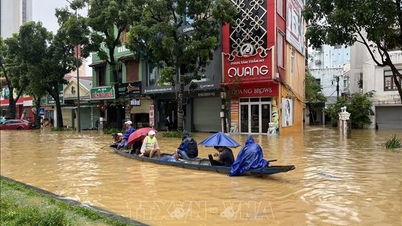
Over the past few days, the Hue city area has continuously had moderate to heavy rain, and in some places very heavy rain. The total rainfall is generally from 200 - 500mm, some places recorded exceptionally heavy rainfall such as Bach Ma 521.4mm, Truoi 522.4mm, Hue Meteorological Station 570.6mm.
Due to the continuous rain, there is almost no dry area for the soil to “rest”, so most areas have absorbed water to the maximum level. Soil saturation reaches over 85%, even reaching 100% in some places, meaning the soil is no longer able to absorb more water.
Can you briefly explain to our readers what happens to the soil structure when it reaches full saturation and how does that affect its natural infiltration and drainage?
When the soil reaches saturation, all the voids between the soil particles are filled with water, there is no air circulation in those voids. Physically, the soil now completely loses its ability to absorb new water, causing the next rainfall to not penetrate but run off the surface.
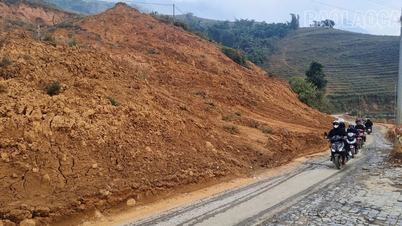
The mechanical structure of the soil when it is “saturated with water” is also significantly weakened. The soil particles are more loosely bound, the friction is greatly reduced, so just a strong flow, or a large load from construction, vehicles, or natural slopes, the soil can slide, subside or collapse. This is the mechanism that causes landslides, subsidence and mud and rock floods after long periods of rain that we often see in the Central region.
Given Hue’s unique topographical conditions, what would prolonged 100% soil saturation increase the risk of: urban flooding, landslides, or both? Which areas are currently at highest risk?
In fact, both risks: landslides and flooding have increased sharply.
Firstly, regarding flash floods and landslides, there are currently 14 communes and wards at high risk, including: Communes in A Luoi area (1-5), Phong Dien, Long Quang, Khe Tre, Nam Dong, Chan May - Lang Co, Binh Dien, Huong Thuy, Loc An, Phu Loc... These are places with steep terrain, strongly weathered rocks and soil, prolonged rain can easily cause landslides or landslides when the flow is concentrated.
Second, regarding urban and delta flooding, there are currently nearly 30 communes and wards that are heavily affected, stretching from coastal areas to Hue city center: Phong Dinh, Phong Phu, Phong Quang, Phong Thai, Quang Dien, Hoa Chau, Duong No, Thuan An, Huong Tra, Huong An, Kim Tra, My Thuong, Phu Ho, Kim Long, Thuan Hoa, Phu Xuan, Thuy Xuan, Vy Da, An Cuu, Thanh Thuy, Phu Bai, Loc An, Hung Loc, Phu Vang, Vinh Loc...
In particular, National Highway 1 through Phu Loc and Hung Loc communes has many deep flooded areas, stretching hundreds of meters. Rainwater from Bach Ma mountain range flows down, overflowing onto the road, causing local traffic disruption. If the rain continues, these areas will be flooded even deeper and for longer.
In conditions where the land is "saturated with water", what signs should people pay attention to to recognize the risk of landslides or subsidence, sir?
This is very important, because many serious landslides often have “early signs” but are ignored. When the ground has been soaked with water for a long time, people need to be alert if they see the following signs: New cracks appear on the ground, roads or house walls, old cracks widen quickly; the ground swells and sinks abnormally, there is a small stream of water leaking from the hillside or the foot of the embankment; trees fall in large numbers over a certain area; stream water and drainage ditches turn cloudy or change flow abnormally, accompanied by strange sounds (rumbling, cracking, rattling).
If there is one of these signs, immediately move away from the suspected area and notify the local authorities or disaster prevention force for support.
Especially in mountainous areas and along slopes, people should not stay in temporary camps or take shelter in houses with cracked walls or weak foundations when it rains for a long time.
What recommendations does the City Hydrometeorological Station have for the government and people at this time?
According to the latest forecast, in the next 24 hours, Hue will still be affected by the cold air mass that has stabilized after weakening, combined with strong high-altitude easterly wind disturbances. It is expected that the whole city will continue to have moderate to heavy rain, and in some places very heavy rain.
In the next 48 - 72 hours (from October 26 - 27), the cold air mass is likely to strengthen again, at the same time the disturbance in the upper easterly wind zone continues to strengthen, so heavy rain may recur over a wide area.
The worrying thing is that the ground is saturated, just one more heavy rain will increase the risk of urban flooding and landslides.
Therefore, the City Hydrometeorological Station recommends that localities maintain 24/7 duty, especially in mountainous communes, along streams, and areas at risk of landslides and deep flooding. It is necessary to prepare evacuation plans when there are signs of prolonged heavy rain or cracks in the ground.
People should limit their movement through steep mountain passes and small streams, and should not stay along slopes, in rock and soil mining areas, or in unfinished construction projects. At the same time, they should proactively monitor rain - flood - landslide warning bulletins that are continuously updated through the local broadcasting system, official social networks, or reliable weather applications.
With the complicated flood situation, in your opinion, what is the key factor to help minimize damage caused by natural disasters at this time?
The key is proactive and timely coordination between the government and the people.
With the weather characteristics in Hue, prolonged rain, steep terrain, and easily saturated soil, we cannot prevent the rain, but we can reduce damage by taking early action. Commune and ward authorities must have a firm grasp of vulnerable areas, review households along streams, at the foot of hills, and places with high slopes, these are locations with the highest risk of landslides.
As for residents, in addition to listening to forecasts, they should carefully observe the area around their homes. If they see any unusual signs, they should report them immediately for assistance in evacuation. In particular, they should not be subjective because "last year this place did not collapse, so it will probably be safe this year". When the soil is saturated, just one extreme rain or strong flow can completely change the geological terrain of the place.
Source: https://huengaynay.vn/chinh-tri-xa-hoi/theo-dong-thoi-su/khi-dat-da-no-nuoc-nguy-co-ngap-sau-sat-lo-tang-cao-159161.html

![[Photo] Explore the US Navy's USS Robert Smalls warship](/_next/image?url=https%3A%2F%2Fvphoto.vietnam.vn%2Fthumb%2F1200x675%2Fvietnam%2Fresource%2FIMAGE%2F2025%2F12%2F10%2F1765341533272_11212121-8303-jpg.webp&w=3840&q=75)
























































































Comment (0)