

... "The rice in the fields withered and died."
Snails in the rice field died from drought.
Wild yams, whether in the forest or in the soil, wither and dry up.
It's a drought, there's no water, my feet are completely dry.
Please, Lord God, send down the rain.
Please grant us favorable weather conditions.
We ask for rain from heaven to nourish the rice seedlings and the fields.
Let diseases and epidemics fall into the fire, fall into the earth, and be washed away by the streams.
Oh Lord of Heaven, oh Lord of Earth…
Protecting buffaloes, pigs, chickens, and ducks from disease outbreaks.
Protect the villagers, from the elderly to the young children, from illness.
Always stay healthy.
The house is full of rice.
"The barns are full of buffaloes, cows, pigs, and chickens..."
The murmured incantations of the ritual chanted by Mr. Lo Van Pau (83 years old) - the shaman - marked the beginning of the Bun Voc Nam Festival in Na Tam commune, Tam Duong district, Lai Chau province.
Bum Vok Nam, in the truest sense of the word, is the Lao people's water-splashing festival for good luck – a festival full of cultural colors, beliefs, and unique characteristics of the Lao community's life. Preserving their identity is not only evident in daily life but also in their national consciousness. Although the economic and spiritual lives of the Lao people in Lai Chau are developing, they still maintain the ancestral belief that water is the source of life. Rain brings prosperity to all things, and the spirits protect the villages. Praying for rain has become ingrained in everyone's consciousness, becoming an important community festival of the year for the Lao people.
The Lao people have a long history of settlement in Lai Chau, characterized by a close-knit community and strong solidarity. Before the festival, respected elders in the village meet to assign tasks, appointing each family to prepare offerings and selecting individuals with the necessary moral character to participate in the rituals. The day of the ceremony is chosen in advance by the shaman as an auspicious date.
Having the good fortune to participate in the Bum Vok Nam Festival in 2023, we were immersed in the dominant indigo color and silver-white hues of the traditional costumes of the Lao people, with their delicate and distinctive brocade patterns.
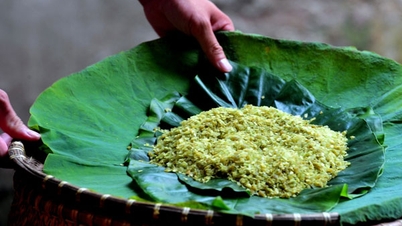
The festival begins with a solemn ritual of offering prayers to the spirits. The Lao people's ceremonial hut is called a "phi ban." The offerings include: sticky rice cakes, pork, chicken, wine, tea, glutinous rice, sugarcane, etc. The prayers express the people's beliefs, asking the gods of heaven and earth to bless them with a bountiful harvest this year. This is a typical wish of the mountain dwellers who cultivate wet rice.
In Northwest Vietnam, the Thai ethnic group also has a Water Splashing Festival (Then Kin Pang), but the culture of each ethnic group has distinct characteristics. The two festivals differ in both the ceremonial and celebratory aspects. The lifestyles of the communities determine the differences in each water splashing festival.
The Bum Vok Nam ritual of the Lao people has a unique ceremony: the ritual of asking for rainwater to offer to Buddha statues. The group going to ask for rainwater consists of 80 young men and women who meet the criteria of moral character and skill, having been selected beforehand from their families. All are dressed in neat traditional clothing.
The girls wear indigo headscarves, embellished with brocade and decorative accessories. They also skillfully pin a fresh flower to highlight their smiles, revealing teeth traditionally dyed black. The complete outfit, including the skirt, blouse, and headscarf, is handcrafted year-round and is a source of pride for any adult Laotian girl.
The boys, dressed in simple indigo clothing and wearing white headscarves decorated with patterns, went from house to house amidst the beating of drums and gongs (previously selected) to ask for rainwater, requesting to open the gates and ask for water.
The folk song, sung by the group to open the gate and ask for water, showcases the unique music and instruments of the Lao people. The high-pitched female voices and the deep, warm male voices blend with the music to create a unique musical atmosphere. The homeowner responds and guides the group to take their pipes to fetch water.
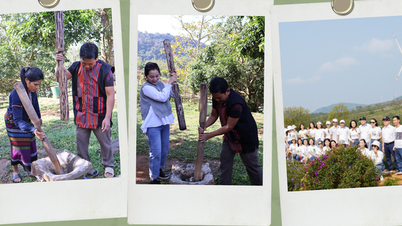
On the way to the festival area, the procession continued to walk amidst the sounds of drums, gongs, the pounding of bamboo trays, the stripping of bamboo strips, and the stripping of dried palm leaves… According to the artisans' demonstrations as they walked and made these sounds, these were the sounds representing thunder, the sound of rain falling—sometimes large, sometimes small, sometimes a downpour, sometimes a gentle patter…
Witnessing this scene firsthand, we were immersed in the unique intangible cultural heritage of the Lao people. These are not only traditional rituals with spiritual significance, but also actions with fertility symbolism.
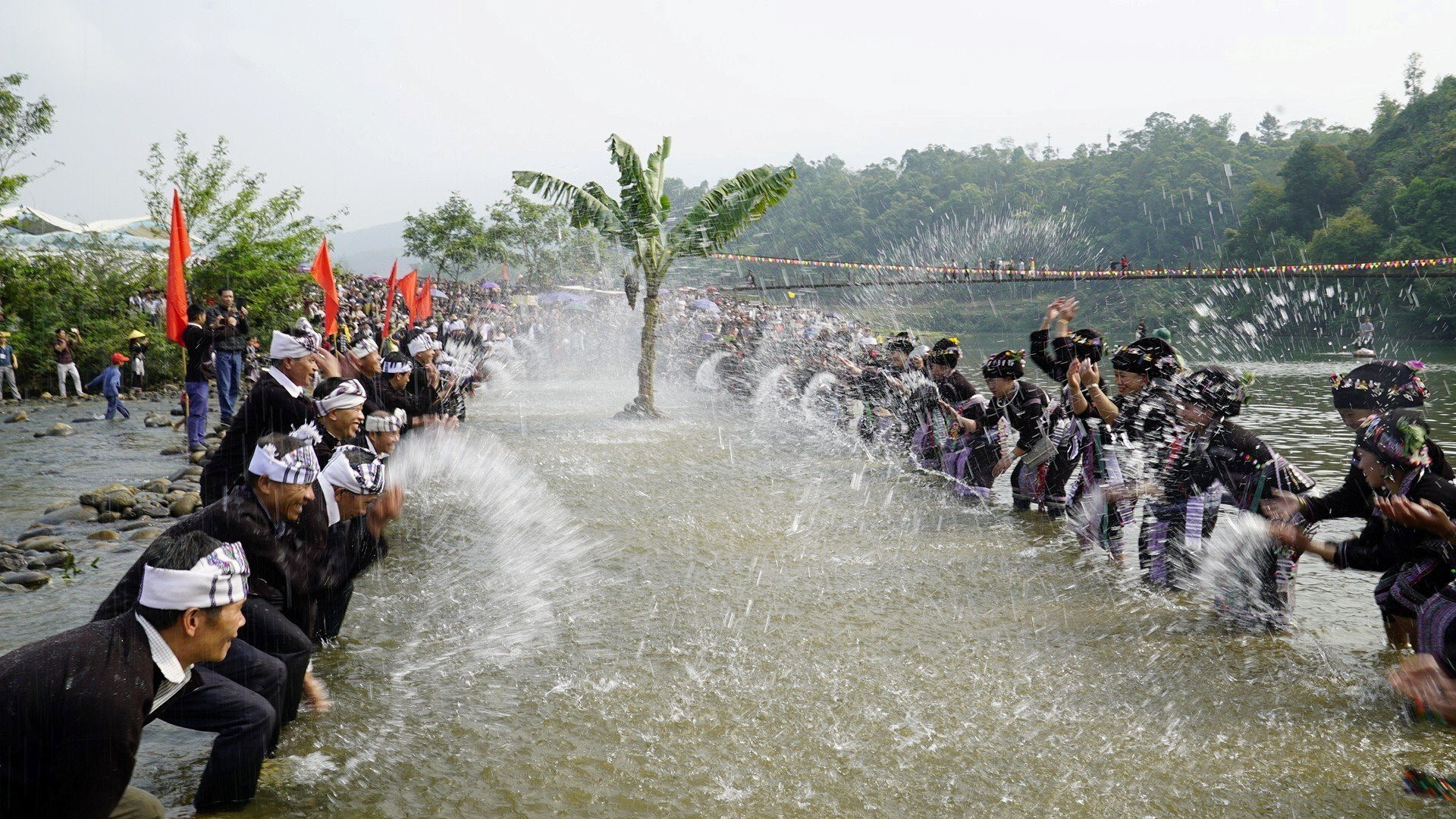
Along the route the water-seeking procession traveled, villagers stood on either side, splashing water on the procession as a way of wishing each other good health, luck, and prosperity. Everyone's face was joyful, reflecting the inherent character of the ethnic group.
The rain-praying ritual is performed by the shaman in a small shrine built by the stream. Villagers bring incense, flowers, and offerings to the shaman to perform the ritual. The prayer expresses the villagers' hopes for a year free from natural disasters and epidemics, for good health, for thriving livestock, and for bountiful rice and corn crops. When the shaman gives permission, the procession carries flowers and water into the shrine. They offer flowers twice, then water once, and continue this until all the flowers are gone.
The ritual of washing the Buddha statue is meticulously performed by the priest with the hope of cleansing it of the dust and grime accumulated over the past year and praying for new beginnings in the new year.
The most anticipated part of the festival is the lively activities. Banana trees are planted in the middle of the stream – symbolizing the flourishing and abundance of the harvest. Young men and women from the villages rush down to the stream to splash water, praying for rain. In the clear stream, there are no distinctions of age, wealth, or gender. They only share one belief: whoever gets splashed the most will have the most luck. In the refreshing atmosphere, streams of water fly up, splashing and creating a white spray; arms are raised, and the entire space is filled with solidarity, camaraderie, friendliness, and joyful smiles of the Lao people. Immersed in this atmosphere, one further appreciates the unique culture of their own people.
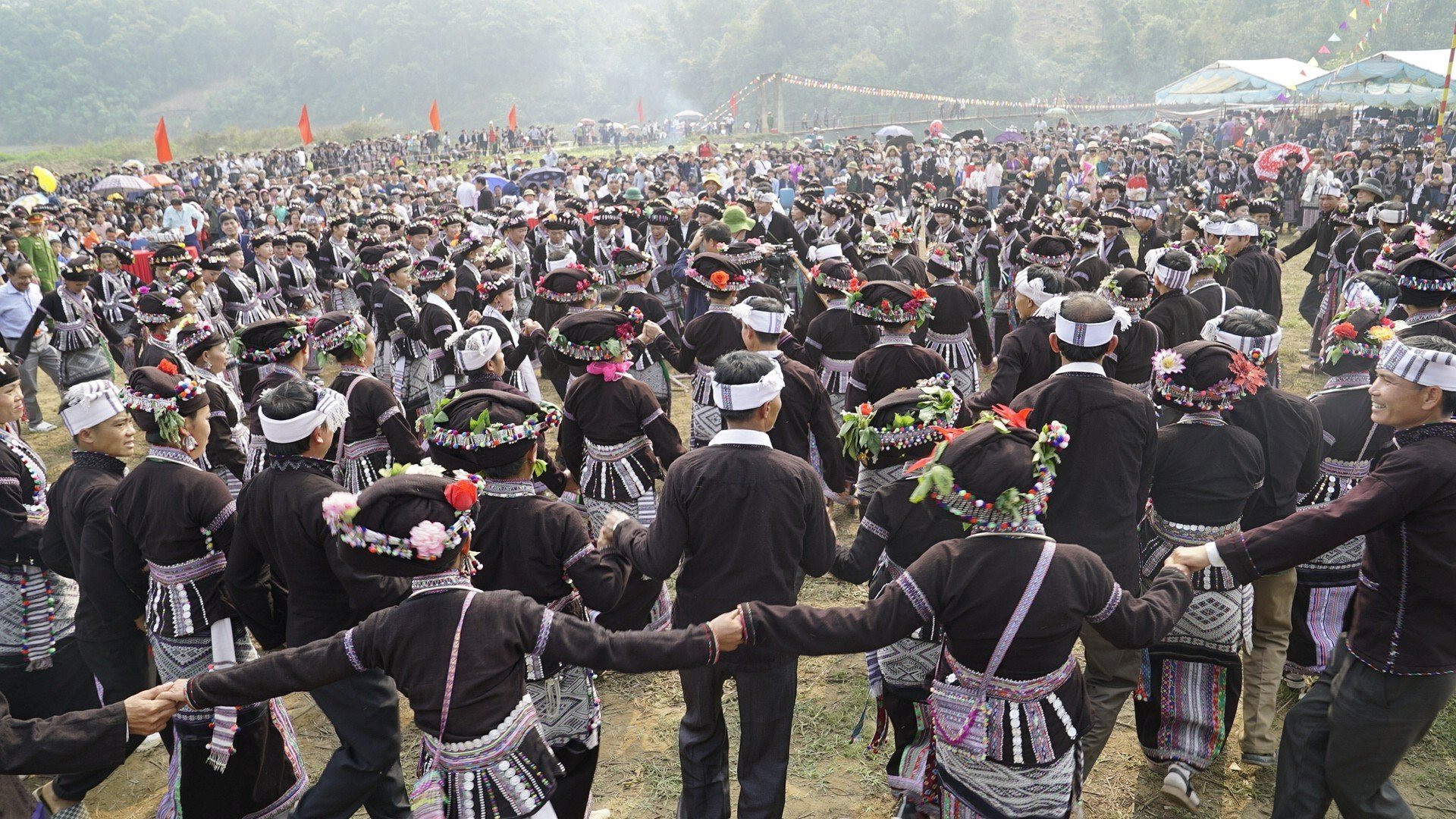
The Bun Vok Nam festival continues with traditional folk games showcasing the strength of the mountains and forests, such as tug-of-war and stick pushing, while the girls sing and dance their traditional songs. Prizes have been awarded, and promises of future festivals still resonate. Everyone leaves with a sense of nostalgia, even though their clothes are soaked from watching the songs and playing the games, drying up, and getting splashed with water again… but the impression of Bun Vok Nam remains, along with the mark of a people who love their traditional culture and are always dedicated to preserving and protecting the unique cultural features of the Lao people.
Source
































































Comment (0)