

On August 22, 2025, the Politburo issued Resolution No. 71-NQ/TW on breakthroughs in the development of education and training.
One notable point in this resolution is the major change in the organizational structure of public educational institutions, namely: There will be no school councils in public educational institutions (except for public schools with international agreements); and the model of the Party Secretary also serving as the head of the educational institution will be implemented.
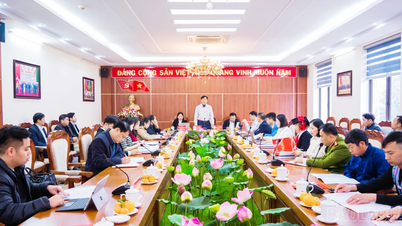
Immediately after its issuance, the resolution became the focus of discussion within the public university system, because there had been much debate surrounding the existence of the University Council institution in recent times.
The question is: How can we simultaneously ensure the comprehensive leadership of the Party and promote the spirit of university autonomy? This is truly a difficult problem for administrators, policymakers, and professionals in the field of higher education.
To gain a more comprehensive understanding of this issue, the Education and Times newspaper conducted an interview with Associate Professor Bui Anh Thuy, Head of the Law Faculty, Van Lang University.
- Sir, as an expert in education and law, how would you assess the current state of operation and the role of the School Council in public higher education institutions over the past period?
The institution of the University Council was established when the Law on Higher Education was promulgated in 2012 and amended in 2018. From that time on, the Party, the National Assembly , the Government, and the entire society have placed high expectations on the University Council as a powerful body within universities.
Specifically, the University Council has the following functions: Deciding on strategies, development plans, and annual plans; Issuing regulations on organization and operation, financial regulations, and regulations on grassroots democracy; Deciding on the direction of student recruitment, opening new majors, training, joint training, scientific and technological activities, international cooperation; ensuring the quality of higher education, etc.
In addition, the School Council decides on the organizational structure and labor structure; on the recruitment, employment, and management of staff, lecturers, officials, and employees; decides and submits to the competent management agency for decision on the appointment, dismissal, and removal of the principal; the appointment, dismissal, and removal of vice-principals based on the principal's proposal; decides on policies to attract investment capital for development; tuition fee policies and student support; approves the financial plan; approves financial reports and budget settlement reports, etc.
The school board decides on the investment and use of valuable assets…; supervises the implementation, compliance with the law, implementation of democratic regulations and accountability of the principal…
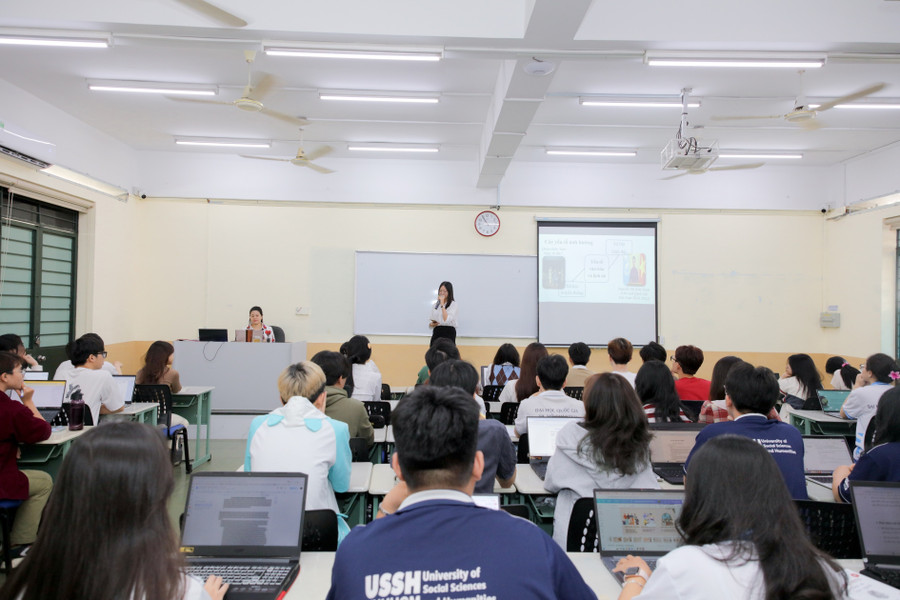
However, the practical implementation of the School Council over the past years has shown that the results have not met initial expectations.
In many higher education institutions, the University Council exists only in name, operating formally, lacking effectiveness, and not truly fulfilling its governance role. Many Council members hold multiple positions, are frequently busy, and rarely attend meetings; when they do participate, they do not make substantial contributions to important decisions of the university.
Furthermore, the regulations regarding the duties and powers of the School Council in the law are not entirely clear, leading to differing interpretations and implementations among schools, causing overlapping in management. The parallel operation of the Party Committee's authority and the School Council's authority in some situations has resulted in conflicts and disagreements, delaying the decision-making process and affecting governance efficiency.
In particular, the School Council model is unsuitable for schools belonging to the armed forces, leading to difficulties in implementation and enforcement.
The aforementioned factors highlight the urgent need for substantive changes to the role and position of the University Council in public universities, in order to ensure effectiveness, appropriateness, and consistency in the governance of the higher education system.

- Resolution 71/NQ-TW outlines the direction of not organizing a University Council; the Party Secretary also serves as the head of the educational institution. How do you assess the impact of this direction on the implementation of university autonomy?
Resolution No. 71/NQ-TW has set clear objectives for reforming the governance model in public universities.
Accordingly, streamlining the organizational structure and improving management efficiency are reflected in the following directions: Reducing administrative procedures, eliminating cumbersome processes, and accelerating decision-making; Concentrating power in a single leadership body, thereby strengthening the personal responsibility of the head; Creating unity in leadership, minimizing conflicts and overlaps, and ensuring smooth and efficient operation.
The resolution has provided specific guidance for the entire political system, all levels of government, and public higher education institutions. However, this significant change also raises many issues that need careful consideration to ensure effective implementation.
Because the University Council is a fundamental institution for university autonomy, it plays a crucial role in realizing the autonomy and accountability of the institution. In practice, the University Council does not inflate the organizational structure, as most members hold dual roles and do not receive significant stipends.
The abolition of the University Council, if not handled skillfully, could lead to a decline in the autonomy of universities. At the same time, concentrating power in a single leader also poses risks to transparency, oversight, and governance effectiveness.

So, what is the solution to both maintain the comprehensive leadership role of the Party organization and ensure genuine empowerment of university governance institutions, sir?
As mentioned, the University Council is the cornerstone of university autonomy. To successfully implement Resolution 71/NQ-TW, the State needs to promptly review and amend relevant laws such as the Education Law, the Higher Education Law, and the Vocational Education Law, in order to create a solid legal framework for the new governance model.
A clear and effective monitoring and accountability mechanism needs to be established to ensure the responsibility of leaders and transparency in operations. Despite changes in the model, genuine autonomy must still be guaranteed, as this is a key factor in the development of higher education.
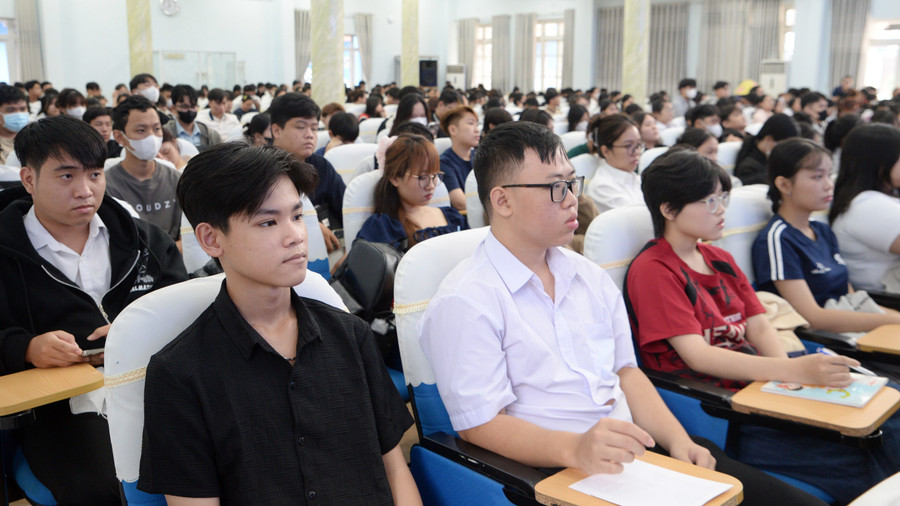
Autonomy is the core essence of modern universities, a prerequisite for fulfilling their mission of education, research, innovation, and serving national development. In countries with developed education systems such as the United States, European countries, and Australia, the University Council is an indispensable institution to ensure academic autonomy, unique identity, independent accountability, and innovative capacity.
Vietnam is undergoing a process of deep international integration. Without a corresponding governance mechanism to replace it, abolishing the University Council and returning to a centralized system could stifle autonomy and diversity – which are fundamental to universities' role in a period of strong national transformation towards a knowledge-based economy, innovation, and integration.
Autonomy cannot be truly effective without democratic and representative governance mechanisms – similar to the current school board.
- We sincerely thank Associate Professor Bui Anh Thuy.
Source: https://giaoducthoidai.vn/khong-to-chuc-hoi-dong-truong-dau-la-huong-di-toi-uu-post747631.html










































































Comment (0)