

A reporter from VietNamNet had an interview with Dr. Can Van Luc, Chief Economist of BIDV Bank and Member of the National Financial and Monetary Policy Advisory Council, regarding this issue.
PV: Sir, although GDP growth in 2023 did not reach the initial target of 6-6.5%, it was still a high growth rate compared to the region and the world. Do you think this growth rate accurately reflects the state of the Vietnamese economy in 2023?
Dr. Can Van Luc: The 5.05% growth rate is relatively low compared to previous years and compared to the initial target. However, this figure reflects the high level of effort and endeavor of the entire system, given that 2023 presented significant, unpredictable, and unforeseen challenges, difficulties, and risks both internally and externally.
In particular, global consumer and investment demand has decreased, and global financial, monetary, and real estate markets are facing significant risks and difficulties, amidst high global inflation and interest rates.
Over the past year, both the National Assembly and the Government have been very decisive, enacting many policies to support the people, businesses, and the economy. The economy showed a clear recovery from the beginning of the third quarter, as evidenced by the higher quarterly figures (Q1 growth of 3.41%, Q2 4.25%, Q3 5.47%, and Q4 6.72%).

Expert Can Van Luc assesses that the growth target of 6-6.5% in 2024 is achievable.
Growth drivers such as exports, investment, and consumption are gradually recovering, albeit slowly. Inflation is relatively well controlled (averaging 3.25%) while global inflation is around 5.5%, even though the money supply in 2023 doubled compared to 2022. This is mainly due to our effective control of the supply and prices of essential goods such as gasoline, food, housing, and construction materials.
Foreign direct investment (FDI) attraction has recovered impressively, with a 32.1% increase in registered and supplementary capital and a 3.5% increase in disbursed capital, despite a 2% decrease in global FDI flows in 2023. Public investment is also a bright spot, having completed approximately 85% of the plan, an increase of about 21% compared to the same period. Hopefully, by the end of January 2024 – the usual closing month – public investment disbursement will reach the 95% target set by the Prime Minister.
Major economic balances such as import-export balance, budget revenue and expenditure, labor supply and demand, etc., are ensured, and fiscal risks (public debt, foreign debt, budget deficit, government debt repayment obligations, etc.) are at a medium level. Interest rates are gradually decreasing, and the exchange rate is basically stable. This is highly appreciated internationally, and therefore, Fitch Ratings upgraded Vietnam's credit rating to BB+ and assessed the outlook as "stable".
Furthermore, Vietnam's digital economy, green economy, circular economy, and energy transition have progressed positively; in particular, Vietnam's digital economy growth in the 2023-2025 period is projected at approximately 20% per year, the highest in the ASEAN region (according to Google & Temasek 2023). Attracting green finance has achieved important initial results.
Foreign affairs and international integration have achieved many important results, especially high-level visits, linked to upgrading comprehensive strategic partnerships with several major partners, creating a foundation to better exploit opportunities in trade, investment, tourism, climate change response, innovation, etc. in the future.
In 2023, one of the key factors driving the aforementioned recovery was the issuance of numerous mechanisms and policies by the National Assembly and the Government to address difficulties and obstacles in areas such as healthcare, public investment, land, construction, real estate, tourism, and planning. Many regional and provincial planning documents were issued; several important laws, such as the amended Housing Law, the amended Real Estate Business Law, the Price Law, and the amended Electricity Transaction Law, were passed, and the amended Land Law and Credit Institution Law are expected to follow soon. These will serve as important legal foundations and frameworks, creating a safer, healthier, and more sustainable development basis in the future.
However, there are still many challenges and difficulties.
These are significant external risks, related to geopolitics, financial risks, global public and private debt; energy and food security; and unpredictable climate change… These factors continue to strongly impact global demand and will certainly continue to affect Vietnam's exports, investment, and tourism in the coming period.
Although import and export activities are recovering, they are still declining, with total import and export turnover decreasing by approximately 6.6% for the whole year; of which, exports decreased by 4.4%. This is noteworthy because Vietnamese exports rarely decline; this is perhaps the first year since 2011 that exports have decreased.
Accordingly, export-oriented industrial production is recovering but slowly, increasing by only about 3% for the whole year - the lowest level since 2011. Budget revenue decreased, falling by about 5.4% for the whole year; this sharp decline is also unusual, leaving more fiscal space.
Businesses still face many difficulties related to legal issues, cash flow, and rising input costs, while output recovery is slow; especially the widespread fear of making mistakes and taking responsibility among civil servants remains a major obstacle. The number of businesses temporarily closing or ceasing operations increased by 20.7% compared to the same period last year.
The completion of institutions related to new growth drivers such as the green economy, digital economy, circular economy, and energy transition is still slow. In particular, the restructuring of the economy, especially weak projects, businesses, and credit institutions, is lagging behind requirements.
Private investment increased quite slowly, by only 2.7% for the whole year; normally, this figure should increase two to three times.
The bond market, real estate market, and gold market still carry many risks; requiring more decisive action in the coming period.
Finally, the quality of growth has not improved as labor productivity growth has been low (only 3.65%, lower than the 4.8% in 2022 and quite far from the 2021-2025 plan of 6.5%/year); the contribution of TFP to growth is estimated at 44% (equivalent to 2022), lower than the average of 45.7% in the 2016-2020 period and the target of 45% in the 2021-2025 period.

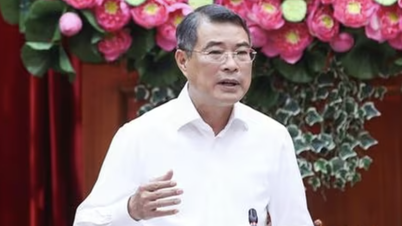
Experts offer six solutions to successfully achieve socio-economic development goals in 2024. (Photo: Hoang Ha)
- With the government's solutions to address the challenges in the corporate bond and real estate markets, along with efforts to boost public investment, what do you think the economic outlook for 2024 will be like?
I believe that, globally, the growth forecast for 2024 will not be as high as in 2023, but will likely remain flat or decline. The main reason is that the US and Chinese economies are projected to grow more slowly than the previous year, while the economies of Europe, Japan, and the UK may recover better, but not significantly.
Therefore, while global demand for exports, imports, investment, and consumption has recovered well, it remains weak. Accordingly, Vietnam's traditional growth drivers such as exports, investment (especially private investment), and consumption continue to recover, but at a slow pace and at a rate not yet reaching pre-Covid-19 levels. On the supply side, agriculture maintains relatively strong growth, but industry and some service sectors are recovering more slowly.
Therefore, it is projected that in 2024, Vietnam could achieve a growth rate of 6-6.5%; inflation will be controlled at 3.5-4%. These targets are achievable as growth drivers are recovering positively, and it is hoped that Vietnam will better leverage new growth drivers such as the digital economy, green economy, energy transition, regional connectivity, and increased labor productivity…
The aforementioned important laws, once passed and gradually implemented next year, will have a positive impact on businesses and the market. Confidence in the real estate and corporate bond markets is expected to recover better.
- So, what are the solutions and policies to successfully achieve the socio-economic development goals for 2024, sir?
In my opinion, we need to focus more intensely on the six main groups of solutions.
First, in 2024, we must be more decisive in improving the investment and business environment, especially regarding public service delivery; a breakthrough is needed, otherwise it will be very difficult.
Secondly, we need to promote the recovery of traditional growth drivers while better leveraging the aforementioned new growth drivers. This includes better utilizing existing FTAs and opportunities arising from recent upgrades to strategic partnerships; and developing the digital and green economies in a systematic, substantive, and strategic manner.
Thirdly, we must steadfastly ensure macroeconomic stability amidst numerous external and internal risks and challenges; we must not be complacent about energy security and food security, and proactively adapt to climate change…
Fourth, pay more attention to the economic restructuring process, especially weak enterprises and credit institutions. Failure to decisively address and accelerate this process will create bottlenecks, as these are essentially "blood clots" leading to inefficient resource allocation and costly expenditures.
Fifth, we must expedite the completion of economic institutions, especially those supporting new growth drivers such as the digital economy, green economy, circular economy, and energy transition; and improve the planning and implementation of existing plans. In this regard, the economy as a whole and localities in particular need to carefully consider and harmonize short-term and long-term goals, strategies, and policies, rather than focusing solely on immediate issues. This is also a way to increase the resilience of the economy.
Ultimately, to achieve the above, improving the quality of growth is both a goal and a foundation. Accordingly, the task of increasing labor productivity, coupled with strong reforms of administrative procedures, application of science and technology, and reform of the recruitment, evaluation, and salary mechanisms for civil servants, is essential.
Thank you, sir!
Source: vietnamnet
Source





![[Photo] General Secretary and President To Lam presides over the meeting to approve the draft report on the results of the second inspection by the Politburo of the Standing Committee of the Hanoi City Party Committee.](https://vphoto.vietnam.vn/thumb/1200x675/vietnam/resource/IMAGE/2026/05/26/1779789811432_a2-bnd-4430-9620-jpg.webp)





















































































Comment (0)