

 |
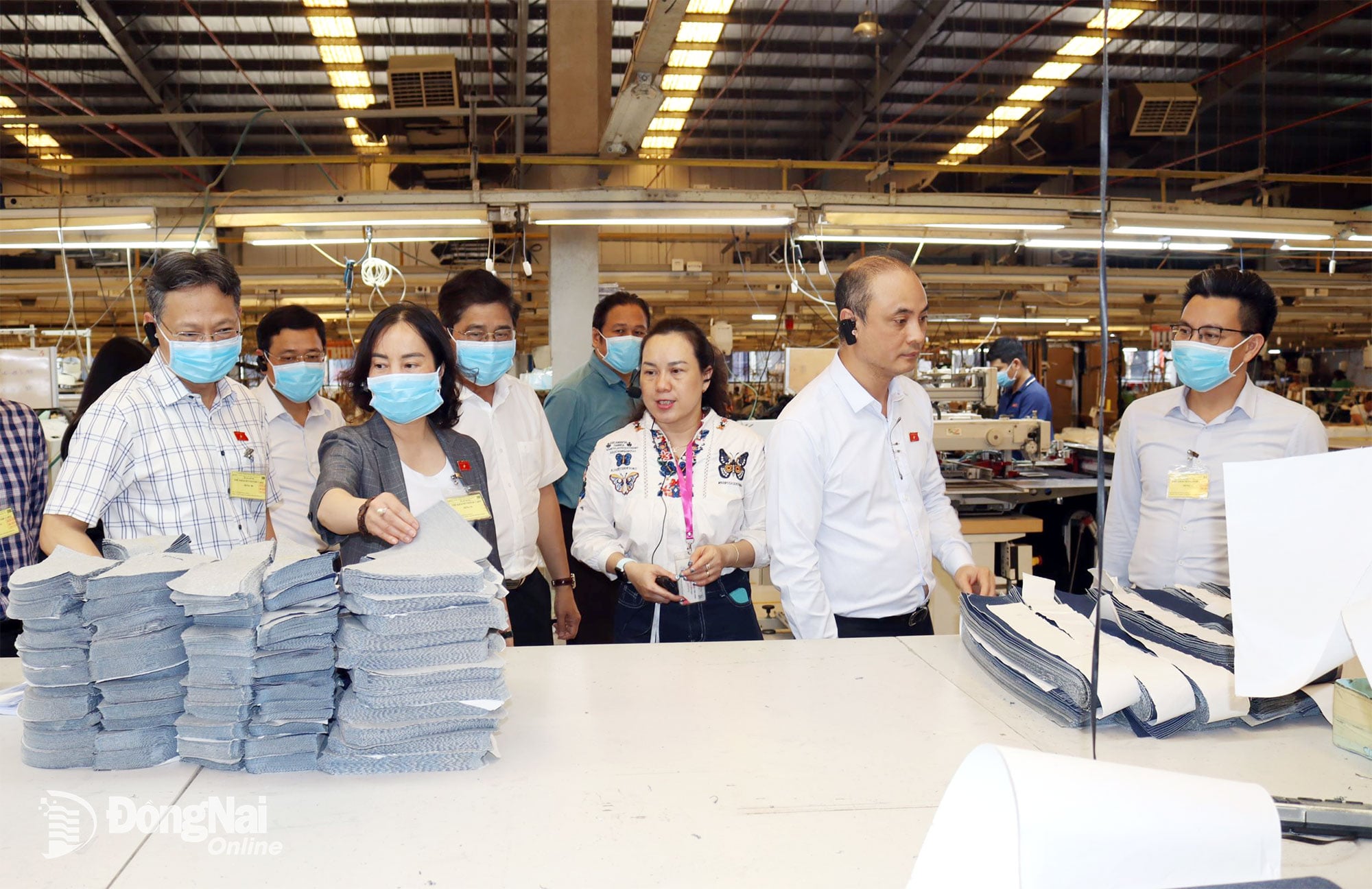
| The delegation of National Assembly representatives from the province visited a green manufacturing plant in the Amata Industrial Park. Photo: Ban Mai. |
Therefore, in addition to "greening" production through raw materials, technology, and waste reuse, industrial parks are paying more attention to maintaining and developing green spaces.
Essentially, 25% of the area has been allocated to green spaces and infrastructure.
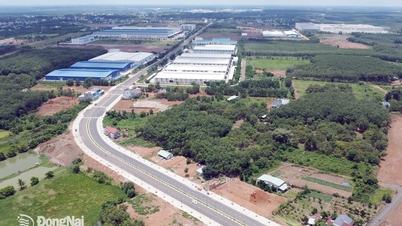
Dong Nai currently has 59 industrial parks, economic zones, and high-tech zones. According to the approved plan, this number will increase to over 83 by 2030. With this scale, Dong Nai continues to be among the leading localities nationwide in terms of industrial development space.
In the Provincial Planning and Resolution of the First Provincial Party Congress, term 2025-2030, Dong Nai identifies green economy and sustainable growth as the central and overarching goals in its development strategy. As a key sector in the economic structure, industry is prioritized and must take the lead in implementing solutions to realize the goal of green development.
Mr. Pham Viet Phuong, Deputy Head of the Management Board of Industrial Parks and Economic Zones of the province, said: More and more businesses in industrial parks are participating in cleaner production activities and using resources efficiently, with linkages and cooperation in production to implement industrial symbiosis.
For industrial parks, infrastructure developers, in addition to strictly complying with legal regulations and providing all basic services, also pay attention to ensuring that the area of green space, transportation, technical areas, and shared social infrastructure reaches 25% according to the criteria of an ecological industrial park. Some industrial parks also have residential areas and cultural and sports facilities to serve workers.
To date, most industrial parks in the province have ensured a sufficient proportion of green space and shared infrastructure. Some industrial parks, such as Amata, Long Duc, Long Khanh, and several newly established ones, have achieved even higher ratios compared to earlier industrial parks. This not only provides shade and improves the landscape, but also effectively controls impacts on residential areas such as dust and noise. In particular, in the context of businesses increasingly having to comply with international Environmental Standards (ESG) to meet the requirements of partners, foreign investors, and the market, developing infrastructure that benefits the environment and the community is a competitive advantage.
As one of the few industrial parks nationwide participating in the pilot program to transform from a traditional model to a modern ecological industrial park, Amata Industrial Park (in Long Binh ward) identifies sustainable development as its core focus. A representative from Amata Bien Hoa Urban Development Joint Stock Company stated that the company has prioritized the application of clean energy, efficient resource management, and the synchronized investment in technical infrastructure, social infrastructure, and amenities serving investors and workers. In the future, Amata will continue to improve its landscape, increase the proportion of green space, prioritize the use of renewable energy, and expand community activities, aiming to become a sustainable investment destination for international investors and a model for the transformation of industrial parks in Dong Nai and Vietnam.
Mr. Nguyen Tuan Anh, Deputy General Director of Long Duc 3 Industrial Park Joint Stock Company, said: The company is currently implementing investment procedures for the construction of Long Duc 3 Industrial Park infrastructure according to the development orientation of an ecological industrial park. Regarding infrastructure, the industrial park will fully meet criteria for internal transportation, wastewater treatment systems, green space, and facilities serving workers. From an investment attraction perspective, the industrial park prioritizes industries using modern, environmentally friendly technologies, especially high-tech projects, supporting industries, and logistics services.
Dong Nai currently has 57 industrial parks, 1 economic zone, and 1 high-tech zone, attracting more than 2,700 domestic and foreign investment projects. According to the provincial plan approved by the Prime Minister, by 2030, the province will have 81 industrial parks, 1 high-tech zone, and 1 economic zone.
Towards a green, clean, and beautiful industrial environment.
The green, eco-friendly industrial park model is a shared aspiration of infrastructure developers, secondary investors, and local authorities. This model not only helps businesses reduce operating costs, efficiently utilize resources, and meet environmental standards, but also enhances competitiveness in attracting high-quality investment. Simultaneously, developing green industrial parks contributes to environmental protection, improves the quality of life for workers, and creates a foundation for sustainable growth.
 |
| Japanese businesses are exploring recycled products made from industrial waste in Dong Nai province. |
Despite being highly valued for their necessity, the construction and maintenance of green spaces in industrial parks still face certain obstacles. In older industrial parks, land resources are limited, resulting in insufficient areas allocated for green spaces, environmental incident prevention facilities, or service areas for workers. Some industrial parks prioritize maximizing space for factories and warehouses for business purposes, leading to a total area of green space, transportation, technical areas, and social infrastructure that does not meet ecological criteria. Similarly, small and medium-sized enterprises (SMEs) with limited capital and land resources also struggle to prioritize "green" elements in technology and environmental protection within their factory premises.
Pham Viet Phuong, Deputy Head of the Management Board of Industrial Parks and Economic Zones of the province, said: In the coming time, the unit will require industrial park infrastructure investors to pay attention to investing in meeting the criteria for green space, transportation, technical areas and shared social infrastructure. Priority will be given to completing both technical and social infrastructure. Along with that, the development of green transportation infrastructure will also be prioritized.
For long-established industrial parks that do not meet the criteria, a review and assessment of secondary enterprises using land inefficiently will be conducted; land used improperly or inefficiently will be reclaimed; and planning will be adjusted. For newly established industrial parks, the application of the ecological industrial park model from the design and construction stages to operation will be encouraged; selective investment attraction will be applied, prioritizing industries that can meet the criteria of industrial symbiosis.
Developing green spaces within industrial parks and factories is not only a landscape requirement but also a practical solution to reduce pollution, improve the working environment, and enhance competitiveness. Increasing green and ecological elements also supports industrial parks and businesses in attracting investment, expanding consumer markets, and boosting exports. Furthermore, this contributes significantly to Dong Nai's goal of building a sustainable, modern, and environmentally friendly economy.
Provincial Party Committee member and Vice Chairman of the Provincial People's Committee Ho Van Ha stated: In recent years, Dong Nai has steadfastly pursued a green and sustainable development policy, particularly focusing on transforming existing industrial parks and investing in new ones based on ecological, green, and high-tech models. Researching, reviewing, and identifying opportunities for transformation into green and ecological models within industrial parks is considered a crucial task to create momentum for local economic growth. This is also an important prerequisite for the province's socio-economic development towards green and sustainable growth, contributing to Vietnam's commitment to net-zero emissions at the 26th United Nations Climate Change Summit (COP26).
To achieve this goal, infrastructure investors and businesses need to formulate plans for implementing industrial symbiosis, cleaner production, etc., based on digital transformation and green transformation. These efforts will help improve production efficiency, reduce emissions, and contribute to building a green and circular economy in Dong Nai.
Morning
Source: https://baodongnai.com.vn/ban-doc/202512/phat-develop-green-network-to-orient-to-ecological-industrial-zone-78901ec/
![[Photo] Closing Ceremony of the 10th Session of the 15th National Assembly](/_next/image?url=https%3A%2F%2Fvphoto.vietnam.vn%2Fthumb%2F1200x675%2Fvietnam%2Fresource%2FIMAGE%2F2025%2F12%2F11%2F1765448959967_image-1437-jpg.webp&w=3840&q=75)


![[Photo] Prime Minister Pham Minh Chinh holds a phone call with the CEO of Russia's Rosatom Corporation.](/_next/image?url=https%3A%2F%2Fvphoto.vietnam.vn%2Fthumb%2F1200x675%2Fvietnam%2Fresource%2FIMAGE%2F2025%2F12%2F11%2F1765464552365_dsc-5295-jpg.webp&w=3840&q=75)















![[Photo gallery] Long Thanh Airport 'lights up' ready to welcome its first flight](https://vphoto.vietnam.vn/thumb/402x226/vietnam/resource/IMAGE/2025/12/11/1765467251707_bia_20251211222704.jpeg)























![[OFFICIAL] MISA GROUP ANNOUNCES ITS PIONEERING BRAND POSITIONING IN BUILDING AGENTIC AI FOR BUSINESSES, HOUSEHOLDS, AND THE GOVERNMENT](https://vphoto.vietnam.vn/thumb/402x226/vietnam/resource/IMAGE/2025/12/11/1765444754256_agentic-ai_postfb-scaled.png)




































Comment (0)