

China is facing a new set of challenges in the face of increasingly extreme and intense weather phenomena.
At 3:44 a.m. on June 19th, Tang Kaili, a household goods store owner in Guilin, southern China, was still fast asleep when a message from the city government appeared on her phone screen. The message warned that an upstream reservoir would begin releasing water at 5 a.m. and urged residents to evacuate. Tang had ignored it and fallen asleep.
For a week, torrential rain poured down on Guilin – a tourist city in the Guangxi Zhuang Autonomous Region, known for its tranquil lakes, winding rivers, and rich cave systems. Several reservoirs were forced to release water because they could no longer contain the massive volume of rain. However, few could have predicted that this latest release would be the final straw, triggering the most severe flooding in Guilin in nearly 30 decades.
At 8:50 AM, Tang received a phone call from the manager of her residential area, informing her that the water level was rising rapidly. Tang rushed outside and found the water had already reached her knees. She decided to wade through the streets to get to her shop to retrieve her belongings and goods. When she arrived, her shop was already submerged in floodwater.
“The manager told me I had to evacuate immediately because the water was rising too quickly. When I returned the next day, my beautiful shop had turned into a pile of mud. I had invested 1 million yuan (about $138,000) in the shop and now it’s all gone. Everything happened so suddenly,” Tang said sadly.
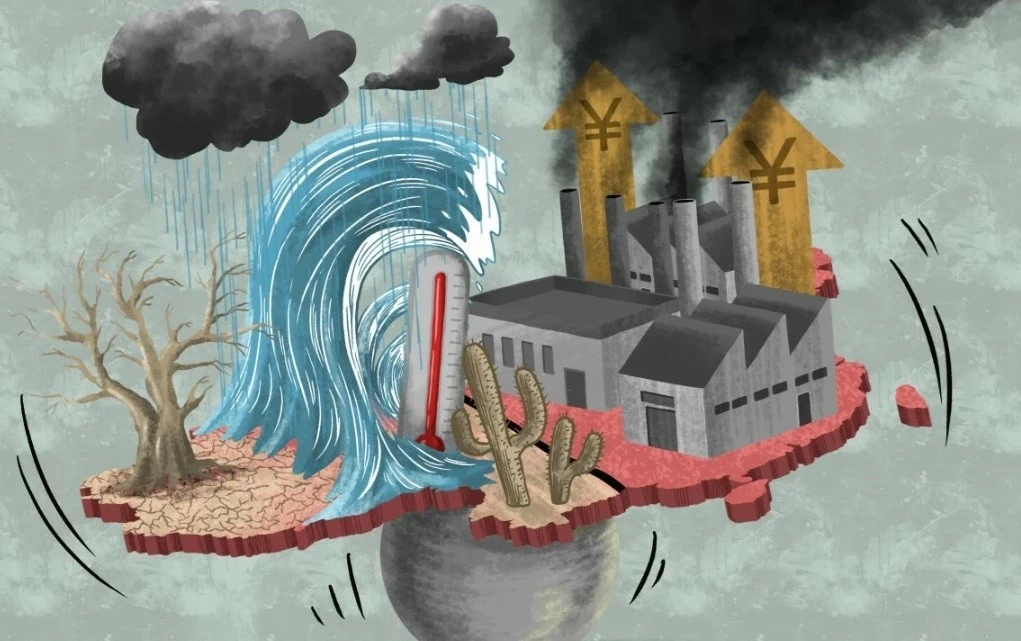 |
| China is facing a new series of challenges due to increasingly extreme and intense weather phenomena. (Source: SCMP) |
Floods and droughts are rampant.
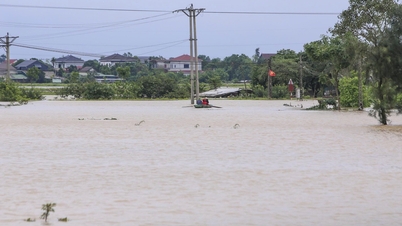
Guilin is not the only city to suffer from this summer's extreme weather. A vast area of China – encompassing 12 provinces stretching from south to northeast – is experiencing severe flooding due to heavy rains and inundations. Meanwhile, four other provinces – Hebei in the north, central Shanxi , Henan , and eastern Shandong – are being scorched by drought.
According to the National Climate Center, China just experienced its hottest July since 1961, with the Xinjiang Uygur Autonomous Region in the west, Hangzhou in the east, and Fuzhou and Nanchang in the south experiencing sweltering weather for more than 20 days with temperatures above 35 degrees Celsius.
The government has yet to release the total death toll from the severe weather. However, 30 people have died and 35 others have been reported missing since Typhoon Gaemi struck Hunan province in central China in late July. Prior to Typhoon Gaemi, more than 20 floods had occurred across the country since April, causing widespread casualties and damage stretching from Guangdong province in the south and Chongqing in the southwest all the way to Hunan.
Extreme weather has impacted the lives of hundreds of millions of people and caused billions of yuan in damage.
China also saw a reduced early rice harvest due to flooding in the country's rice-growing regions of Jiangxi and Hunan, increasing pressure on annual production, especially at a time when Beijing is striving to boost food security.
New series of challenges
Despite its extensive experience in responding to natural disasters – from issuing warnings and implementing preventative measures to mobilizing the military, law enforcement, medical personnel, and volunteers for rescue and relief efforts – this Northeast Asian nation is facing a new set of challenges in the face of increasingly sudden and intense extreme weather events.
"Since the beginning of the 21st century, the number of days with extreme heat in China has increased significantly, as have the number of heavy rains. China is particularly vulnerable to extreme weather events due to climate change," the China Meteorological Administration (CMA) said in a report published on July 4.
China's average annual temperature reached its highest level in 2023 since records began in 1901. Extreme weather events are increasing rapidly. Reports indicate that average sea levels are rising faster in coastal areas, and glaciers in western regions are melting at an alarming rate.
Ronald Li Kwan-kit, who works at the Chinese University of Hong Kong and is a member of the Hong Kong Meteorological Society, said the main reason is the rising amount of greenhouse gas emissions.
The expert analyzed: "Southern China typically experiences heavy rainfall in the summer as part of the monsoon season. However, the intensity of rainfall can be affected by climate change, thus becoming more severe."
Extreme weather is also profoundly impacting China's economic activities. According to Ronald Li Kwan-kit, typhoons are causing serious damage to the shipping industry; floods and droughts are occurring more frequently and with greater intensity, harming China's agriculture. And the most urgent solution is to reduce carbon emissions.
China is currently the world's largest emitter of greenhouse gases. In April 2021, President Xi Jinping stated that the country would "strictly control" coal-fired power generation projects, reaching peak consumption by 2025 and beginning phasing them out by 2026. This is part of the national goal of achieving net-zero emissions by 2060.
But these targets are at risk of being derailed as the number of new coal-fired power plants approved quadrupled in 2022 and 2023, compared to the five years from 2016 to 2020, according to the Center for Clean Air and Energy Research. This surge comes as China pushes for a post-pandemic economic recovery.
“Because China plays a central role in global production chains, what happens in China is clearly not limited to the domestic sphere – the shocks will spread globally,” said Sourabh Gupta, a senior policy fellow at the China-America Institute in Washington. According to Gupta, the long-term solution is for China to move up its domestic value chain.
According to this expert, Beijing needs to reduce carbon emissions in manufacturing and exports, improve its green energy production capacity, and save on related costs and services.
The key lies in technology.
Ma Jun, director of the Institute for Public and Environmental Affairs, a Beijing-based non-governmental organization, argues that China's Flood Control Law should set higher standards for flood control facilities and expand the application of technology in severe weather forecasting, advance warning, and digital management of dams, flood retention areas, and other floodplains.
The last revision of the Law came into effect in 2016. In early July, China's Ministry of Water Resources held a workshop to gather expert opinions on further revisions to the Law aimed at "addressing new and old problems" in the fight against natural disasters.
Last year, China developed at least two weather forecasting models that utilize powerful technology to predict severe weather events such as tropical storms and heavy rainfall with much greater accuracy than traditional forecasting models.
Faith Chan, associate professor of environmental science at the University of Nottingham in Ningbo, said China has made positive progress in improving disaster preparedness and response, but ultimate success still depends on government policy.
However, the expert also cautioned that while a unified data system could allow for “more organized and effective practices” in addressing natural disasters, thereby minimizing casualties and economic losses, “a lack of flexibility and rigidity in handling extreme weather events could affect the effectiveness of operations.”
According to this expert, the need for technology adoption is becoming increasingly urgent. "The key remains the decision and action from the government, allowing the use of technologies such as big data or artificial intelligence," he said.









































































Comment (0)