

(NLĐO) - A bizarre set of teeth dating back 1.4 million years has helped identify a new species "closer to humans".
A research team led by paleoanthropologist Clément Zanolli from the University of Bordeaux (France) used modern tools to re-analyze SK 15, a set of teeth quite similar to those of modern humans, unearthed at the Swartkrans site in South Africa in 1949.
The results were unexpected: They were the remains of a species never before recorded in the world , belonging to the genus Paranthropus of the Hominidae family and living approximately 1.4 million years ago.
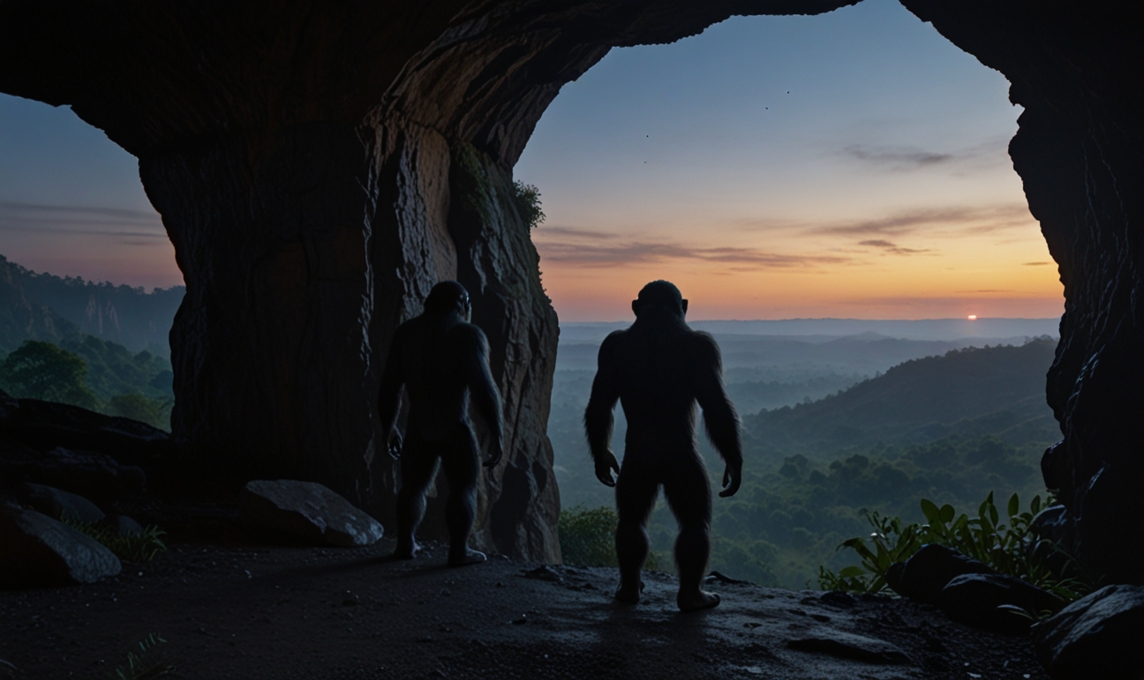
The new species Paranthropus capensis is a hominid that is "close to humans" - AI illustration: Thu Anh
Paranthropus in Latin means "close to humans". Species in this genus are also nicknamed "nutcrackers" because of their large jaws and teeth, which are also large and coarse compared to other human species.
They moved on two legs, but their features still retained strong ape-like characteristics, not yet truly resembling humans.
According to Science Alert, at the time Paranthropus lived, the world also had several other hominid species, including our own genus Homo, which appeared at least 2.8 million years ago.
We Homo sapiens only appeared about 300,000 years ago, but our ancestral species are thought to have overlapping relationships with three species of Paranthropus, which lived 1-2.7 million years ago.
It is quite possible that the newly discovered species is similar, because the Swartkrans site – where these ancient remains were found – also contains tools characteristic of species belonging to the genus Homo.
Specimen SK 15 has an interesting history. For decades, it was mistakenly believed to be the teeth of an ancient human species, Homo ergaster.
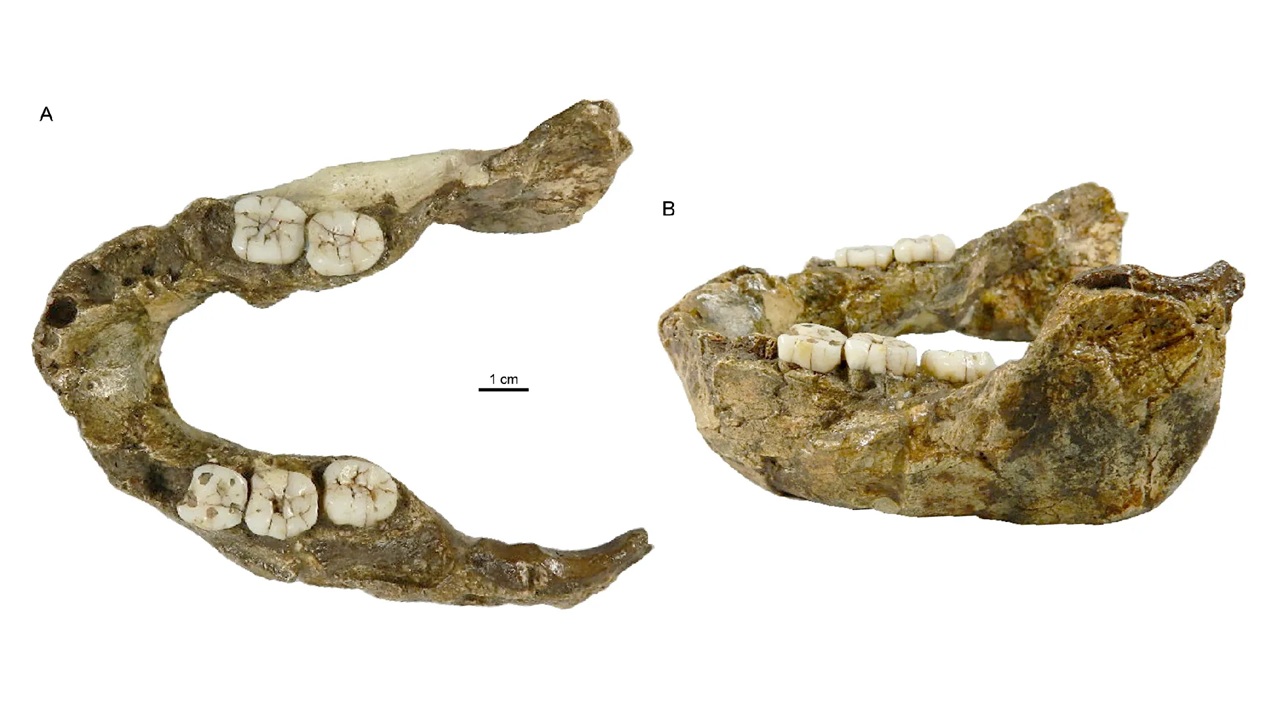
Specimen SK 15 - Photo: Lazarus Kgasi
However, this time, scientists discovered that the dentin beneath the enamel did not match any known Homo specimens.
Instead, based on the jaw shape and the size and shape of the crown and root of the teeth, SK 15 likely belongs to Paranthropus. However, it also looks different from any known Paranthropus specimen.
They named this species Paranthropus capensis. These ancient humans—or near-human hominids—existed alongside another member of the same genus, Paranthropus robustus, in Southern Africa.
They may have occupied different ecological niches, as suggested by their differing dentition, which demonstrates the different food preferences of each species.
Scientists are continuing their investigation and hope to find more specimens of the new species, Paranthropus capensis, to see if they have reached an evolutionary dead end or become ancestors of any species on humanity's complex evolutionary tree.
Source: https://nld.com.vn/lo-dien-loai-ho-hang-chua-tung-biet-cua-con-nguoi-196250207112148476.htm
















































































Comment (0)