

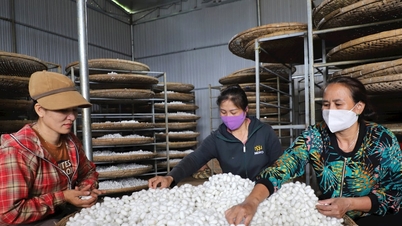
For nearly two years now, the family of Ms. Dam Thi Dep (village 8, Quang Hoa commune, Dak Glong district, Dak Nong province) has returned to the profession of mulberry cultivation and silkworm rearing. Previously, due to unstable market demand, Ms. Dep and her husband abandoned this profession to seek other work for a period of time.
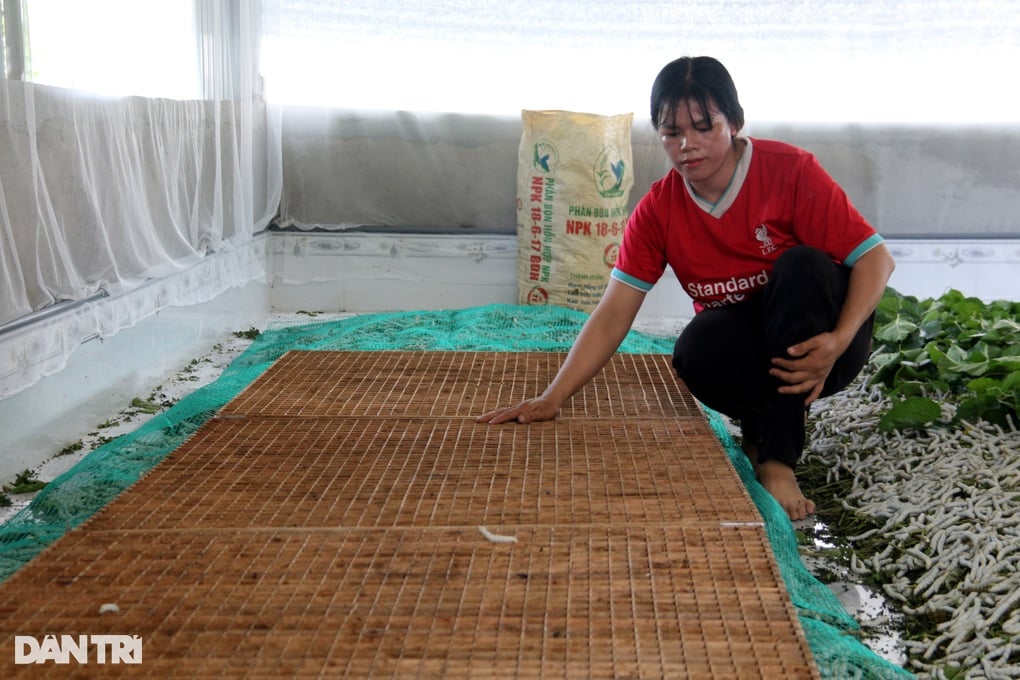
Ms. Dam Thi Dep's family has returned to silkworm farming for nearly two years now (Photo: Dang Duong).
Thanks to poverty reduction funds, Ms. Dep's family received loan support to resume production through a closed-loop silkworm farming model.
Instead of raising them in temporary shelters as before, Ms. Dep's family built a single-story house, about 80 square meters in size, so that the silkworms would have a suitable space to grow.
Introducing the silkworm farm, Ms. Dep wittily remarked that the area is more spacious and sturdy than where her family lives. However, thanks to the investment in upgrading the coops, the silkworms are thriving and yielding significant economic benefits.
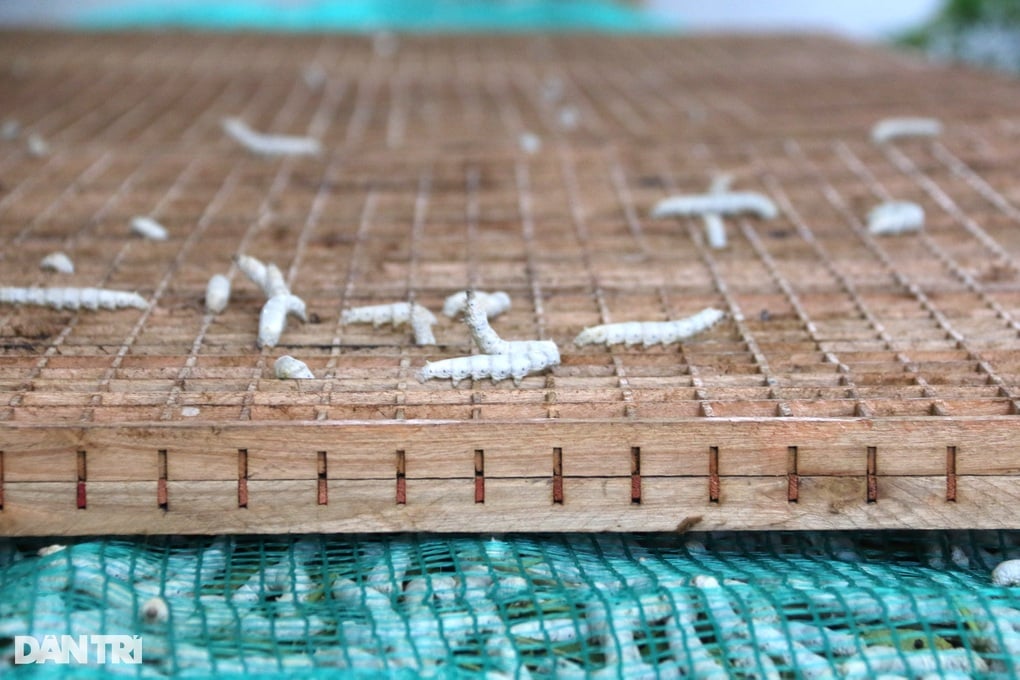
Silkworms are raised in open areas on the ground, which reduces the risk of skin abrasions (Photo: Dang Duong).
"The silkworms are raised directly on the ground to avoid abrasions, and also to save on cleaning and sanitation costs after each harvest season," Ms. Dep said.
According to experience, silkworms are frequently attacked by flies. Therefore, for the past two years, people in Quang Hoa commune have been sharing tips on how to "install nets" to protect the silkworms.
This method minimizes silkworm infections and pus formation, helping farmers reduce risks and losses during production.
"Each month, my family can raise two batches of silkworms (an average of 15 days per batch). With cocoon prices around 200,000-220,000 VND/kg, my family earns about 7-7.5 million VND per batch from selling cocoons," Ms. Dep added.
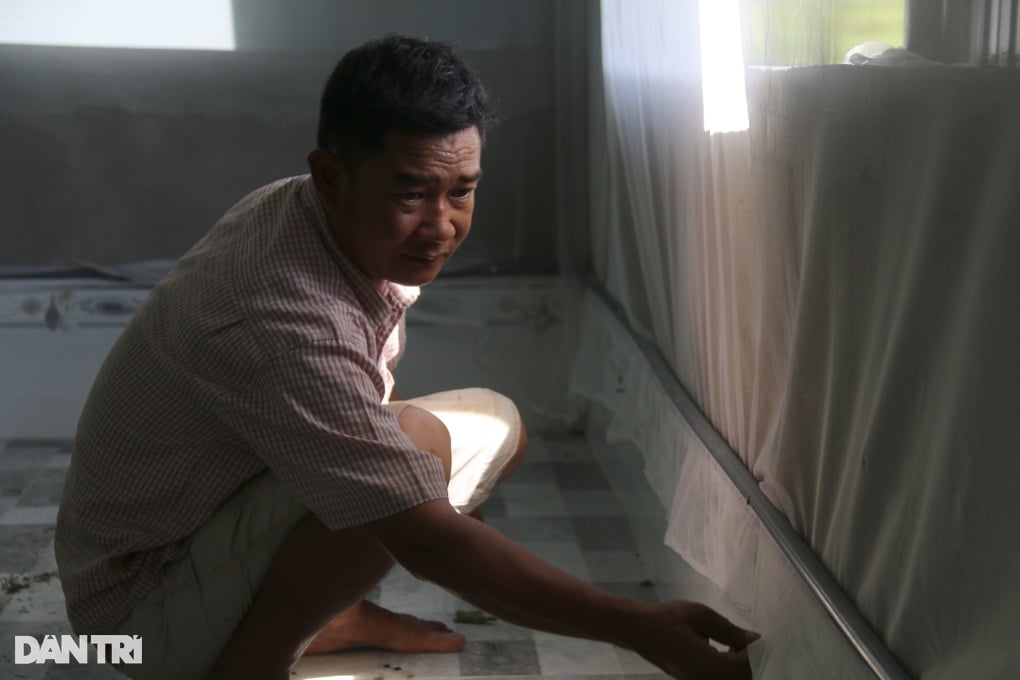
Raising silkworms indoors requires breeders to adhere to hygiene regulations and regularly reinforce the silkworm house system (Photo: Dang Duong).
According to Ms. Dep, raising silkworms in a screened house requires strict adherence to hygiene procedures. Each time the silkworms are fed, the breeder must disinfect the area and regularly reinforce the screen to prevent insects from entering the silkworm rearing room.
Like Ms. Dep, a few years ago, due to a lack of capital, Ms. Ma Thi Sam, from Hamlet 7, Quang Hoa Commune, only invested in silkworm farming on a small scale.
According to Ms. Sam, in the past, silkworm farming was hard work, and silkworms were easily susceptible to disease, resulting in low farming efficiency. Since the model of raising silkworms on the ground and using insect nets was implemented, farmers no longer have to endure the hardship of "eating while standing" and suffer losses due to silkworms dying from disease.
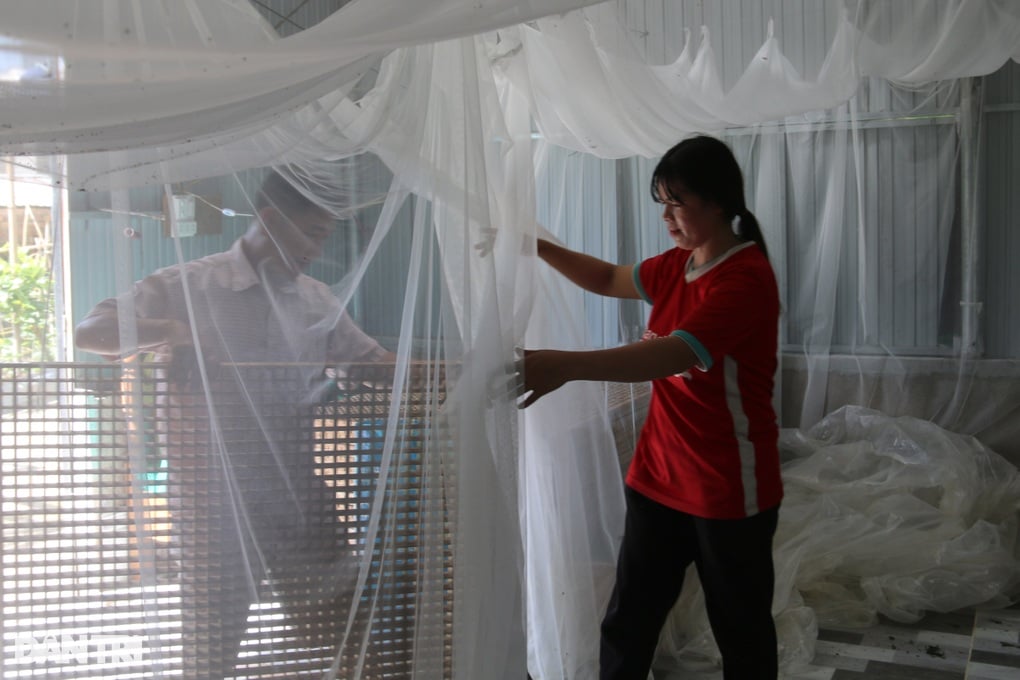
People in Quang Hoa commune share tips on raising silkworms in screened houses to reduce the risk of pus-filled diseases (Photo: Dang Duong).
"Thanks to changes in farming methods, silkworm farming, cocoon care, and harvesting have become much less time-consuming. In recent years, cocoon prices have been stable, and with each box of silkworms (about 1kg of silkworm larvae), farmers can earn 15 million VND per month," Ms. Sam said.
According to the People's Committee of Quang Hoa commune, in 2022 and 2023, 150 poor and near-poor households in the commune received support to implement the mulberry cultivation and silkworm farming model, with a total budget of 3.1 billion VND.
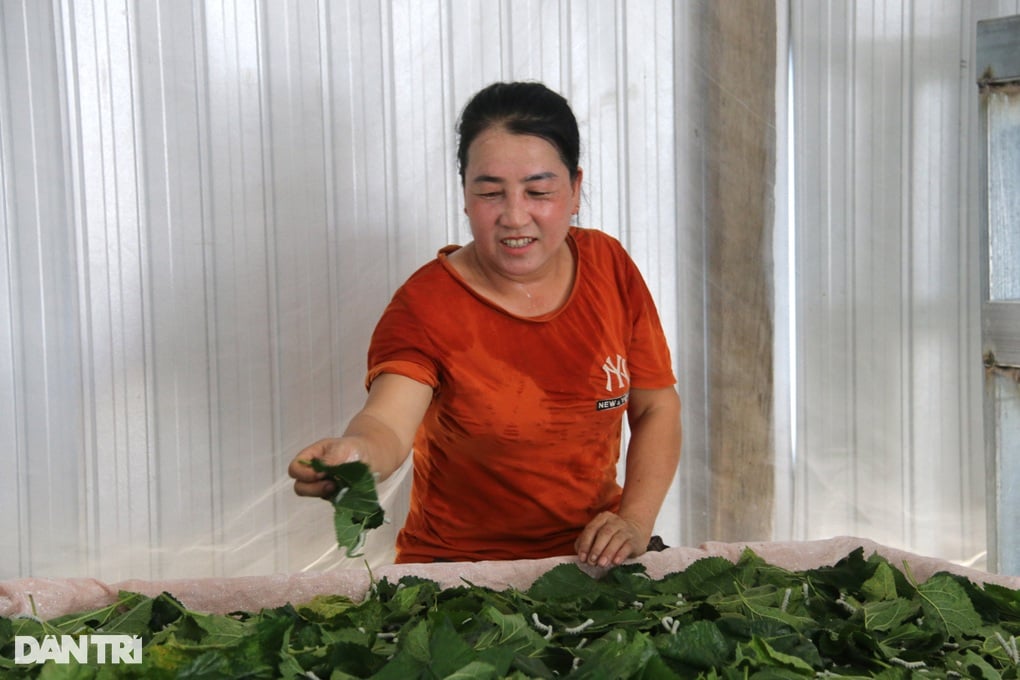
Many poor households in the poorest commune of Dak Nong province have the opportunity to escape poverty thanks to silkworm farming (Photo: Dang Duong).
Mr. Tran Quang Mao, Chairman of the People's Committee of Quang Hoa commune, assessed: "Mulberry cultivation and silkworm rearing are in line with the local orientation, helping to maximize the strengths of nature and people. Silkworm rearing has low costs, a quick capital turnover, and stable cocoon prices, so in reality, many farming households have escaped poverty and become wealthy from this profession."
Source link
![[Photo] Closing Ceremony of the 10th Session of the 15th National Assembly](/_next/image?url=https%3A%2F%2Fvphoto.vietnam.vn%2Fthumb%2F1200x675%2Fvietnam%2Fresource%2FIMAGE%2F2025%2F12%2F11%2F1765448959967_image-1437-jpg.webp&w=3840&q=75)

![[Photo] Prime Minister Pham Minh Chinh holds a phone call with the CEO of Russia's Rosatom Corporation.](/_next/image?url=https%3A%2F%2Fvphoto.vietnam.vn%2Fthumb%2F1200x675%2Fvietnam%2Fresource%2FIMAGE%2F2025%2F12%2F11%2F1765464552365_dsc-5295-jpg.webp&w=3840&q=75)











































![[OFFICIAL] MISA GROUP ANNOUNCES ITS PIONEERING BRAND POSITIONING IN BUILDING AGENTIC AI FOR BUSINESSES, HOUSEHOLDS, AND THE GOVERNMENT](https://vphoto.vietnam.vn/thumb/402x226/vietnam/resource/IMAGE/2025/12/11/1765444754256_agentic-ai_postfb-scaled.png)














































Comment (0)