

Norway is in the process of building the world's longest and deepest undersea road tunnel, a massive infrastructure project aimed at shortening travel times between major cities and creating a ferry-free coastal highway along its west coast.
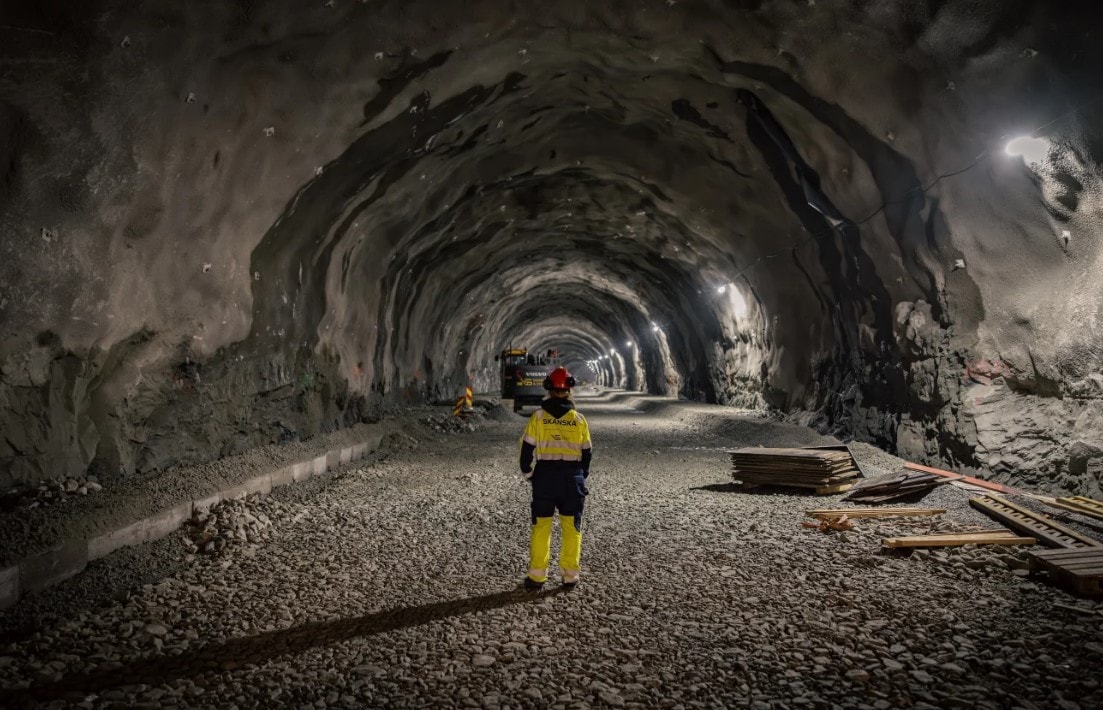
The project is worth 2.4 billion USD
The 27 km long tunnel is named Rogfast - short for “Rogaland fastforbindelse”, meaning “Rogaland fixed link” after the area it passes through.
Construction began in early 2018 but was halted in late 2019 due to cost overruns, leading to the cancellation of old contracts and project restructuring.
Construction resumed in late 2021 and is expected to be completed in 2033, with a total investment of about 25 billion Norwegian kroner (about 2.4 billion USD).
The tunnel will replace existing ferry routes, reducing travel time between Bergen and Stavanger, two of Norway's four most populous cities, by about 40 minutes, making daily commutes easier.
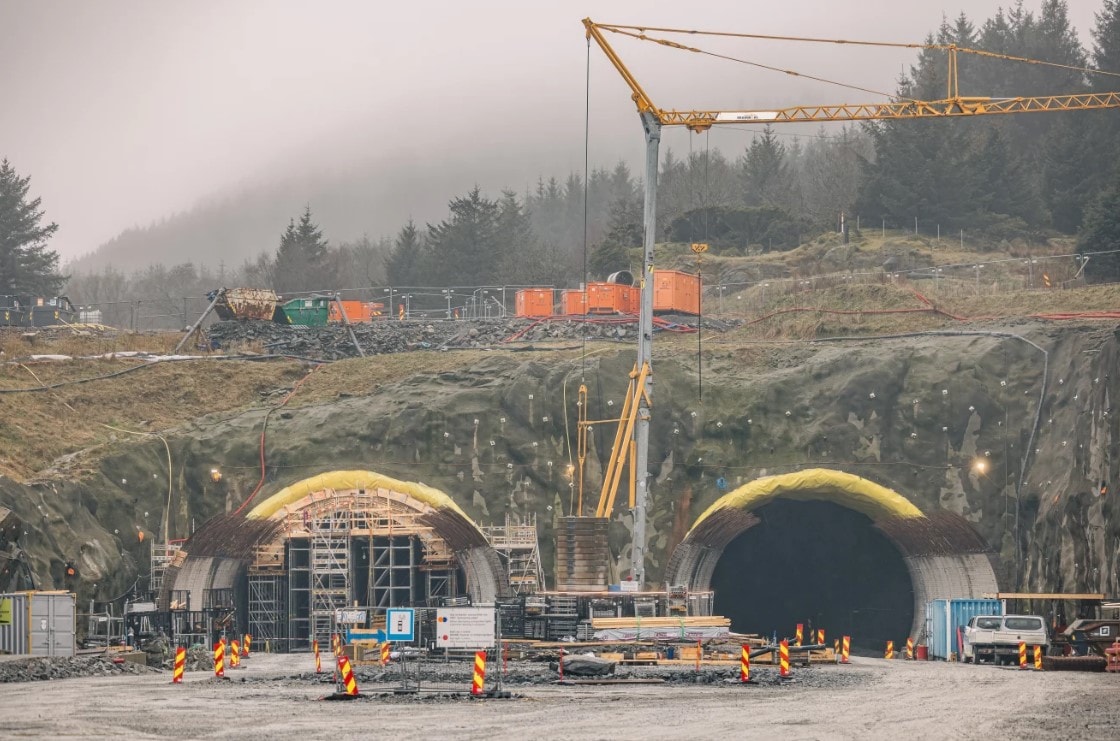
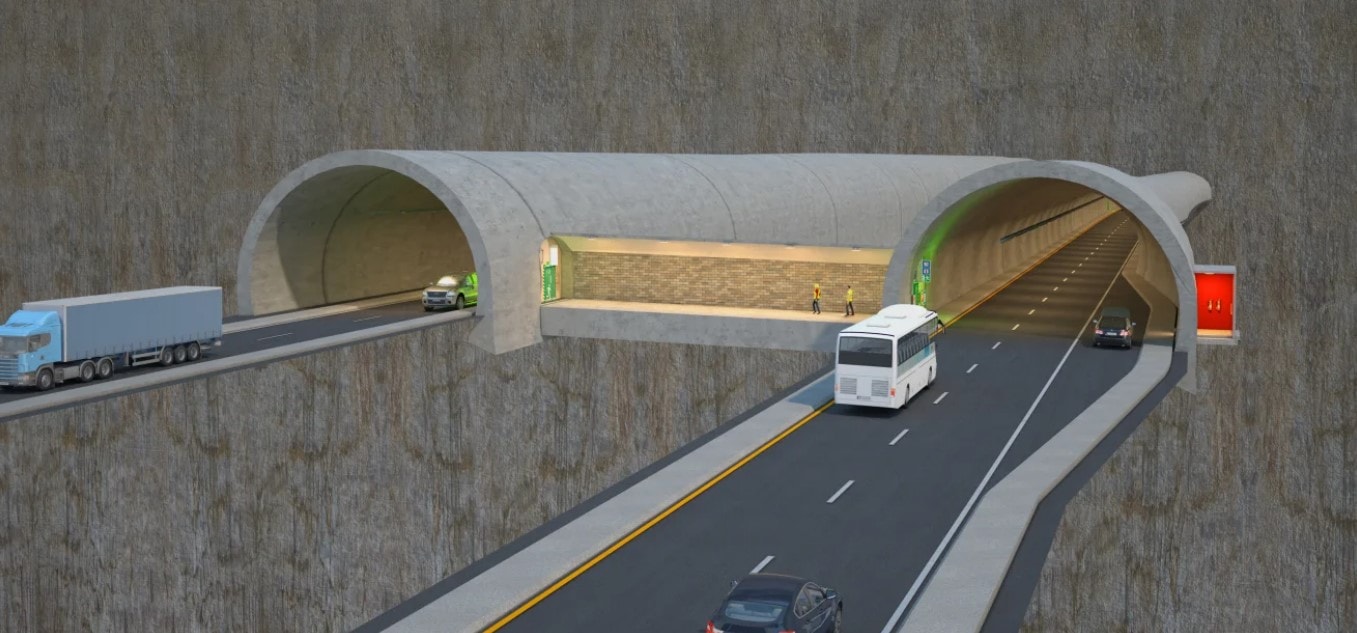
The tunnel will consist of two separate tubes, each with two lanes, dedicated to road traffic. A unique feature is the central section with a double roundabout at a depth of 260 meters, connecting to another tunnel leading to the island of Kvitsøy.
Technological challenges at depths of nearly 400 meters
Building long underwater tunnels poses a series of strict technical requirements.
The tunnel is being dug simultaneously from both ends, aiming for the two construction teams to meet in the middle with a maximum error of just 5 cm - one of the most precise requirements in the world.
To achieve this precision, rotating lasers and high-tech scanning equipment are used to record about 2 million data points per second, creating a “digital twin” of the newly excavated tunnel and comparing it with the original design to detect deviations.
Errors exceeding the allowable level not only cause risks but also significantly increase costs because the amount of material that needs to be excavated and refilled increases dramatically.
Rogfast is a key project in the plan to improve the 1,100 km long E39 coastal motorway, stretching from Trondheim to Kristiansand.
The entire journey currently takes 21 hours and involves seven ferry journeys. The goal is to eliminate all ferries by 2050 and use a system of bridges and tunnels, cutting travel time in half.
The biggest challenge, according to the expert, is dealing with water leaks: "The main challenge so far has been finding a method of grouting that is good enough to seal the rock. Right now, at 300 meters below sea level, we have serious saltwater leaks in the system."
The tunnel will also be equipped with a longitudinal ventilation system combined with shaft ventilation extending to Kvitsøy to ensure air quality for drivers. Real-time warning systems, cameras and radar will be deployed to monitor incidents, congestion or accidents.
While the ferry closure will result in job losses in some sectors, Rogfast is expected to bring long-term economic benefits through improved access to jobs, education and public services, while boosting the economy and seafood industry through reduced transport costs.
Currently, the title of the world's longest tunnel with an underwater section belongs to the Seikan Tunnel in northern Japan - a 53.85 km long train tunnel, of which 23.3 km is located under the seabed.
The Channel Tunnel connecting England and France, also dedicated to rail, has a total length of 50.46 km, but the underwater section is 37.9 km long, longer than Rogfast.
However, Rogfast will excel in depth, going down to nearly 400 meters below sea level - much deeper than the Seikan (240 meters) and the Channel Tunnel (115 meters).
Source: https://congluan.vn/na-uy-dang-xay-duong-ham-duoi-bien-sau-va-dai-nhat-the-gioi-10320128.html





























![[Photo] Worshiping the Tuyet Son statue - a nearly 400-year-old treasure at Keo Pagoda](/_next/image?url=https%3A%2F%2Fvphoto.vietnam.vn%2Fthumb%2F1200x675%2Fvietnam%2Fresource%2FIMAGE%2F2025%2F12%2F02%2F1764679323086_ndo_br_tempimageomw0hi-4884-jpg.webp&w=3840&q=75)
![[Photo] Parade to celebrate the 50th anniversary of Laos' National Day](/_next/image?url=https%3A%2F%2Fvphoto.vietnam.vn%2Fthumb%2F1200x675%2Fvietnam%2Fresource%2FIMAGE%2F2025%2F12%2F02%2F1764691918289_ndo_br_0-jpg.webp&w=3840&q=75)


































































Comment (0)