

What constitutes legal overtime work?
According to the Government newspaper, recently, the director of Mr. Nguyen Van Phuc's company ( Tay Ninh ) suggested that workers work an extra 1 hour and 35 minutes every day (outside of office hours), but not counting overtime compensation and will have Saturday off.
In the case of a Saturday where there is an urgent order and the employee has to go to work, only 1.5 times the normal rate is applied, and working on Saturday is not counted as a day off. Mr. Phuc asks if this method of calculation is in accordance with the law.
The Department of Labor, War Invalids and Social Affairs of Tay Ninh province responded to this issue as follows:
Clause 1, Clause 2, Article 105, Clause 2, Article 107 and Clause 1, Article 111 of the 2019 Labor Code stipulate:
Article 105. Normal working hours
1. Normal working hours shall not exceed 8 hours per day and 48 hours per week.
2. Employers have the right to regulate working hours by day or week, but must notify employees; in the case of weekly working hours, normal working hours shall not exceed 10 hours per day and 48 hours per week.
Article 107. Overtime work
2. Employers may require employees to work overtime when all of the following requirements are met:
a) Must have the consent of the employee;
b) Ensure that the number of overtime hours of employees does not exceed 50% of the normal working hours in 1 day; in case of applying the regulation on normal working hours per week, the total number of normal working hours and overtime hours does not exceed 12 hours in 1 day; not more than 40 hours in 1 month;
c) Ensure that the number of overtime hours of employees does not exceed 200 hours in 1 year, except for the case specified in Clause 3 of this Article.
… Article 111. Weekly rest
1. Each week, employees are entitled to at least 24 consecutive hours of rest. In exceptional cases where the work cycle makes weekly rest impossible, the employer is responsible for ensuring that employees receive an average of at least 4 days of rest per month.
Thus, labor law stipulates that normal working hours are no more than 8 hours per day and no more than 48 hours per week. In the case of weekly work, normal working hours are no more than 10 hours per day and no more than 48 hours per week, ensuring that each week employees have at least 24 consecutive hours (1 day) of rest.
Furthermore, if overtime is required, the company will negotiate and obtain the employee's consent to organize overtime work, not exceeding 50% of the normal working hours per day; in cases where the normal working hours are based on a weekly schedule, the total number of normal working hours and overtime hours shall not exceed 12 hours per day, 40 hours per month, and 200 hours per year.

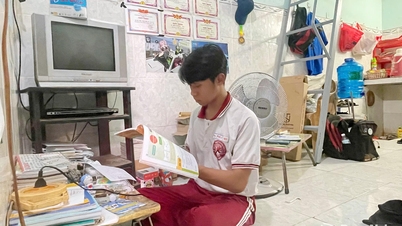
Illustrative image
Working overtime from over 200 hours to 300 hours per year.
According to the newspaper Nguoi Lao Dong, when organizing overtime work exceeding 200 hours but not exceeding 300 hours per year, employers must notify the Department of Labor, War Invalids and Social Affairs in the following locations:
- Where the employer organizes overtime work ranging from over 200 hours to 300 hours per year;
- The location of the head office, if the head office is located in a province or centrally-governed city different from where the employer organizes overtime work exceeding 200 hours but not exceeding 300 hours per year.
Notification must be made no later than 15 days after the date of overtime work exceeding 200 hours but not exceeding 300 hours in a year. The notification document must follow Form No. 02/PLIV, Appendix IV, issued with Decree 145/2020/ND-CP.
In case there is no limit on the number of overtime hours:
Employers have the right to request employees to work overtime on any day without any limit on the number of overtime hours as prescribed above and employees may not refuse in the following cases:
- Implement mobilization orders to ensure national defense and security tasks in accordance with the law;
- To perform tasks aimed at protecting human lives and property of agencies, organizations, and individuals in preventing and mitigating the consequences of natural disasters, fires, dangerous epidemics, and catastrophes, except in cases where there is a risk to the life and health of workers as stipulated by the law on occupational safety and health.
Truc Chi (compiled)
Source



















































![[OFFICIAL] MISA GROUP ANNOUNCES ITS PIONEERING BRAND POSITIONING IN BUILDING AGENTIC AI FOR BUSINESSES, HOUSEHOLDS, AND THE GOVERNMENT](https://vphoto.vietnam.vn/thumb/402x226/vietnam/resource/IMAGE/2025/12/11/1765444754256_agentic-ai_postfb-scaled.png)

















































Comment (0)