

In 2023, Starbucks marked its 10th anniversary in Vietnam by opening its 100th location. Starbucks focused on upgrading and providing a completely new experience with the reopening of Starbucks New World – the first Starbucks store in Vietnam.
Starbucks of the US has taken a “cautious and locally appropriate” approach. To date, the number of stores opened in Southeast Asia’s largest coffee market is considered quite modest compared to other countries. In Singapore, a small market in the region, Starbucks has nearly 150 stores.
Despite having been in operation for a decade, Starbucks declined to comment on its profitability prospects in the Vietnamese market.
Meanwhile, other coffee brands like The Coffee House and Phuc Long Coffee and Tea have attracted younger customers with sophisticated tastes. Vietnam's open economy has embraced international trends, such as "third wave" coffee, which focuses on extracting the natural flavors of coffee beans.
Besides that, Highlands Coffee, Trung Nguyen Legend, Cong Cafe, Gemini Coffee… remain the top-rated brands in Vietnam, making it difficult for foreign brands like Starbucks to expand.
Recently, many once-famous brands have fallen into the hands of Vietnamese tycoons and are developing continuously. This has also made the competition between domestic and foreign brands in the domestic market more balanced.
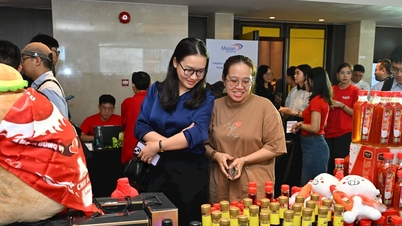
In 2021-2022, Masan spent hundreds of millions of dollars to acquire 85% of Phuc Long's shares. Masan's strategy is M&A, making large-scale investments to compete with foreign chains.
Masan CEO Danny Le said that the group often looks at strong Vietnamese brands in the market and considers bringing Vietnamese brands to the world . In the tea and coffee sector, Phuc Long is a strong brand, similar to Starbucks, that could be taken to the global market.
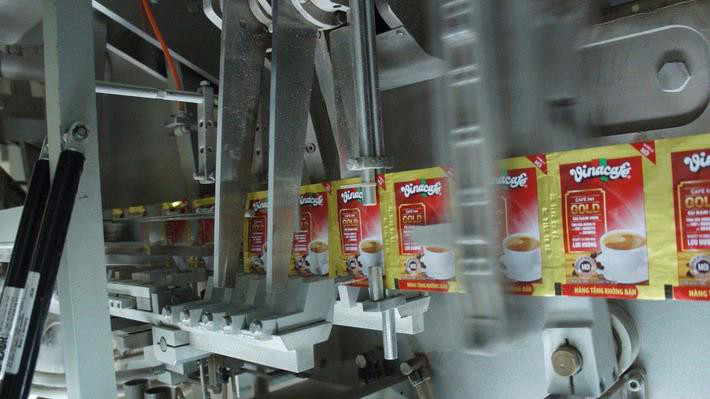
In the processed coffee sector, major domestic players also maintain a strong position. With Vinacafé Biên Hòa (VCF), Masan's unexpected M&A of the instant coffee brand with the largest market share in Vietnam in 2011 gave Masan a head start and a dominant stake in Vinacafé Biên Hòa compared to foreign investment funds: Hongkong GaoLing Fund (currently holding over 23%), FTIF - Templeton Frontier Markets Fund (1.6%), and Barca Global Master Fund, LP (1.5%).
The decision to acquire VCF also helps Masan, along with Trung Nguyen, compete on equal footing with foreign corporations in the Vietnamese processed coffee market.
In China, G7 Trung Nguyen is only behind three other brands – Nestle, Starbucks, and Saturnbird – in terms of popularity.
It is evident that many long-established Vietnamese brands are weakening in a globalized world, facing increasing competition from multinational corporations, even in the domestic market. However, some brands continue to grow stronger after being acquired by Vietnamese tycoons, thanks to sound management systems, strong financial resources, and extensive sales networks.
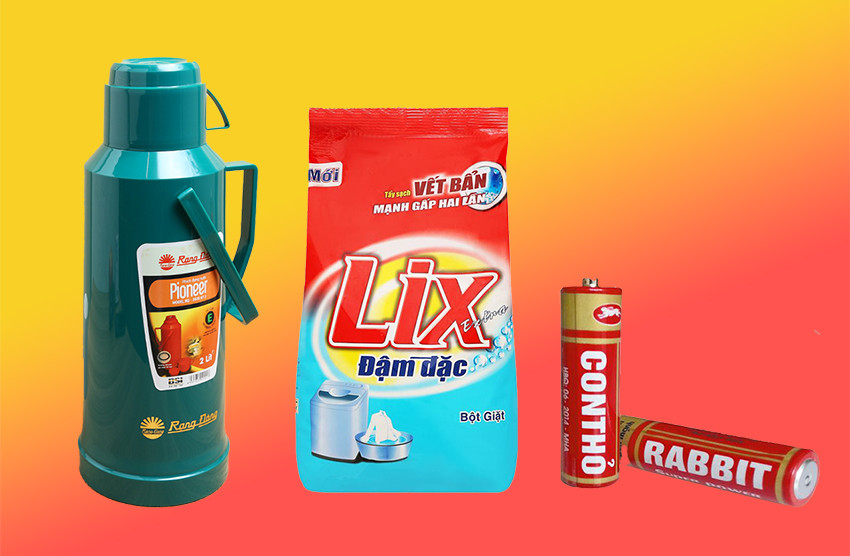
Vinacafé Biên Hòa (VCF), Vĩnh Hảo Mineral Water, Vinamilk… are long-standing brands that remain prominent names in Vietnam's beverage industry, excelling in the domestic market and expanding their presence to many other countries.
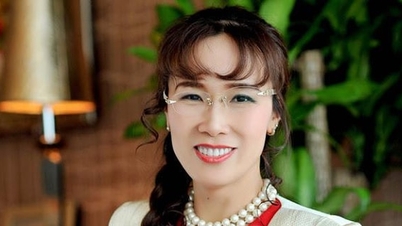
Many new products have emerged under the leadership of Masan Group, chaired by Mr. Nguyen Dang Quang, as well as entrepreneurs eager to build and protect Vietnamese brands, such as Ms. Mai Kieu Lien.
Growing stronger under the ownership of Vietnamese tycoons.
Vinacafé Bien Hoa Joint Stock Company (VCF) has just released its business plan for 2023. Accordingly, the first instant coffee producer in Southeast Asia expects a maximum net profit of 500 billion VND.
This is a not-so-low target given the sharp decline in domestic and international market demand, as most countries' economies face numerous difficulties following the Covid-19 pandemic, the Russia-Ukraine conflict, and instability in global financial and banking markets. High interest rates also pose challenges for businesses.
A profit of 500 billion VND is even an impressive figure for a company with a capital of less than 266 billion VND, and higher than the profit of over 319 billion VND in the challenging year of 2022.
After being acquired by Masan Group (MSN) of billionaire Nguyen Dang Quang (Masan indirectly owns 99% of the shares), Vinacafé Bien Hoa developed strongly, with profits increasing from approximately 200 billion VND to 320-720 billion VND per year thereafter.
VCF has consistently been one of the top-performing companies in terms of earnings per share (EPS) on the stock market, and also has a top-tier market capitalization.
Vinacafé Bien Hoa is known as the first instant coffee producer in Southeast Asia, operating since 1968. In its early stages, VCF developed its product portfolio and established an extensive distribution system, maintaining the number one market share in the instant coffee industry and a leading position in the branded beverage industry in Vietnam.
In recent years, Vinacafe Bien Hoa (VCF) - a subsidiary of Masan Beverage Co., Ltd. (part of Masan Group) - has aggressively entered the energy drink market, competing with Red Bull from Thailand.
After 12 years under Masan's ownership, VCF has achieved great success with its energy drink line, especially the coffee-flavored Night Wolf energy drink. Prior to that, VCF entered this segment with the Wake-up 247 energy drink.
The rise of the Wake-up 247 product line has diminished the dominance of Red Bull from Thailand and other brands such as Sting from PepsiCo and Number 1 from Tan Hiep Phat...
In addition, the launch of the "Compact" and "Tiger Stripe" brands has helped Masan strengthen its position in the beverage sector.
In 2017, Vinacafé was recognized as a "Famous Vietnamese Brand". VCF's diverse product portfolio includes brands such as Vinacafé, Wake-Up, Café de Nam, Phil, Wake-Up 247, and Kachi.
Within the entire beverage segment, ready-to-drink packaged tea, carbonated drinks, bottled water, coffee, and energy drinks hold the largest market share by value. Masan is competing in the three largest beverage categories in Vietnam: energy drinks, bottled water, and coffee.
Regarding bottled water, according to Masan, this market had a size of VND 6.5 trillion in 2022 and is projected to grow by double digits in the short and medium term, due to the increasingly deteriorating water quality in some areas, leading to a strong increase in demand for clean and safe drinking water.
Masan entered this business sector by acquiring two leading and long-established bottled water brands in Vietnam: Vinh Hao and Quang Hanh. In addition, over the past two years, Masan has developed a new premium mineral water product under the brand "Vivant".
Reaching regional level, on par with foreign giants.
Not only Masan's beverage brands, Vinamilk (VNM) is considered one of the few businesses capable of expanding into the soft drink industry (if it so desires) thanks to its regional-level management capabilities and leading distribution system in Vietnam.
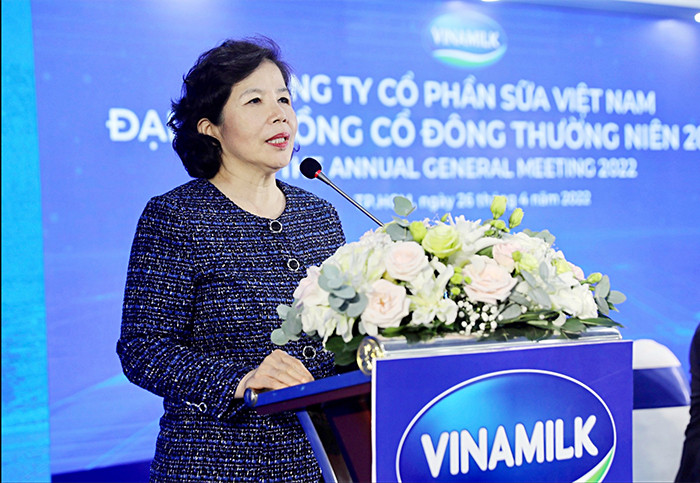
Under the leadership of renowned businesswoman Mai Kieu Lien, Vinamilk is ranked by Brand Finance (a leading global brand valuation company) as the 6th largest dairy brand in the world and the most valuable food brand in Vietnam. In 2022, Vinamilk was valued at US$2.814 billion, an impressive increase of 18% compared to 2021.
In the powdered milk market, Vinamilk's market share is on par with Abbott (of the US), with each company holding approximately 20%.
At Vinamilk's 2023 annual general meeting, the company set a revenue target of over 63,000 billion VND and a profit target of over 8,500 billion VND, determined to transform itself and surpass its past successes.
Ms. Mai Kieu Lien stated that in the Vietnamese market, VNM has the largest market share, a competitive advantage, and a product range spanning almost all product categories. Vinamilk has long been profitable at its factory in Cambodia. For many years, VNM has exported to China. VNM also has a joint venture with Del Monte to produce products suitable for Filipino consumers for export, and when the market is large enough, VNM will build a factory and cattle farm in that country.
Several other Vietnamese beverage businesses have also established their position in the domestic market, in their respective segments, with many brands becoming familiar to Vietnamese consumers.
Among them, Quang Ngai Sugar Company is famous for its Dung Quat beer and Vinasoy Vietnamese soy milk, but it also has Thach Bich mineral water, which has achieved national brand status. This is also a company that could aggressively expand into this field.
For Trung Nguyen, Vietnam's leading coffee brand, there was a difficult period when the "king of Vietnamese coffee," Dang Le Nguyen Vu, and his wife, Le Hoang Diep Thao, went through a billion-dollar divorce.
However, to this day, Trung Nguyen remains a prominent domestic coffee brand in Vietnam. Meanwhile, Ms. Thao has successfully built the King Coffee brand with a strategy of transforming the brand into an icon. Vietnamese coffee brands are fiercely competing with the foreign giant Nestlé.
More than a decade ago, Trung Nguyen began exporting coffee to China, and by the end of 2022, it had opened its first Trung Nguyen Legend Coffee World model in Shanghai. According to the China Coffee Research Institute, Trung Nguyen G7 is second only to Nestle, Starbucks, and Saturnbird in popularity in China.
Ms. Thao's King Coffee also has ambitions to conquer the Chinese market of over a billion people, starting with its first office in Shenzhen. In recent years, King Coffee has also expanded its presence to the US, South Korea, China, Singapore, Australia, India, and other countries.
Not only are Vietnamese entrepreneurs preserving Vietnamese brands, but they are also continuing to develop valuable assets inherited from previous generations. Recently, VCF has outlined strategies to boost product innovation. This is identified as the main growth driver, penetrating the Asian market, further maximizing the production capacity and export capabilities of instant coffee factories to optimize production costs, digital transformation, and sustainable growth.
Source


![[Photo] The captivating scenery of the fragrant maple forest in Quang Tri](/_next/image?url=https%3A%2F%2Fvphoto.vietnam.vn%2Fthumb%2F1200x675%2Fvietnam%2Fresource%2FIMAGE%2F2025%2F12%2F10%2F1765353233198_lan09046-jpg.webp&w=3840&q=75)
![[Photo] Explore the US Navy's USS Robert Smalls warship](/_next/image?url=https%3A%2F%2Fvphoto.vietnam.vn%2Fthumb%2F1200x675%2Fvietnam%2Fresource%2FIMAGE%2F2025%2F12%2F10%2F1765341533272_11212121-8303-jpg.webp&w=3840&q=75)





















![[Video] The craft of making Dong Ho folk paintings has been inscribed by UNESCO on the List of Crafts in Need of Urgent Safeguarding.](https://vphoto.vietnam.vn/thumb/402x226/vietnam/resource/IMAGE/2025/12/10/1765350246533_tranh-dong-ho-734-jpg.webp)











































Comment (0)