10 parts sand to carry 4 parts fishing line
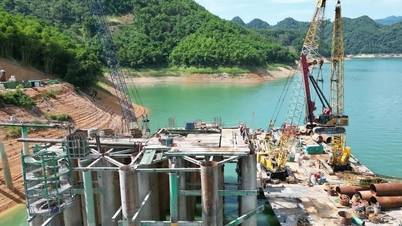
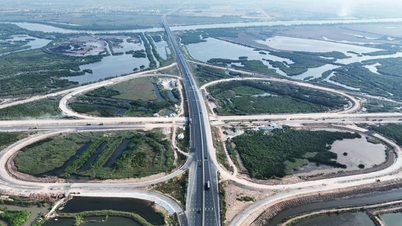
At the end of September, the Ho Chi Minh City Ring Road 3 project, specifically the section bordering the Rach Chiec River (Long Truong ward, Thu Duc City), was under construction but was facing a severe sand shortage.
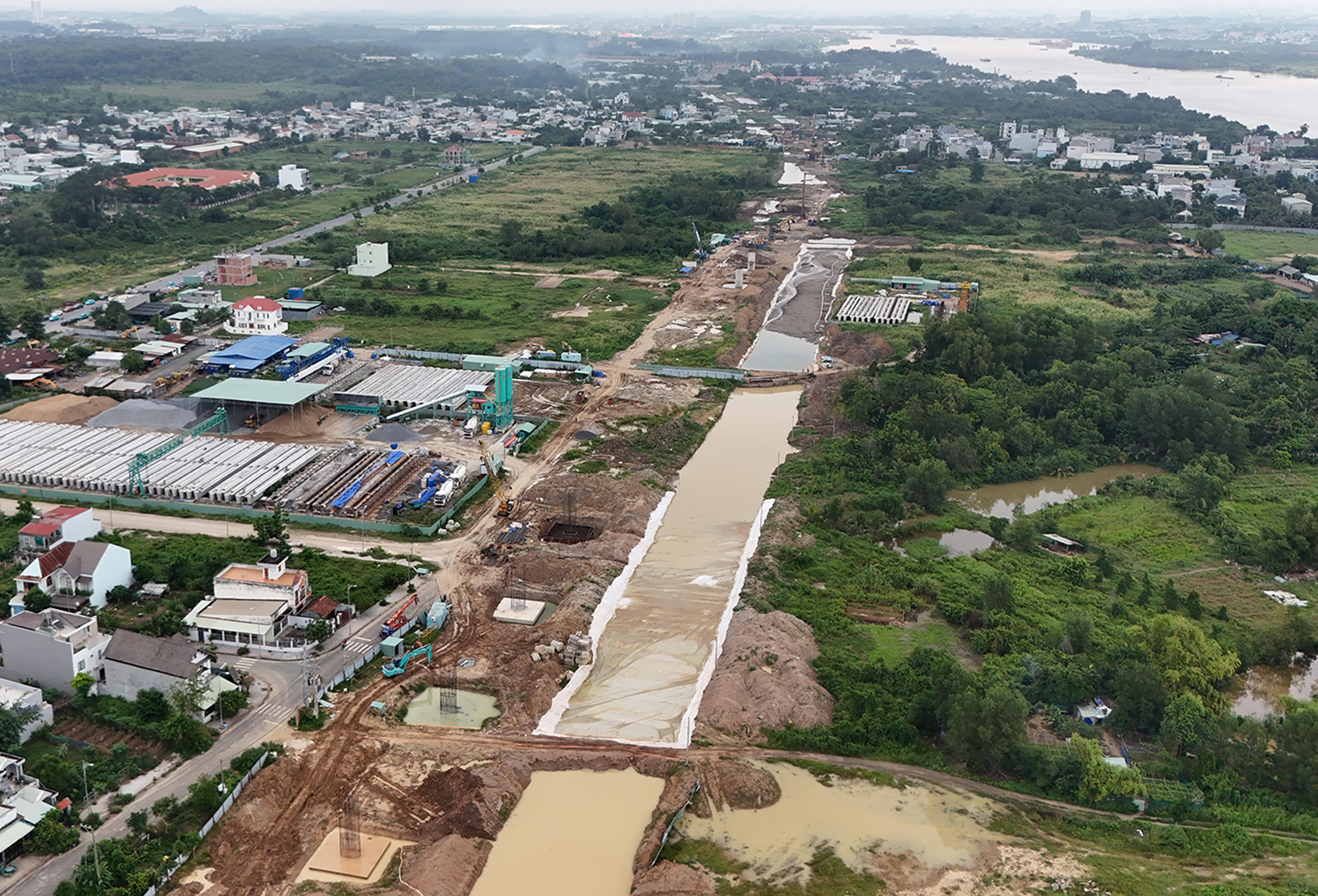
The progress of the Ho Chi Minh City Ring Road 3 section passing through Thu Duc City is being affected due to a shortage of sand.
Mr. H, a supervising engineer for a construction project, shared: "For more than half a year now, the contractor has been struggling to make up for the production shortfall while waiting for sand, causing the overall progress to slow down significantly."
In early September, the supply of imported sand from Cambodia became abundant again, but transportation costs increased significantly.
Instead of transporting materials to the construction site by dump trucks as before, the contractor was forced to devise a plan to use a pumping ferry, pulling pipelines along the construction site to build the foundation.
Mr. T, the director of a company with nearly 20 years of experience supplying sand and stone in Ho Chi Minh City, said that the sand used for leveling the ground in transportation projects previously came mainly from inland mines near Ho Chi Minh City.
When these mines closed, suppliers like his had to buy sand through importers from Cambodia via the Vinh Xuong border gate ( An Giang ). The long route and numerous steps and procedures added to the transportation cost, resulting in a situation where "10 parts sand cost 4 parts freight."
Sand prices
To clarify the situation, our reporter contacted HM Company, one of the 16 businesses importing Cambodian sand and distributing it to domestic trading companies. A company employee stated that the price of sand commonly used in road construction projects currently ranges from 170,000 to 180,000 VND/m³ at the barge.
"The price is for on-site sales, with a 30% deposit, and payment is due after each shipment. Transportation from An Giang to Ho Chi Minh City will be arranged by you," this person stated.
An employee from DL Company, another sand import business, also quoted similar prices and added: "Previously, barges of 1,000 m3 or more were priced at 65,000 VND/m3 for processing from An Giang to Ho Chi Minh City. Now the price has gone up to 82,000 VND/m3. Each trip costs more than 80,000,000 VND in transportation fees," this person said.
In Ho Chi Minh City, when you add the cost of scooping sand from the barge onto the site, loading it onto trucks, and transporting it to the construction site, each cubic meter of sand costs an additional 55,000 – 70,000 VND/m3 depending on the distance.
Thus, the total cost of one cubic meter of sand for leveling the ground for the enterprise ranges from 305,000 to 320,000 VND. Of this, the total transportation cost, including both water and road transport, accounts for more than 40%, a phenomenon unprecedented in previous years.
Not only the Ring Road 3 project, but the sand shortage has caused delays in many projects, with hundreds of sections of the route unable to be inspected and approved. Investors cannot disburse funds, and contractors cannot expedite the work. Meanwhile, suppliers of auxiliary materials, such as concrete companies, are burdened with outstanding debts from construction contractors.
"We need to pay for sand and cement for concrete production immediately, but some contractors are four months behind on payments. Our revenue from the beginning of the year to date is nearly 20 billion VND, but accounts receivable account for 70%. We don't know how long we can last. Now, hearing about large orders makes us hesitant," shared a representative of a concrete production company in Thu Duc City.
Many solutions to overcome the problem.
Amidst significant fluctuations in the sand market, Ho Chi Minh City has implemented decisive measures to address and share the difficulties faced by investors and contractors involved in key transportation projects.
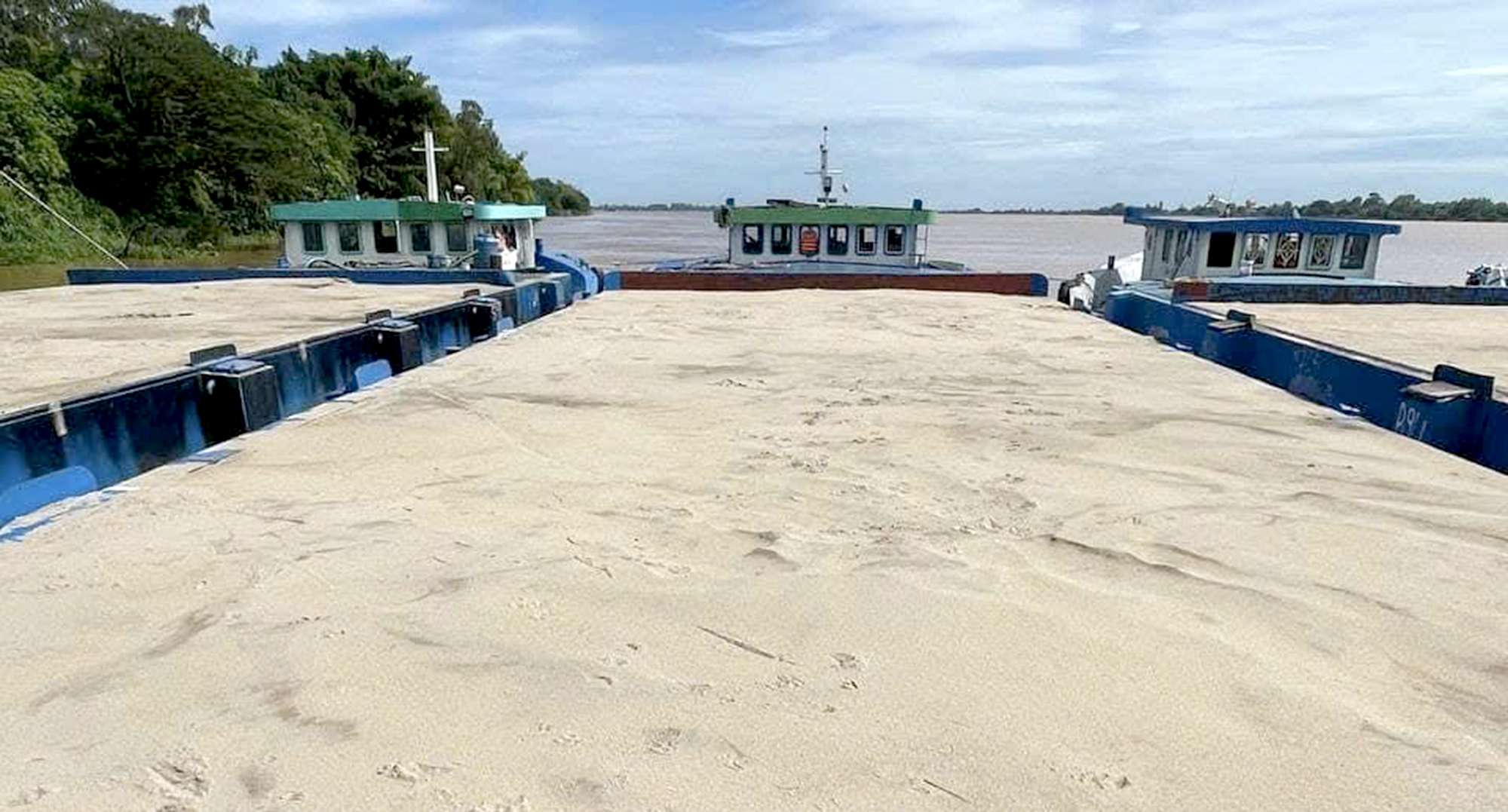
Sand barges on their journey from Vinh Xuong border gate (An Giang province) to Ho Chi Minh City.



"The city has considered allocating 120 billion VND to subsidize the project because the current market price of imported sand from Cambodia is over 360,000 VND/m3, while the contract price for construction packages is only 240,000 VND/m3," said Chairman of the Ho Chi Minh City People's Committee Phan Van Mai at a meeting with the Investment Project Management Board for Transportation Works at the end of September.
According to the assessment of the Ho Chi Minh City Investment Project Management Board for Transportation Works, the coordination process between the Ho Chi Minh City Materials Task Force and the People's Committees of Tien Giang, Vinh Long , and Ben Tre provinces has been very positive. From October, sand from these three provinces will begin arriving at the construction site after the completion of mining permit procedures.
It is expected that Tien Giang province will have three mines that have completed licensing procedures, with a total supply volume of 6.6 million m3, and potentially 3 million m3 in 2024 alone. Vinh Long province will supply 1.4 million m3 of sand for the Ring Road 3 project, with 700,000 m3 by the end of 2024. Ben Tre province will supply 1 million m3 of sand for the Ring Road 3 project by the end of this year.
Not only the Ring Road 3 project, but also, according to observations by reporters from Giao Thong Newspaper at several other key construction sites such as Tham Luong Canal, An Phu intersection, and the expansion of National Highway 50, contractors have organized the allocation of work volume for each item. This includes shortening the time in some stages such as casting structural components and constructing technical trenches, areas where solutions do not heavily depend on the density of sand.
Source: https://www.baogiaothong.vn/tphcm-nha-thau-ngoi-tren-lua-vi-cuoc-van-chuyen-cat-192241007220927109.htm
![[Image] National conference summarizing one year of operation of the overall organizational model of the political system, the three-tiered government model.](https://vphoto.vietnam.vn/thumb/1200x675/vietnam/resource/IMAGE/2026/07/01/1782882811691_ndo_br_1-jpg.webp)