

Speaking at the press conference, Ms. Vu Thi Duoc, Vice Chairman of the Gia Vien District People's Committee and Deputy Head of the Organizing Committee for the commemoration of the 1,100th anniversary of the birth of Emperor Dinh Tien Hoang (924-2024), said that the commemoration ceremony will be held on March 24, 2024 (corresponding to the 15th day of the 2nd lunar month).
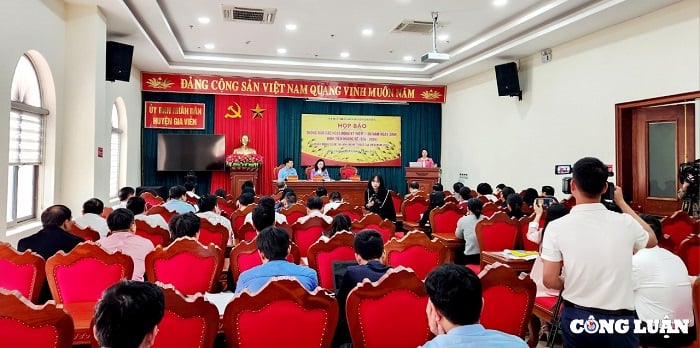
Overview of the press conference announcing activities commemorating the 1,100th anniversary of the birth of Emperor Dinh Tien Hoang (924-2024).
Specifically, on the morning of March 24, 2024, there will be an incense offering ceremony at the temple of King Dinh Tien Hoang in Gia Phuong commune, Gia Vien district, Ninh Binh province, followed by an art performance.
In the afternoon of the same day, the book "Gia Vien - History and Culture" was launched; a Book Reading Festival was held; the Hoa Trang Nguyen Contest took place; a Folk Art Performance was held; and the preliminary round of the 3rd "Nurturing Young Tourist Guide Talents" contest in Gia Vien district was organized.
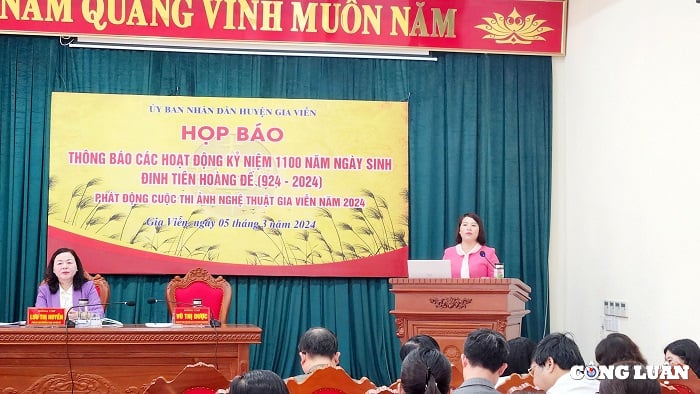
Ms. Vu Thi Duoc, Vice Chairman of the Gia Vien District People's Committee, provided information on activities commemorating the 1100th anniversary of the birth of Emperor Dinh Tien Hoang (924-2024).
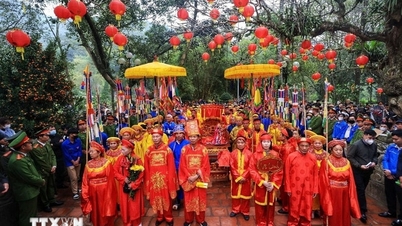
Prior to that, on March 23, 2024 (corresponding to the 14th day of the 3rd lunar month), many exciting activities will take place, such as: processions of palanquins from localities inside and outside the district, sacrificial rites and installation ceremonies; a competition for offerings to the King; a competition for offering five kinds of fruit to the King; a human chess competition; a calligraphy exhibition, etc.
All activities will be held at the National Historical Monument of King Dinh Tien Hoang Temple, Gia Phuong commune, Gia Vien district, Ninh Binh province.
Also within the framework of the 1,100th anniversary of the birth of Emperor Dinh Tien Hoang (924-2024), activities will take place such as: organizing the 2024 Trade and Investment Promotion Program to attract investors in the industrial sector, promoting tourism, publicizing the image and creating a favorable business environment in the district;
"Opening of traditional opera performances on Van Long Lagoon" aims to introduce and maintain the activities of local folk art troupes to serve tourism in 2024; Organizing the first Gia Vien District Cross-Country Race and the first Gia Vien District Half Marathon.
The press conference also provided additional information on preparations, mobilization of participating forces; publicity work; preparatory work; security and order maintenance; environmental sanitation before, during, and after the ceremony…
Concluding the press conference, Ms. Luu Thi Huyen, Permanent Deputy Secretary of the District Party Committee and Deputy Head of the Steering Committee for the 1,100th Anniversary of the Birth of Emperor Dinh Tien Hoang (924-2024), emphasized that in order to organize successful activities that leave a deep impression on the people of the district and visitors from all over, the activities must fully reflect the significance of the 1,100th Anniversary of the Birth of Emperor Dinh Tien Hoang (924-2024); the founding emperor of the Dinh Dynasty and Dai Co Viet in Vietnamese history. He established the first fully centralized feudal state in Vietnam.
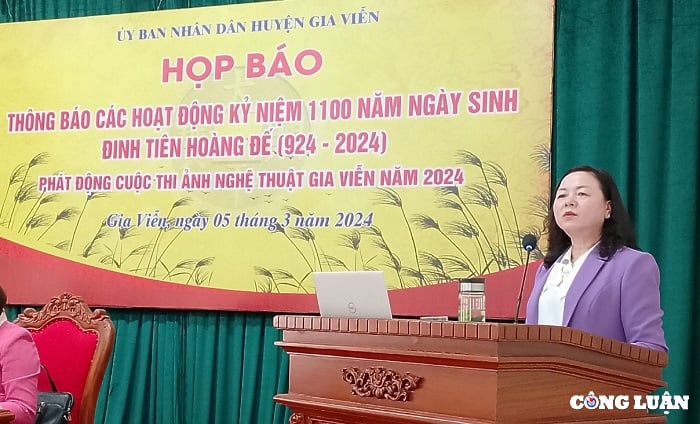
Ms. Luu Thi Huyen, Permanent Deputy Secretary of the District Party Committee, delivered the concluding remarks at the press conference.
Therefore, it is requested that agencies and units urgently develop detailed plans outlining their assigned tasks to ensure the successful implementation of these activities.
Dinh Bo Linh was born on February 15th, Giap Than year (924), in Dai Hoang village. The remains of the old house where he was born are still at Go Bo De (the remains are still at the old health station, Van Ha village, Gia Phuong commune), his father was Dinh Cong Tru, his mother was Mrs. Dam Thi.
As a child, Dinh Bo Linh herded buffaloes for his uncle, Dinh Du. He was respected as the leader (the oldest child) by the other buffalo herders. Linh often taught the children to pick reeds to make flags and play mock battles. These mock battles, though seemingly real (thanks to his former servant), were played out as realistically as real ones, showcasing Dinh Bo Linh's spirit and skill.
After each training session, the children would fold their arms and carry Dinh Bo Linh in a palanquin, like the ceremonial procession of the Emperor. Among them were several children from the same hometown and of the same age, who had become sworn brothers. These were Dinh Bo Linh, Dinh Dien, Nguyen Bac, Luu Co, and Trinh Tu, who revered Bo Linh as their elder brother. Later, they formed the core of the Hoa Lu warlords, becoming the "Four Pillars of the Court" when Bo Linh ascended the throne.
After the death of Ngo Vuong Quyen, the Ngo dynasty was plagued by internal strife and powerlessness. Several officials and generals rebelled, seizing control of their own territories and causing chaos throughout the country. This period is known in historical records as the "Rebellion of the Twelve Warlords." At that time, Dinh Bo Linh's forces were relatively strong. Due to his courage and strategic brilliance, many people in the region rallied to his cause.
Đinh Bộ Lĩnh harbored the ambition to quell rebellions, unify the country, and establish a royal court. Knowing his forces were still small, Bộ Lĩnh sought an alliance with the warlord Trần Lãm (also known as Trần Minh Công in Bố Hải Khẩu - present-day Thái Bình ). Trần Lãm, a former colleague and close friend of Đinh Bộ Lĩnh's father, gladly accepted, trusted him, and even married his daughter to him. Thanks to this alliance, the warlord Trần Lãm - Đinh Bộ Lĩnh - grew increasingly powerful.
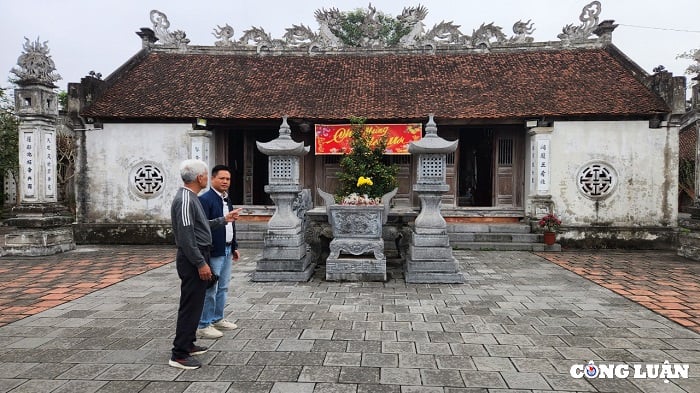
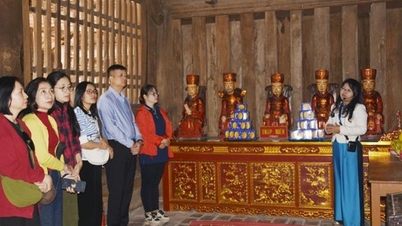
The National Historical Monument of King Dinh Tien Hoang Temple, Gia Phuong commune, Gia Vien district, Ninh Binh province, is where many activities are held to commemorate the 1,100th anniversary of the birth of Emperor Dinh Tien Hoang (924-2024).
When he was old and frail, Tran Lam handed over all authority to Dinh Bo Linh. Seeing that Bo Hai Khau was not a suitable base for building an army and establishing a great empire, Bo Linh brought all his generals and soldiers back to build a base in Dong Hoa Lu.
Here, taking advantage of the rugged mountainous terrain, Dinh Bo Linh strengthened the fortifications, recruited heroes and soldiers, and became a renowned and powerful figure in the region.
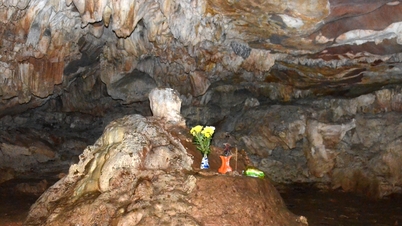
Seeing that Dinh Bo Linh's forces were growing stronger, Ngo Xuong Van and Ngo Xuong Ngap led their troops to Hoa Lu (Thung Lau Cave, Gia Hung commune today) intending to eliminate Dinh Bo Linh, but suffered a crushing defeat and had to retreat.
Later, Dinh Bo Linh sometimes persuaded others to surrender, and sometimes attacked and destroyed other warlords. Dinh Bo Linh's fame grew even more illustrious; in just one year, he pacified the warlords and was hailed as Van Thang Vuong. In the year Mau Thin (968), Van Thang Vuong ascended the throne as Emperor, with the title Dai Thang Minh Hoang De, established the national name Dai Co Viet (Great Viet country), set the capital in Hoa Lu, built palaces, and established court ceremonies. In 970, he established the reign name Thai Binh, minted Thai Binh copper coins, and established five empresses. In 971, King Dinh established the ranks and titles for civil and military officials and Buddhist monks.
In 972, he sent Nam Viet King Dinh Lien to pay tribute to the Song dynasty. The Song dynasty bestowed the title of Giao Chi Prince upon Dai Thang Minh Hoang De, and appointed Dinh Lien as the An Nam Protectorate's Military Governor of Tinh Hai. By February 974, King Dinh's army comprised 10 divisions. The King prescribed uniforms and hats for civil and military officials and established punishments for those who committed crimes.
In 977, the king appointed Hang Lang as Crown Prince and Dinh Toan as Prince of the Guard. On the Mid-Autumn Festival night of the Year of the Rabbit (September 9, 979), he and his eldest son, Prince of Nam Viet Dinh Lien, were murdered by his attendant Do Thich. After his death, Emperor Dai Thang Minh was honored by the court as the First Emperor, and his remains were buried at Son Lang (Ma Yen Mountain), Truong Yen, Hoa Lu. King Dinh reigned for 12 years (968-979) and died at the age of 56.
His temple is built at the foot of Ma Yen Mountain (Truong Yen, Hoa Lu), right on the site of the old palace. Historical records describe Dinh Tien Hoang as follows: “A talented and intelligent king, the most courageous of his time, he swept away the warlords and restored the great dynasty of Trieu Vu De. However, he lacked foresight and could not maintain his rule for his entire life. What a pity!” “…At a time when Vietnam was without a ruler, warlords were seizing power, but with one battle he subdued all twelve warlords, then established a new capital, changed his title to Emperor, appointed officials, created six districts, and almost completed the system. Surely it was the will of Heaven that Vietnam would produce such a sage and philosopher to continue the legitimate lineage of Trieu Vu De.”
Dinh Tien Hoang was a national hero who initiated and laid the foundation for national unification, laying the groundwork for a centralized feudal state. The large inscription "Legitimate Origin" in the Dinh Dynasty temple in Truong Yen affirms and proves this truth. "The legitimate emperors of Vietnam began here. The successive saintly emperors who succeeded each other followed the lessons of the Dinh Dynasty." This is "Heaven's will to give Vietnam a wise and virtuous ruler to continue the national tradition."
Source



















![[Photo] Prime Minister Pham Minh Chinh holds a phone call with the CEO of Russia's Rosatom Corporation.](/_next/image?url=https%3A%2F%2Fvphoto.vietnam.vn%2Fthumb%2F1200x675%2Fvietnam%2Fresource%2FIMAGE%2F2025%2F12%2F11%2F1765464552365_dsc-5295-jpg.webp&w=3840&q=75)













































Comment (0)