

Vietnam has always recognized that land and maritime borders define the living and development space of nations, while simultaneously demonstrating the sovereignty, sovereign rights, and jurisdiction of nations in accordance with international law. Therefore, clearly demarcating borders and effectively managing and cooperating on the basis of international law is a key factor in ensuring peace , stability, and sustainable development, as well as building long-lasting friendly relations between the countries involved.
In the current context, numerous traditional and non-traditional security challenges are emerging, posing threats to the international order and the common interests of many nations and the international community. Therefore, Vietnam not only faces disputes over territorial and maritime sovereignty and the complex and worrying developments arising from these disputes, but also confronts many non-traditional challenges such as climate change, marine pollution, resource depletion, and transnational crime. These issues profoundly affect not only the security and sustainable development of each nation but also impact the security and development of the region and the world. These were the remarks of the Permanent Deputy Minister of Foreign Affairs of Vietnam, Nguyen Minh Vu, at the international conference "Cooperation for Borders, Seas, Islands, Peace and Development," held on the morning of October 8th in Hanoi. The conference was organized by the Ministry of Foreign Affairs in collaboration with the Wallonie-Bruxelles Delegation in Vietnam. |
Permanent Deputy Minister of Foreign Affairs Nguyen Minh Vu delivered the opening speech at the International Conference on Cooperation for Peaceful and Developed Borders, Seas and Islands. (Photo: Anh Son)
In his opening remarks at the Workshop, Permanent Deputy Minister of Foreign Affairs Nguyen Minh Vu emphasized that the organization of the Workshop stemmed from the significance of border and territorial work and the objective practical requirements of managing and cooperating for peaceful and developed borders, seas, and islands.
Effective border demarcation, management, and cooperation are key factors in ensuring peace, stability, and development, not only for a single country but also in relations between countries, especially those sharing a common border. Clearly defined borders help countries determine their territorial sovereignty. This forms the basis for resolving border disputes peacefully, minimizing conflict, and ensuring national security. Effective border management, including patrolling, control, and handling violations, is essential. Cooperation between border guards, customs, and relevant agencies on both sides will enhance security and stability in border areas. Stable and peaceful borders facilitate trade, cultural exchange, and economic activity between countries. This not only benefits all parties but also supports the development of local communities in border regions. Effective border management cooperation not only limits conflict but also creates opportunities for countries to resolve disagreements through dialogue and negotiation. Open dialogue helps build trust between parties. Effective border management cooperation also requires the protection of the environment and natural resources. Countries need to work together to develop sustainable environmental protection plans in border areas. A clearly defined and well-managed border will make both sides safer from threats such as cross-border crime, smuggling, and terrorist activities. Cooperation and effective border management will contribute to strengthening diplomatic relations, promoting regional peace and stability, and laying the foundation for development. Thus, clear border demarcation and cooperative management will be prerequisites for peace, stability, and sustainable development among countries, contributing positively to building a peaceful and cooperative world.
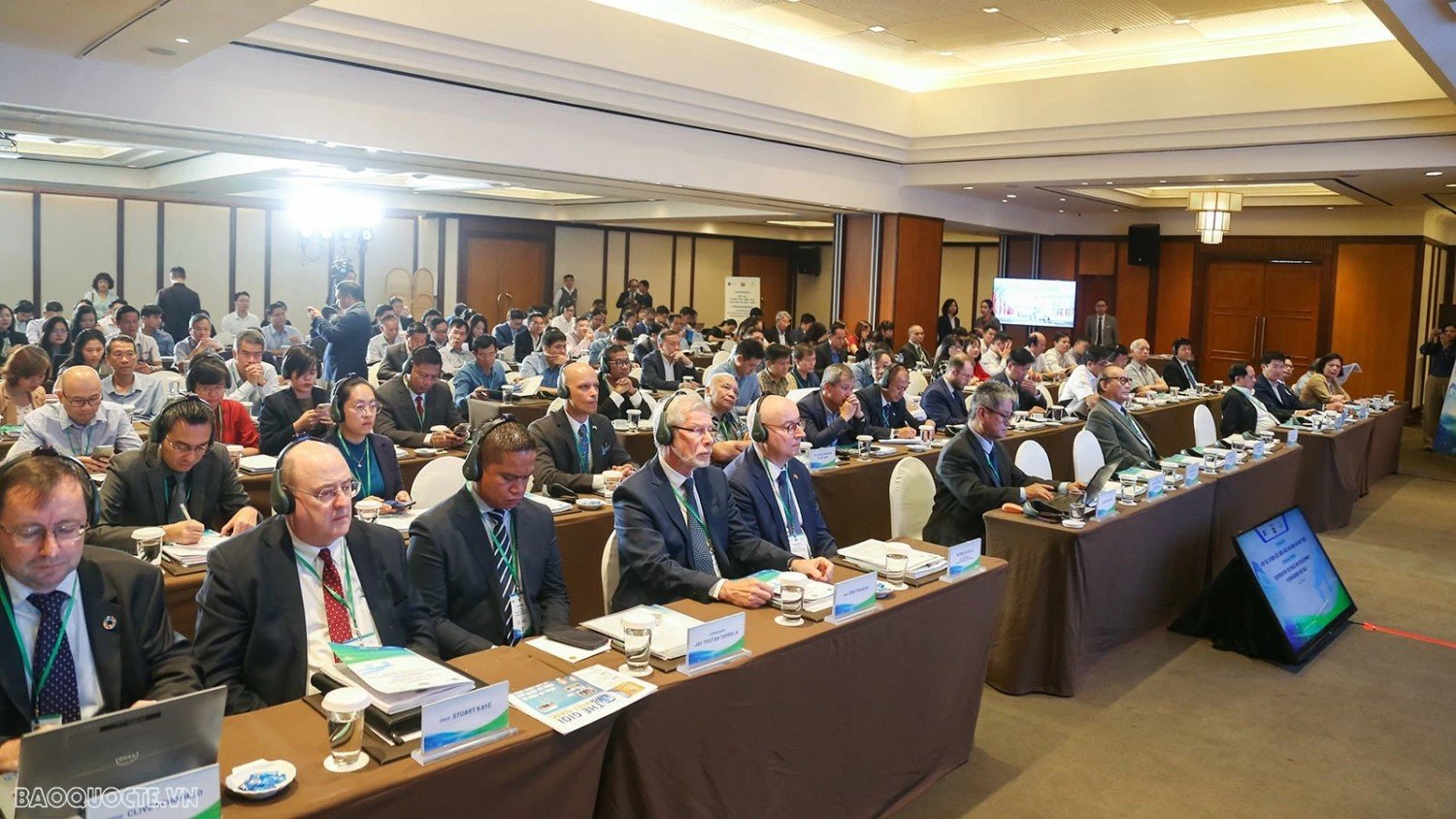 |
Delegates attending the International Workshop on Cooperation for Peaceful and Developed Borders, Seas and Islands. (Photo: Anh Son)
Vietnam is committed to respecting and applying the provisions of UNCLOS to resolve maritime issues. In addressing these challenges, international law, particularly the 1982 United Nations Convention on the Law of the Sea (UNCLOS), plays an extremely important role as a comprehensive and universal legal framework for all activities in the seas and oceans, widely recognized by the international community. As one of the pioneering countries in signing and implementing UNCLOS, Vietnam is committed to respecting and applying its provisions to resolve maritime issues, aiming to work with the international community to protect and maintain an international legal order in the seas and oceans based on UNCLOS, encouraging development and cooperation, as affirmed by the Vietnamese National Assembly in its Resolution ratifying UNCLOS on June 23, 1994. Clear border demarcation and cooperative management will be prerequisites for peace, stability, and sustainable development among nations, contributing positively to building a peaceful and cooperative world.Thanh Tung

























































































Comment (0)