

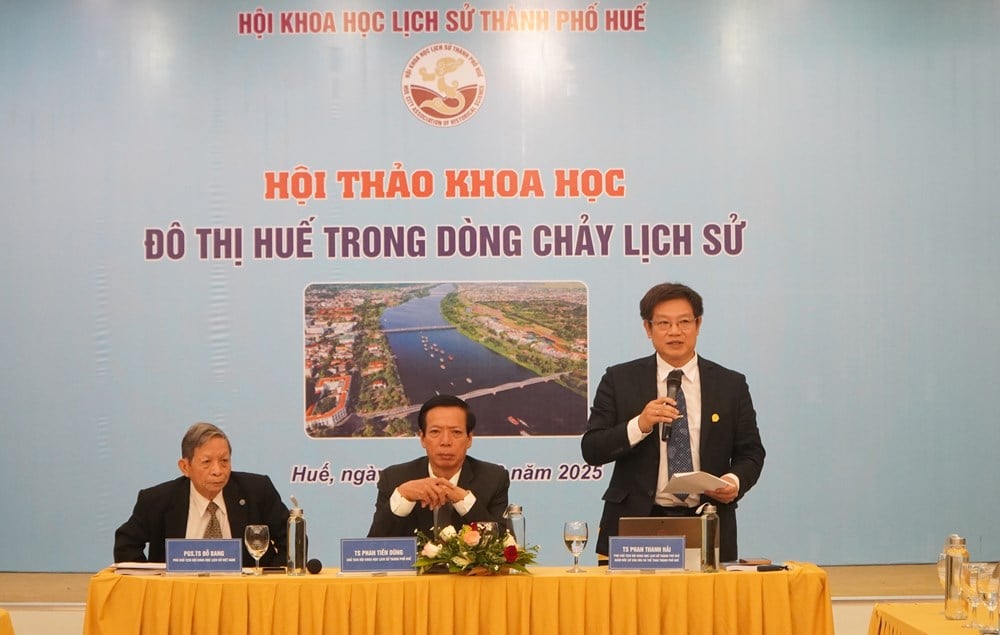
On December 10, the Hue City Historical Science Association organized a scientific workshop on “Hue City in the flow of history” with the participation of many experts and researchers from inside and outside the locality. The workshop aimed to discuss and identify the value of Hue City in historical periods, and at the same time propose solutions for sustainable development in the future.
Dr. Phan Tien Dung, Chairman of the Hue City Historical Science Association, affirmed: Hue City has a long history, originating from the Champa period with traces of Loi citadel and Hoa Chau citadel. By the 14th century, Hoa Chau citadel was the headquarters of Dai Viet nation in the South.
The process of urban development of Hue is closely linked to the expansion and construction of the political center of the Nguyen Lords. Then, from the end of the 18th century, Phu Xuan (Hue) became the capital of the Tay Son Dynasty and then the Nguyen Dynasty, planned according to the model of the capital of a unified country.
In 1945, after the monarchy collapsed, Hue City underwent many changes according to the nature of each historical period. “Hue is a rare urban area that converges folk, royal, colonial and modern architectural styles; harmoniously developing architecture, landscape and culture, creating a unique identity” - Dr. Phan Tien Dung emphasized.
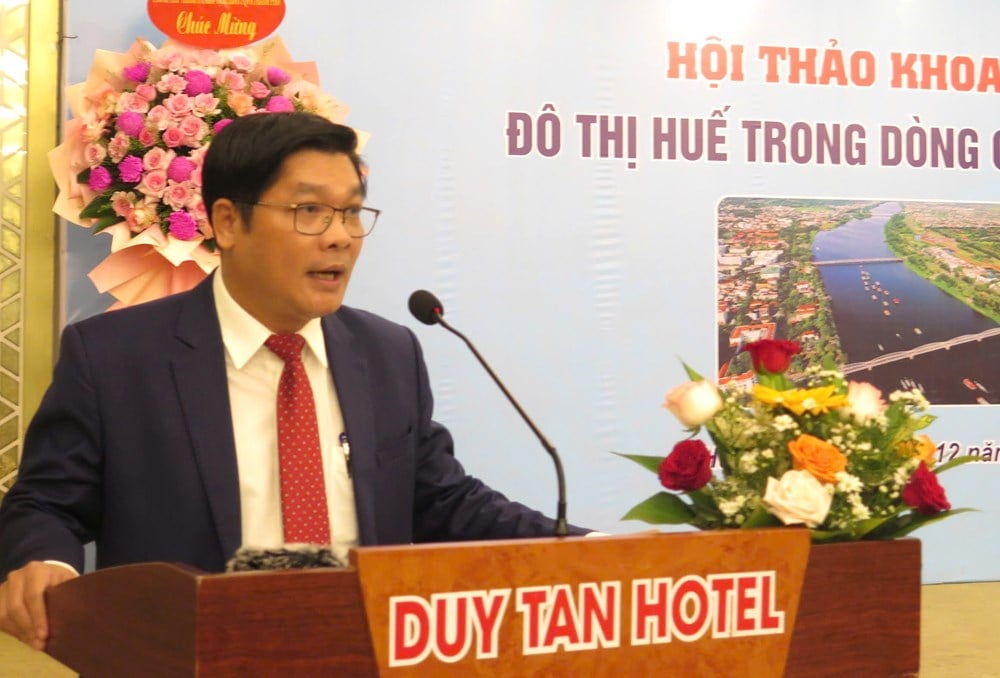
Deputy Secretary of the City Party Committee, Chairman of the Vietnam Fatherland Front Committee of Hue City Nguyen Chi Tai said that, in the development process, Hue City is an urban area with a long history, clearly reflecting important contributions to the historical process of the country.
After 1945, in the context of many changes in modern history, the structure and functions of Hue city continued to have important adjustments, reflecting the characteristics of each stage of socio-economic development, while also posing new requirements in urban management, conservation and development.
The characteristic of Hue city is the convergence and inheritance of many different types of architecture and urban space; maintaining the harmony between construction space, natural landscape and cultural life. That is the foundation that creates the identity of Hue city and the core value of the heritage city.
Mr. Nguyen Chi Tai said that in the current context, when Hue is aiming at the goal of developing a sustainable heritage city, systematic research on the urban historical process; fully identifying historical, cultural values and spatial structure; and at the same time clarifying the relationship between conservation and development, is extremely important in both science and practice.
The presentations at the conference "Hue City in the flow of history" focused on 3 contents: Hue through historical periods; Characteristics and values of Hue City; The development of Hue City today.
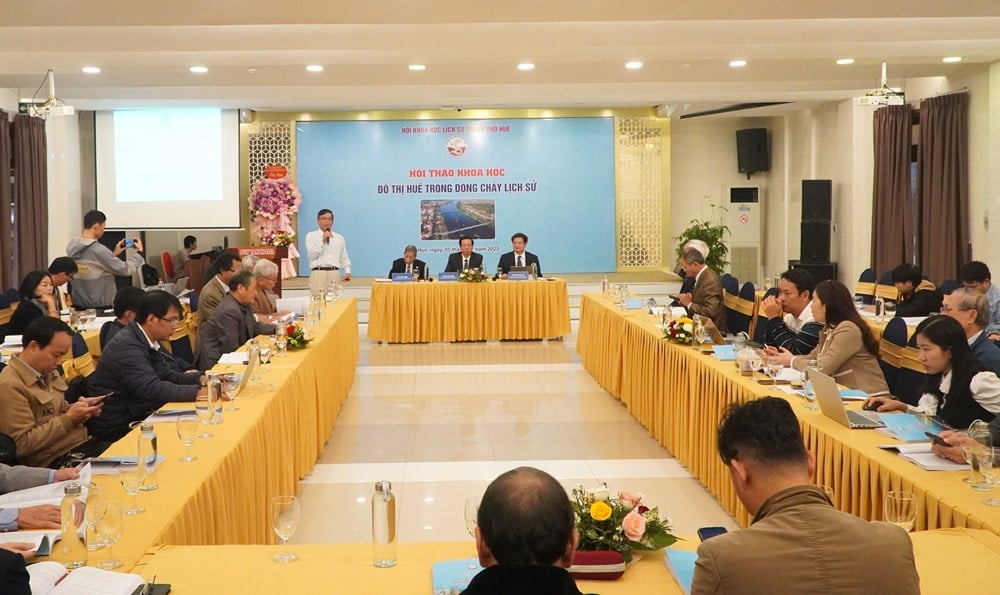
At the conference, experts and researchers also discussed and clarified many contents such as: The role of geopolitical factors in the early formation of urban space in Hue; the relationship between the royal urban area and the commercial urban area; the values of Hue urban area in current development; proposals for Hue to promote its position in the development of the country...
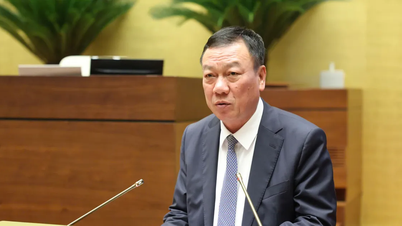
Dr. Phan Thanh Hai, Director of the Department of Culture and Sports of Hue City, said that the city is currently adjusting the Plan for the conservation and promotion of the value of the Complex of Hue Monuments until 2030, with a vision to 2050; including expanding the protection area for feng shui landscapes and the water system of the Huong River - Ngu Mountain. This planning direction creates a comprehensive connection between heritage - nature - community, forming a "heritage belt" surrounding the urban area, both preserving the sacred space and opening up opportunities for sustainable development.
The Director of the Department of Culture, Sports and Tourism of Hue City said that in the new era, it is necessary to develop Hue - a green heritage city towards a smart city with key contents: conservation associated with sustainable development; digital transformation in heritage conservation; creative economy based on heritage... In particular, the community and the young generation are the subjects of conservation and creativity.
Source: https://baovanhoa.vn/van-hoa/phat-huy-the-manh-cua-do-thi-hue-trong-ky-nguyen-moi-187202.html




![[Photo] Explore the US Navy's USS Robert Smalls warship](/_next/image?url=https%3A%2F%2Fvphoto.vietnam.vn%2Fthumb%2F1200x675%2Fvietnam%2Fresource%2FIMAGE%2F2025%2F12%2F10%2F1765341533272_11212121-8303-jpg.webp&w=3840&q=75)




















![[Video] The craft of making Dong Ho folk paintings has been inscribed by UNESCO on the List of Crafts in Need of Urgent Safeguarding.](https://vphoto.vietnam.vn/thumb/402x226/vietnam/resource/IMAGE/2025/12/10/1765350246533_tranh-dong-ho-734-jpg.webp)














































Comment (0)