

With a population of approximately 4 million people and an area of 56,594 km2, Croatia consistently ranks far ahead of larger and more economically developed countries.
Bilingualism, or even multilingualism, is common in Croatian society. A recent survey showed that 80% of Croatians are multilingual, with 81% speaking English, according to the Rewind Dubovnik Foundation.
Up to 95% of people aged 15-34 speak at least one foreign language, with English being the most common foreign language.

According to the EF English Proficiency Index (EF EPI) 2023, Croatia ranks 11th in the world with 603 points and is rated as "very high proficiency".
Factors such as culture, the education system, and socioeconomic dynamics have converged to create a nation where multilingualism is the norm and English proficiency is a valuable shared asset.
Early language education
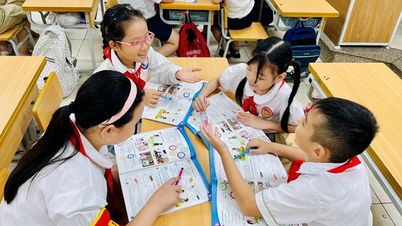
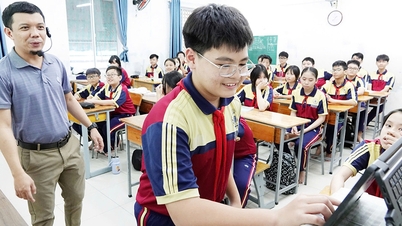
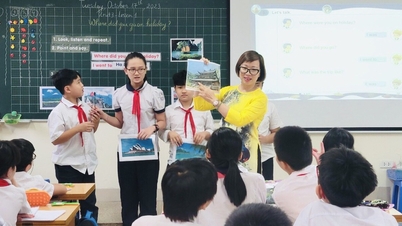
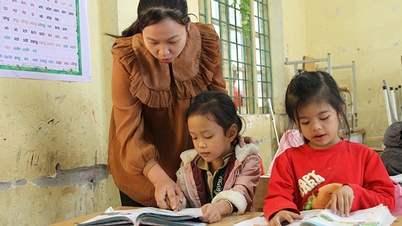
One of the key factors contributing to Croatia's high level of English proficiency is the early introduction of language education into schools.
Foreign language instruction in Croatia is governed by the Law on Primary and Secondary Education (2008). According to this law, the curriculum mandates compulsory learning of a first foreign language from grade 1 of primary school, while a second foreign language can be taught as an elective subject from grade 4.
According to the curriculum, the first foreign language is taught for 2 hours per week from grades 1 to 4 and 3 hours per week from grades 5 to 8. The second foreign language (optional) is taught for 2 hours per week from grades 4 to 8.
In fact, English (sometimes French or German) is often taught from kindergarten. English is usually the first foreign language taught in the first grade (7 years old) of primary school. The most common second foreign language is German, followed by Italian and French.
At the secondary school level, Russian and Spanish are sometimes taught as a second or third foreign language. This early start is important because it allows children to develop the skills at a stage where they are most receptive to learning new languages.
Latin and ancient Greek are taught in all schools with a classical curriculum (focusing on traditional subjects). Latin is compulsory in all humanities secondary schools. Minority language education is available from kindergarten to secondary school and is funded by the Croatian government for Serbian, Czech, Hungarian, and Italian minority groups.
Although Croatian remains the official language of education, there is a growing trend towards science and engineering courses being taught in English.
Croatia also makes no secret of its "ambition" to spread its national language beyond national borders. Under Prime Minister Andrej Plenkovichć, Croatia is taking steps to promote the Croatian language in Europe through the enactment of a new Croatian Language Act.
This law aims to ensure that Croatian is used as an official language in Croatia, Bosnia and Herzegovina, and the EU, while also promoting the learning of Croatian abroad, according to Euractiv.
Tourism and economic development: Real drivers
Croatia's booming tourism industry also plays a significant role in boosting the country's high level of English proficiency.
The ability to speak English is essential for anyone wanting to work in the tourism industry, from hotel and restaurant staff to tour guides.
As one of Europe's most popular tourist destinations, Croatia attracts millions of international visitors every year.
In 2023, approximately 20.6 million tourists visited Croatia (more than five times the country's population) and 108 million stayed overnight, according to the eVisitor system. International tourist spending accounted for nearly 20% of the country's GDP – the highest proportion in the EU, according to research by the European Commission.
Many Croatians, especially those living in tourist hotspots like Dubrovnik, Split, and the capital Zagreb, have seized the opportunity for economic development. For them, fluency in English is a must-have skill.
The demand for this level of English proficiency is not limited to the tourism industry but also affects other sectors of the economy such as international trade and finance.
Media promotes daily contact.
Another important factor contributing to Croatia's success with English is its extensive exposure to English-language media.
Research by Dr. Sara Brodarić Šegvić at the University of Split (Croatia) emphasizes the importance of learning English naturally and incidentally. This means that students learn English through exposure to media rather than relying solely on formal education.
Specifically, the study shows that high school students in Croatia are frequently exposed to English-language media, such as movies, music, and online content. This exposure helps them practice and improve their English skills outside of the classroom.
Many Croatian students prefer watching English films without subtitles or with English subtitles instead of Croatian subtitles.
Although students also learn other foreign languages such as Italian, research shows that English-language media is far more popular and influential.
A study by Dr. Sara Brodarić Šegvić concluded that the English proficiency of Croatian students is closely related to their habits of exposure to and consumption of English-language media.
This constant exposure reinforces language skills learned in school and makes English a part of daily life for many Croatians.
Making English a Second Language: Lessons Learned from Singapore and Malaysia
What did Singapore do to go from zero to second-best in the world in English proficiency?
Politburo: Gradually making English the second language in schools.
Source: https://vietnamnet.vn/quoc-gia-80-dan-so-noi-duoc-da-ngon-ngu-95-thanh-nien-thong-thao-tieng-anh-2317822.html








































































Comment (0)