

Overloaded with schoolwork.
A packed academic schedule, the difficulty in balancing coursework with projects supporting graduation, and feelings of uncertainty and fear of competition in the job market are concerns for some graduating final-year students.
Many nights I had to stay up all night working on assignments. Thanh Thảo, a final-year student at the Posts and Telecommunications Institute of Technology in Ho Chi Minh City, said she is exhausted and under a lot of pressure.
"I'm majoring in design, and many courses require project submissions with closely spaced final exam schedules, so the projects are piling up. I have to complete sketches for approval before I can start production. I'm also doing scientific research to support my graduation, and I'm worried about choosing a suitable internship. Sometimes I fear graduating late and having difficulty finding a career," Thảo said.
Ngoc Duong, a final-year student at the University of Social Sciences and Humanities in Ho Chi Minh City, shared that she felt quite lost and disheartened after being rejected during her application.

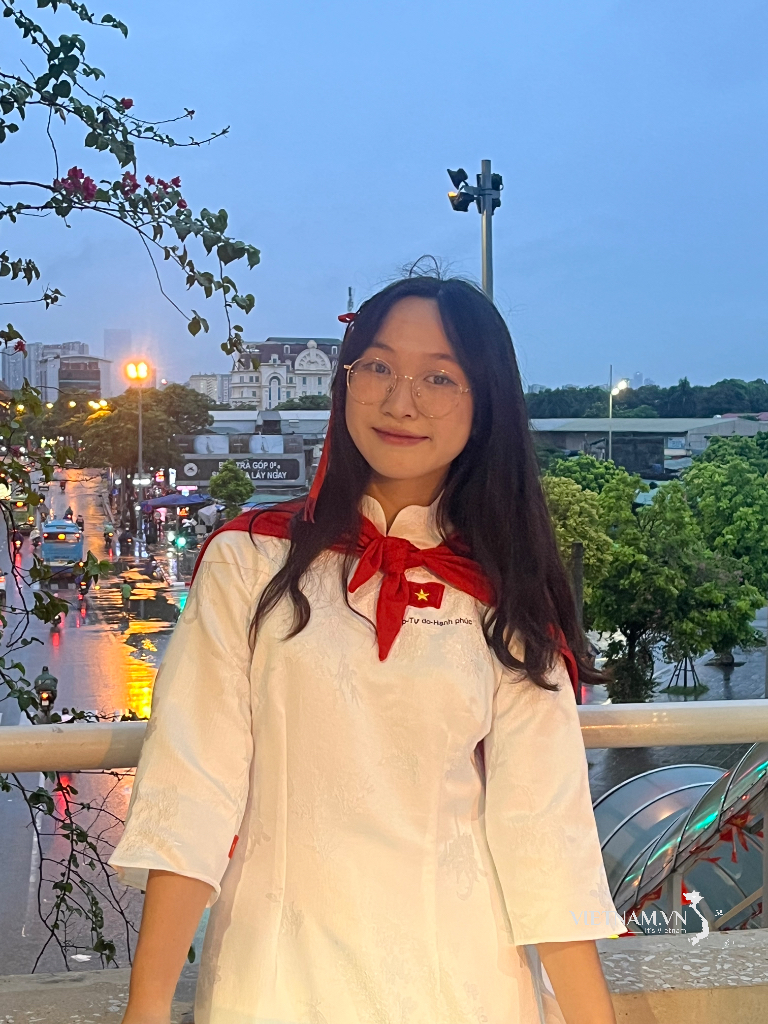
Coursework and graduation projects cause stress for many final-year students.
"Since I'm in my final year, I'm applying for internships to gain experience, but some places require experience. My schedule in my second and third years is quite demanding, making it difficult to arrange my time, so I can't meet this requirement. I'm also confused about my career path after graduation," the female student worried.
Also facing the same situation of being overwhelmed, Mai Hong, a final-year student at Ho Chi Minh City University of Education, said that the mid-semester period is quite stressful with a continuous amount of coursework, and she feels anxious as graduation approaches but still lacks confidence.
Prioritize learning.
Having recently graduated with a degree in Finance and Banking, Thuy Vu, a former student of Ho Chi Minh City University of Industry, said that final-year students often face pressure regarding their thesis, so they need to invest time in self-study and limit part-time work if they cannot balance it, as it can easily affect their grades.
Graduating with honors and currently working as an audit assistant, Minh Thu, a former student majoring in auditing at the University of Economics and Law, Ho Chi Minh City, shared that students should focus on completing their final courses, taking certification exams necessary for graduation, and searching for job opportunities on websites or following the media channels of companies in their chosen field.
"Students shouldn't think that they're not qualified, haven't graduated, or haven't completed their certificates... that it limits their job opportunities. They should identify their desired field early on and cultivate the necessary skills and professional knowledge," Minh Thu said.
Developing personal character
Dr. Nguyen Hong Phan, Head of the Department of Educational Psychology at the University of Social Sciences and Humanities in Ho Chi Minh City, informed that, to create favorable conditions for students, the university has designed and arranged a program focusing on internships to help final-year students reduce the burden of coursework.
Regarding the situation where some final-year students lack confidence and feel anxious about entering the job market, Professor Phan believes this is unavoidable.
"Students must accept the transition from the academic environment to the workplace and proactively improve the necessary skills for the job. Departments and schools also organize many internships and practical training programs to help students familiarize themselves with and enhance their skills," Professor Phan shared.

Some students are confused about their career path.
Dr. Phan added that some final-year students who haven't yet determined their career path or aspirations shouldn't panic, as this might just be a period of disorientation.
"There are many reasons why students feel confused, such as a lack of self-awareness during career guidance from high school to university, the school's lack of clear training orientation, and the absence of specific guidance, causing some students to be confused when choosing a career within their major. Students must make an effort, re-evaluate themselves, avoid a mentality of waiting and relying on others, and need to plan from the earlier stages," the doctor commented.
According to Professor Phan, the current training program focuses on developing qualities and competencies, while the implementation lies in the students' own self-discipline and training. "Students need clear direction during their studies, getting acquainted with and gaining practical experience from their second and third years, preparing soft skills and specific knowledge relevant to their chosen field to meet job requirements and avoid feeling overwhelmed when entering the real world."
In my final year, I'm unsure about my future direction. Should I pursue higher education?
Without a clear direction, PV (a final-year student at the University of Social Sciences and Humanities, Ho Chi Minh City) shared her plan to pursue a master's degree to allow time to explore her own aspirations. "I'm torn between graduating with a bachelor's degree and finding a job related to my major, or continuing my education. I think pursuing a master's degree will help strengthen my expertise and broaden my career opportunities."
According to Dr. Hong Phan, pursuing higher education without a clear direction, beyond genuine need, can stem from reasons such as peer pressure, pressure to succeed, and a desire to excel.
Taking a "gap year" after high school or dedicating time after university to gain work experience and explore one's passions is quite common in the West. "However, due to social prejudices and parental attitudes in Eastern countries, this practice is limited. Students should spend time gaining practical experience and accumulating knowledge to better envision their future careers, rather than just focusing on theory," Dr. Hong Phan noted.
Source link

![[Photo] Prime Minister Pham Minh Chinh holds a phone call with the CEO of Russia's Rosatom Corporation.](/_next/image?url=https%3A%2F%2Fvphoto.vietnam.vn%2Fthumb%2F1200x675%2Fvietnam%2Fresource%2FIMAGE%2F2025%2F12%2F11%2F1765464552365_dsc-5295-jpg.webp&w=3840&q=75)


![[Photo] Closing Ceremony of the 10th Session of the 15th National Assembly](/_next/image?url=https%3A%2F%2Fvphoto.vietnam.vn%2Fthumb%2F1200x675%2Fvietnam%2Fresource%2FIMAGE%2F2025%2F12%2F11%2F1765448959967_image-1437-jpg.webp&w=3840&q=75)




































![[OFFICIAL] MISA GROUP ANNOUNCES ITS PIONEERING BRAND POSITIONING IN BUILDING AGENTIC AI FOR BUSINESSES, HOUSEHOLDS, AND THE GOVERNMENT](https://vphoto.vietnam.vn/thumb/402x226/vietnam/resource/IMAGE/2025/12/11/1765444754256_agentic-ai_postfb-scaled.png)


































Comment (0)