

Following the collapse of the Soviet Union, Cuba faced the most challenging economic situation in its history. However, the Caribbean island nation persevered and achieved remarkable successes.
Decades of US sanctions
After lawyer Fidel Castro overthrew the US-backed Batista dictatorship in 1959, Cuba became a Communist-led nation and remained stable for decades despite economic isolation, particularly after the collapse of the Soviet Union.
Since the early 1960s, the US has adjusted its foreign policy toward Cuba, most notably through the controversial trade embargo and other restrictions. Reuters quoted Cuban Foreign Minister Bruno Rodriguez as saying that the US embargo against Cuba was an unending storm. It wasn't until 2015 that the Washington administration began to gradually normalize relations with Havana, including modifying the embargo measures.
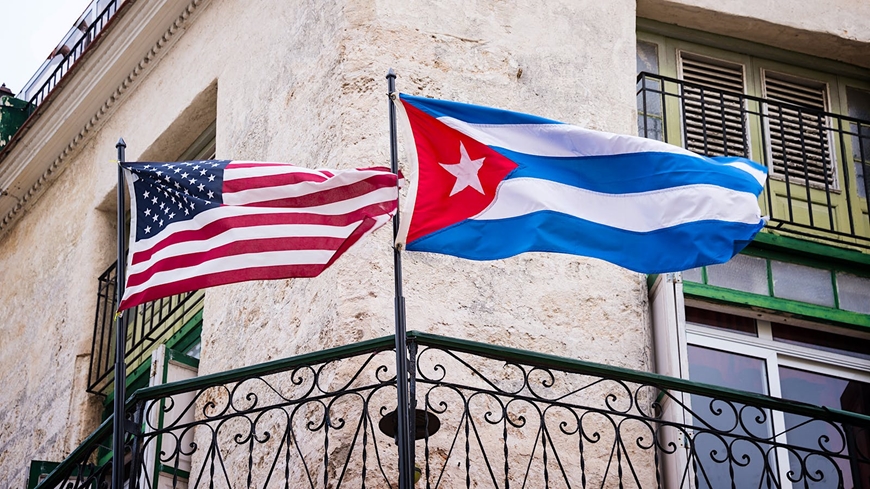 |
The US continues to maintain numerous sanctions against Cuba. (Illustration: Cigar Aficionado) |
However, during President Donald Trump's term, he reinstated the old measures and even added new sanctions. For example, banning travel to the US and restricting the amount of money Cuban Americans could send to their relatives back home were new policies introduced under Trump. Under current President Joe Biden, some restrictions have been eased.
Guillaume Long, former Foreign Minister of Ecuador, noted that the Cuban economy has been significantly impacted by US sanctions. Cuba also experienced a major shock following the collapse of the Soviet Union in 1991. Prior to that, the Soviet Union supplied 90% of Cuba's fuel needs and 70% of other imports, including food and medicine, mostly at subsidized prices. From 1989 to 1994, Cuba's trade with the former Soviet Union plummeted by 89%.
Today, the Cuban economy is heavily reliant on commodities. Tobacco and sugar account for approximately 30% of foreign exchange earnings. Cuba also develops its healthcare services by sending doctors and nurses to various countries, such as Brazil and Venezuela. Meanwhile, tourism in the country also represents a significant source of revenue.
On the other hand, the Cuban Communist Party has also succeeded in establishing reputable education and healthcare systems. Not only does Cuba have a much higher average life expectancy than many developed countries, including the United States, but it is also the smallest country in the world to successfully develop a COVID-19 vaccine.
The "tests" for the economy
Due to the immense role of tourism, the Covid-19 pandemic has dealt a severe blow to the country's economy. According to Bloomberg, the number of tourists decreased significantly during the pandemic, from 4 million in 2019 to just 356,000 in 2021.
To cope with dwindling foreign exchange reserves, Cuba adopted a dual exchange rate system in January 2021, leading to a depreciation of the peso, which had been pegged to the US dollar for decades.
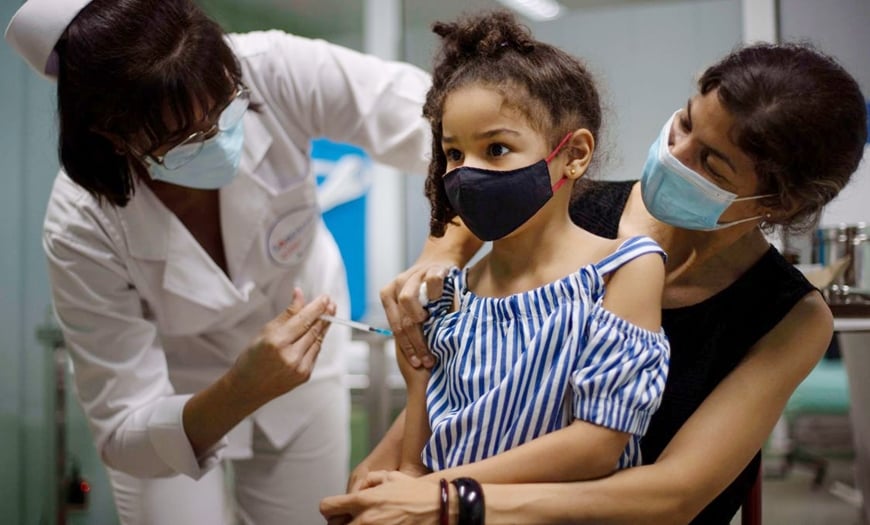 |
| The Covid-19 pandemic has caused numerous difficulties for Cuba's socio-economic situation. Photo: CNN |
However, senior researcher Alberto Gabrielle at Sbilanciamoci, a political think tank based in Rome, Italy, stated, "The devaluation of the currency has not achieved equilibrium in Cuba's import-export structure, causing shortages of goods and increased inflation." Meanwhile, Cuba's consumer price index (CPI) rose 70% in 2021, with inflation reaching triple digits during the same period. Purchasing power has been severely impacted.
Overcoming difficulties and striving for development.
In 2008, Cuba launched a reform process aimed at "updating Cuban socialism." This policy was officially formalized and adopted at the Sixth National Congress of the Communist Party of Cuba on April 18, 2011, and is known as the socio-economic policy guidelines of the Party and the revolution.
By 2009, Cuba continued to introduce several new socio-economic policies and models, initially decentralizing agricultural production, allowing private businesses in certain service and retail sectors, reducing subsidies while improving public social services, and downsizing the state workforce. From 2012, Cuba officially launched the process of updating its economic model. Accordingly, more than 40 new legal documents on taxation, foreign investment, etc., were enacted by the Cuban National Assembly, in line with the "Economic Model Update" process.
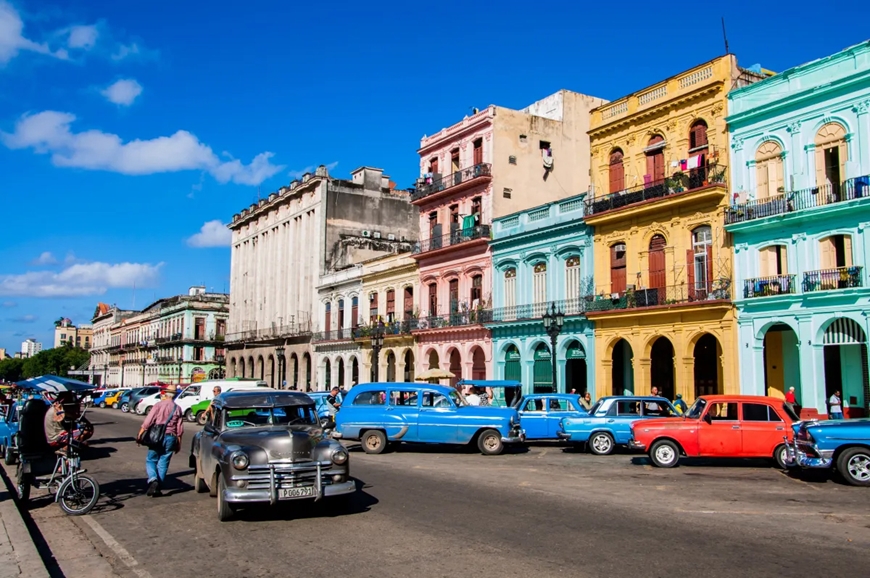 |
Cuban streets are bustling with traffic. Photo: The DeVoe Moore Center |
In 2014, to attract foreign investment, Cuba passed a new Foreign Investment Law and announced the inauguration of the Mariel Special Economic Development Zone, a 465km² complex comprising a deep-sea port, bonded warehouses, export processing zones, and service areas, with numerous preferential policies regarding investment, trade, taxes, and customs fees.
The Politburo of the Cuban Communist Party has also approved the "Socio-Economic Development Strategy to 2030" aimed at leveraging domestic resources while attracting external investment to revive the economy. Cuba is actively building a long-term legal framework, issuing several documents with market economy elements.
A socio-economic strategy aimed at boosting the economy and addressing the crisis caused by Covid-19 was also announced by the Council of Ministers on July 16, 2020. This strategy involves several changes in the conception of the national economy, considering the private sector as a crucial driving force of the economy and protecting economic protectionist policies to maximize the development of domestic industries.
In addition, the Cuban government began expanding the private sector in an effort to increase production and alleviate shortages. In February 2021, Cuba agreed to grant private company status to 2,000 listed industries (up from 127 previously), facilitating partnerships with foreign investors and limiting state control over commercial activities.
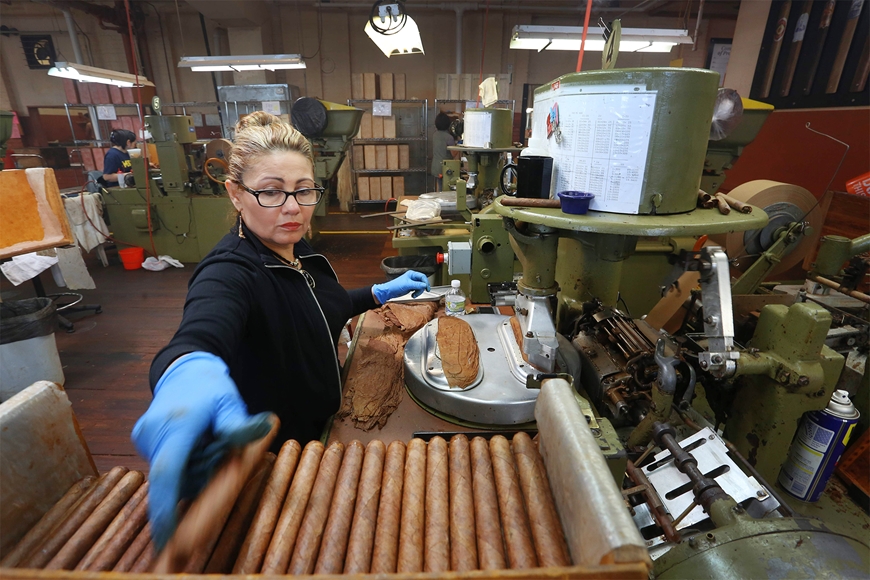 |
| Cigars are one of Cuba's most famous products globally. Photo: Tampa Bay Times |
Recently, Cuba has enacted several laws concerning small, medium, and micro-enterprises, encouraging agricultural production, reforming income tax, and easing exchange rate adjustments… all aimed at improving the economic situation. Former President Raul Castro once stated that implementing these policies “is not an easy path; it requires fundamental changes,” and that it is necessary to eliminate “outdated thinking, passive attitudes, and a lack of faith in the future.”
The policies of former President Raul Castro have brought about significant changes in Cuba's socio-economic life. Specifically, the Cuban government has licensed 580,000 private businesses, a fivefold increase since 2010. In total, the private sector now employs 29% of the workforce. In 2017, the Cuban economy achieved a growth rate of 1.6%, amidst numerous challenges and significant financial difficulties, along with the consequences of Hurricane Irma and a prolonged drought. Meanwhile, as of the first quarter of 2022, Cuba's exports reached $590 million (an increase of $162 million compared to the same period in 2021); imports reached $2.4 billion (exceeding the plan by $138 million)... The Cuban government hopes the economy will grow by 3% in 2023. Simultaneously, foreign exchange earnings are estimated to increase to $1.037 billion this year thanks to a $318 million increase in revenue from exported goods.
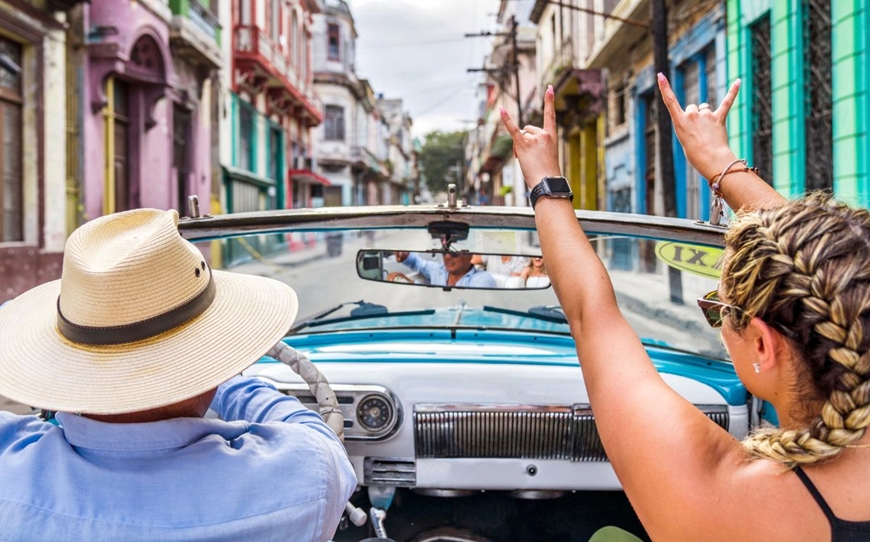 |
| The beautiful country of Cuba is reviving its tourism industry in the post-Covid-19 era. Photo: Traveling Lifestyle |
In addition, tourism, transportation and telecommunications, agriculture, and construction are major contributors to the increase in gross domestic product (GDP). Despite travel restrictions imposed by the administration of former US President Donald Trump, Cuba's tourism industry welcomed over 4.7 million international tourists in 2017 (a 16.2% increase compared to 2016). The Caribbean island nation expects to welcome 3.5 million foreign tourists in 2023, as the tourism sector gradually recovers to pre-pandemic levels – a time when Cuba received approximately 4 million visitors annually. Recently, foreign companies have shown increasing interest in investing in Cuba, especially in the tourism sector. Official figures show that there are currently 87 foreign investment projects in the tourism sector in Cuba, along with 18 foreign hotel chains operating on the island.
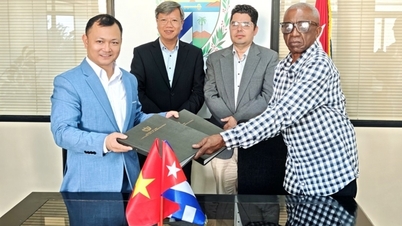
Cuba is also stepping up cooperation with traditional partners in many areas. Accordingly, Russian partners are helping Cuba modernize the Maximo Gomez and Habana del Este thermal power plants; upgrade the Antillana steel mills; and supply cars and trucks to support the development of the road transport sector. Recently, Russia and Cuba have been discussing issues related to the modernization of the textile industry. A $4 billion high-speed rail line connecting Havana with the Varadero beach resort is also being planned between Russia and Cuba. The Cuban government has also granted an operating license in the Mariel Special Development Zone (in western Havana) to ViMariel SA of Vietnam. Vietnam is currently Cuba's second largest Asian trading partner. Between 2015 and 2020, bilateral trade reached approximately $250-350 million.
Vietnam's main exports to Cuba include: rice, electrical goods, electronics, clothing, footwear, cosmetics, building materials, industrial materials, household goods, and stationery. Vietnam imports from Cuba mainly medicines, vaccines, and medical biological products. The Vietnam-Cuba Trade Agreement, signed in November 2018 and officially effective from April 2020, provides an important legal basis for businesses in both countries to take advantage of tariff preferences, aiming to increase bilateral trade to US$500 million within the next five years. Furthermore, Cuba and the European Union (EU) maintain bilateral cooperation projects in agriculture and food security, renewable energy, climate change, and economic modernization, contributing to the development of micro, small, and medium-sized enterprises in Cuba.
 |
| The Cuban people have always trusted in the leadership of the Communist Party of Cuba, the State, and the Government of Cuba in socio-economic development. (Illustration: CNBC) |
It can be said that the outstanding socio-economic policies and achievements will pave the way for successive generations of Cuban leaders to inherit, develop, and lead the country to new heights. Cuban Vice President Salvador Valdés Mesa declared: “No Cuban will be left behind... We will not relinquish the sovereignty and independence that previous generations fought for over centuries.”
Following the successful election of the 10th National Assembly of the People's Power and the election of the Cuban State and Government leadership for the 2023-2028 term, the Caribbean nation immediately embarked on the task of national development and defining long-term strategies. President of the Republic of Cuba Miguel Díaz-Canel affirmed that the top priority in the coming period is to continue focusing on the country's economic development. According to the Cuban President, to achieve economic development, the Caribbean island nation needs to promote a plan for macroeconomic stability, including policies to combat inflation, reduce the budget deficit, bridge the gap between wages and purchasing power, increase available foreign exchange reserves, and address many other issues.
MINH ANH
Source



















![[Photo] Prime Minister Pham Minh Chinh holds a phone call with the CEO of Russia's Rosatom Corporation.](/_next/image?url=https%3A%2F%2Fvphoto.vietnam.vn%2Fthumb%2F1200x675%2Fvietnam%2Fresource%2FIMAGE%2F2025%2F12%2F11%2F1765464552365_dsc-5295-jpg.webp&w=3840&q=75)









































Comment (0)