

The pictures online were gorgeous, but the room was a disappointment.
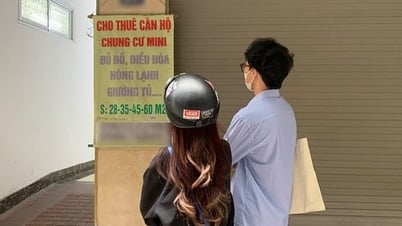
Every school year, the rental housing market in major cities becomes bustling. This is also an opportunity for scammers to employ various tricks to make a profit.
One common trick that still traps many students is "showing one thing in the picture, but the reality is something else."
Pictures of bright, tidy rental rooms, sometimes enhanced with lighting and glamorous decorations, are posted on social media platforms or rental websites. However, when you actually visit, the harsh reality often emerges.
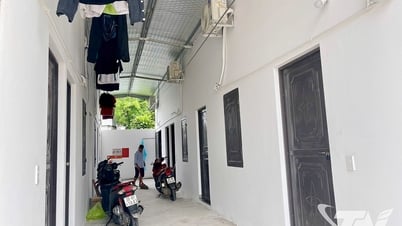
Thu Ha, a student at Ho Chi Minh City University of Education, shared: “On Facebook, the room looked very nice, spacious, and cheap. But when I arrived, the room was old, damp, and cramped. The landlord said the room in the picture was already rented, then tried to persuade me to put down a deposit for another room.”

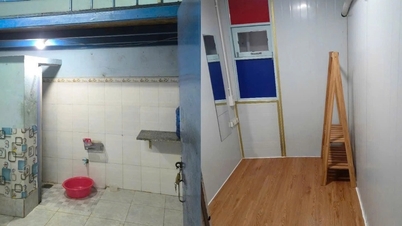
It's not just Ha; many other students have faced similar situations. Minh Anh, a student at the University of Economics and Law, Vietnam National University Ho Chi Minh City, said she had to swallow the bitter pill of losing her 2 million VND deposit because she believed in the glamorous photos.
"The room is much smaller in real life than in the pictures, and the toilet is in the shared courtyard, not as described. I tried to get my deposit back, but the landlord refused to return it," Minh Anh recounted.
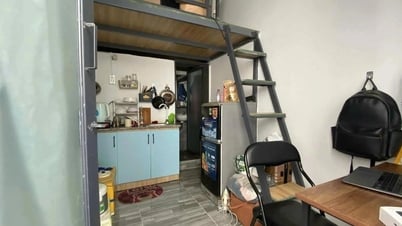
Furthermore, many landlords and brokers use the tactic of exaggerating the size and quality of the rooms. They often take photos with wide-angle lenses, making small, cramped rooms appear spacious and airy. Sometimes, a room that is only 10m² is advertised as 20m².
"When we arrived, the place was small and hot, completely different from what they promised. But since we'd already paid the brokers, the students had no choice but to stay temporarily or rent another place, suffering losses in every way," Bảo Châu, a student at the Ho Chi Minh City University of Architecture, said angrily.
These tricks aren't new, but they recur every year because new students often rush to find accommodation without the experience to verify its authenticity. This fear of losing their spot leads many to easily put down a deposit without thoroughly inspecting the room, creating opportunities for unscrupulous landlords to take advantage.
"Haunted rooms" and fake brokers
Another scam that causes many young people to lose money right from the start is the "ghost room" scam – rooms that don't actually exist. Scammers often exploit the desire for cheap deals among new students, spreading rumors about surprisingly low rental prices, accompanied by urging messages like "reserve now before it's gone," or "only one room left."
A common tactic is to request a deposit transfer in advance as "confirmation," and then... disappear.
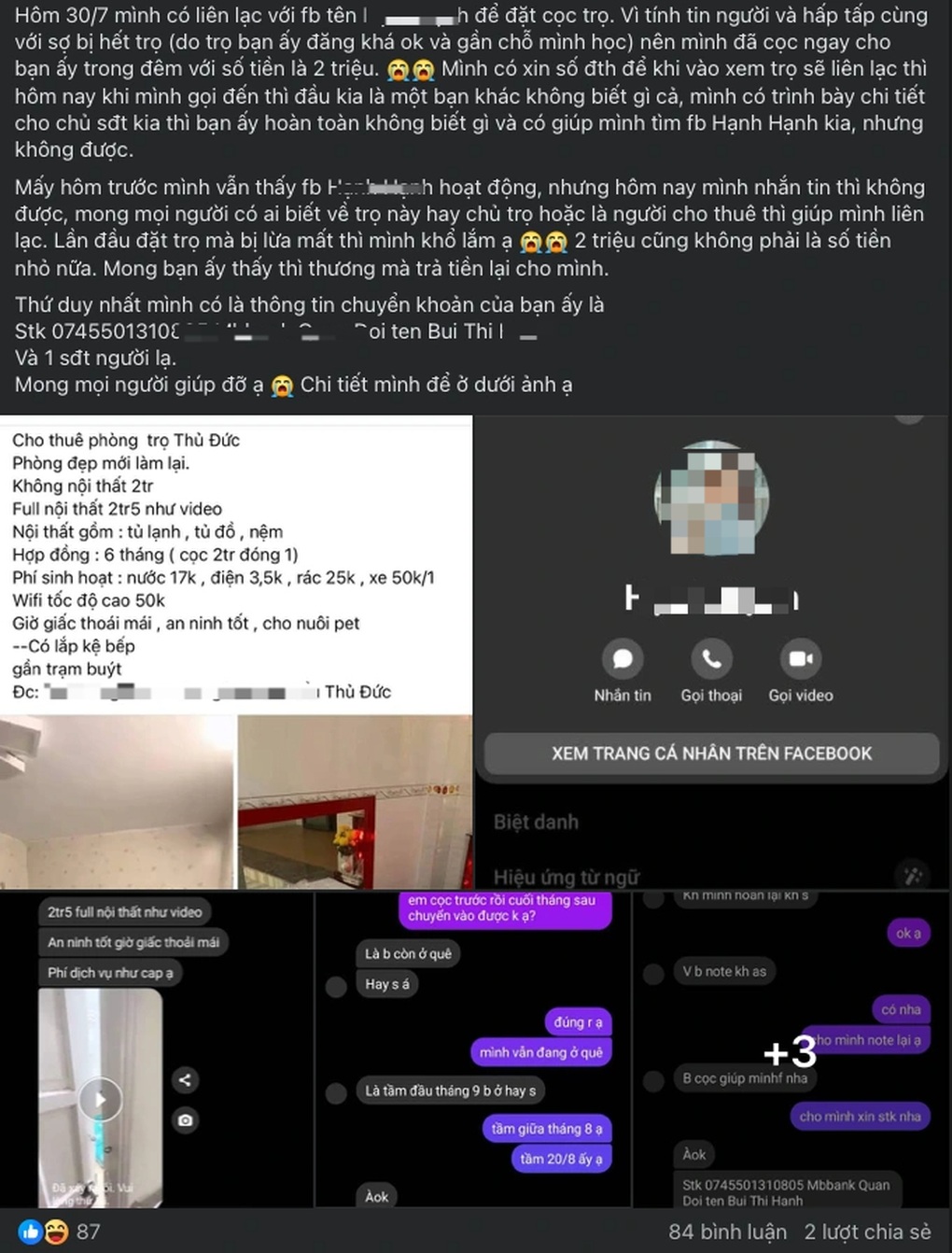
Bao Chau recounted her memorable experience: “I saw an advertisement for a room for rent at only 1.2 million VND/month, much cheaper than the average. The advertiser said I had to transfer 500,000 VND in advance to reserve the room, otherwise someone else would take it. I believed them and transferred the money immediately. But then they blocked my number and I lost all contact. That's when I realized I had been scammed; I lost my money and the room didn't exist.”
Many other students have fallen into a similar situation. Minh Quan, a second-year student at Ho Chi Minh City University of Industry, said he once lost 700,000 VND when he paid a deposit for a "haunted room" advertised in the former Binh Thanh district.
“The photos of the room were great, and it was close to the school. But when we arrived at the address, it was just a locked house, and the neighbors said no one had ever rented it out before,” Quân recounted.
The common thread in these cases is that scammers often exploit the inexperience and impatience of students. With just a few photoshopped images online and an enticing promise, they easily gain the trust of those in a hurry to find accommodation. A transfer of a few hundred thousand dong may seem small, but for many students away from home, it's the money they need for a whole week's living expenses.
Charging unreasonable additional fees in the name of safety.
Even after securing a room, students can still be ripped off with unreasonable fees. Many landlords use safety and amenities as excuses to charge extra money to tenants.
Dang Khoa, a student at Nguyen Tat Thanh University, recounted: “Recently, due to several fire incidents, my dormitory has installed additional fire extinguishers, masks, and fire alarms. But instead of the landlord paying, they're making each room contribute several hundred thousand dong. What angers me is that the price they're charging is double the market rate. Clearly, they're exploiting safety concerns to extort more from students.”
Thu Phuong, a student at the University of Social Sciences and Humanities, Vietnam National University Ho Chi Minh City, and her group of friends once encountered a situation where, after moving out, the landlord suddenly imposed exorbitant fees and demanded that the entire amount be deducted from their security deposit.
However, Thu Phuong bravely spoke up, providing evidence of the room's condition and the contract, ultimately preventing the landlord from "cheating."

In addition, many students have reported being charged extra fees such as cleaning, security, internet, and even unusually high parking fees. Although each fee is not very large, when added together, this becomes a significant burden for students who already have limited finances.
Many people believe these fees are like a "hidden trap"; initially, the listed rent is affordable, but when the fees are added up, the total monthly payment is almost as high as a room in the city center.
In reality, this is a tactic many landlords use to retain tenants. They understand that students are often reluctant to move because of the hassle of searching for and transporting their belongings, so after signing the contract, tenants reluctantly accept and overlook any additional fees. This not only creates financial pressure but also fosters resentment and a lack of trust between the landlord and the tenant.
According to Tien Dung, a real estate consultant in Ho Chi Minh City, the main reason students are easily scammed is their desire for cheap deals and their haste.
"People often worry about losing the room, so they transfer the deposit immediately without going to see it in person or carefully reading the contract. This is the biggest mistake," he remarked.
When looking for accommodation, students should survey the options early to have more choices. Most importantly, they should visit the room in person, carefully checking its condition and the surrounding area. The contract should clearly state the costs of electricity, water, internet, and the vacancy conditions.
Students should absolutely avoid paying deposits online and should prioritize finding rooms through recommendations from friends, reputable groups, or student support centers.
These stories not only serve as a warning to new students but also reflect a troubling reality in the current rental market. Finding suitable accommodation is not just about securing a place to live, but also the first lesson in caution and self-protection skills in an unfamiliar city.
Phuong Thao, Khanh Ly
Source: https://dantri.com.vn/giao-duc/tan-sinh-vien-di-thue-phong-tro-voi-vang-la-dinh-bay-20250901062610676.htm





























































































Comment (0)