

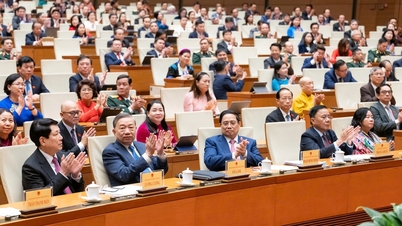
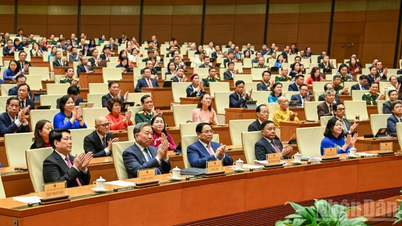
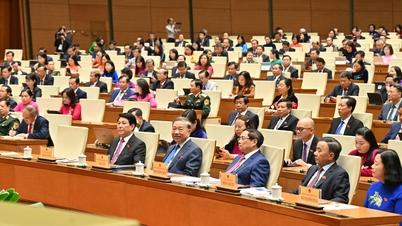
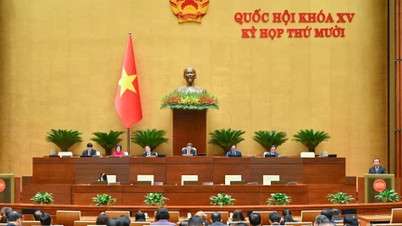
This morning, with 431 out of 433 delegates voting in favor, the National Assembly passed a Resolution on a number of specific mechanisms and policies to create breakthroughs in protecting, caring for, and improving the health of the people.
The resolution stipulates the implementation of increased rates and levels of reimbursement for medical examination and treatment costs under health insurance; and expenditure on screening, diagnosis, and early treatment of certain diseases and priority groups from the Health Insurance Fund according to a roadmap consistent with the socio -economic development conditions of the country, the balancing capacity of the state budget, and the health insurance fund.
According to the resolution, health insurance participants who are members of near-poor households and elderly people aged 75 and above receiving social retirement benefits are entitled to 100% coverage of medical examination and treatment costs within the scope of their health insurance coverage.
Hospital fees will be waived from January 1, 2030.
According to a resolution of the National Assembly, from January 1, 2030, a policy of waiving basic hospital fees within the scope of benefits for health insurance participants will be implemented according to a roadmap consistent with the socio-economic development conditions of the country, the balancing capacity of the Health Insurance Fund, and the increase in health insurance contributions.
The National Assembly also decided to increase the benefit rate within the scope of health insurance coverage for social policy beneficiaries, vulnerable groups, low-income earners, and some other priority groups.
The health insurance fund covers screening, diagnosis, and early treatment of certain diseases.
The National Assembly has directed the implementation of pilot programs to diversify health insurance packages, diversify types of health insurance services, and implement supplementary health insurance provided by insurance companies based on people's needs when eligible.
Any act that violates the physical integrity, health, life, or insults the honor and dignity of medical staff will be dealt with (disciplinary action, administrative penalties, criminal prosecution), and if damage is caused, compensation must be paid in accordance with the law.

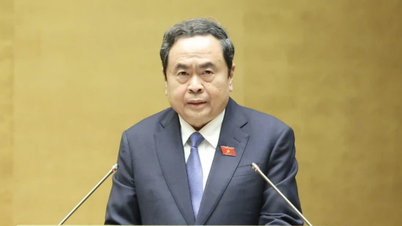
Minister of Health Dao Hong Lan. Photo: National Assembly
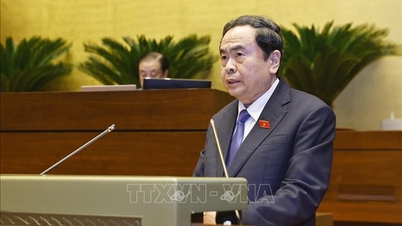
Before the National Assembly deputies voted, on behalf of the Prime Minister, Minister of Health Dao Hong Lan presented the report on the revisions and amendments to the draft resolution.
Minister Dao Hong Lan stated: "The draft has been researched, refined, and has incorporated and revised as much as possible the opinions of National Assembly deputies, and has further specified some contents of Resolution 72."
Regarding salaries and allowances, the draft regulations stipulate that from the effective date of the resolution, medical doctors, traditional medicine doctors, dentists, preventive medicine doctors, and pharmacists currently receiving salary level 1 will be moved to salary level 2. This policy mainly applies to commune-level health stations, preventive medicine, and specialized fields such as psychiatry, forensic medicine, and emergency resuscitation.
This is a groundbreaking regulation in salary policy, consistent with the training process of healthcare workers and demonstrating the concern of the Party, the State, and the National Assembly for the healthcare sector.
Regarding land, tax, and finance policies, the draft adds regulations on forms of attracting social resources, allowing healthcare facilities to decide on the level of allocation to supplementary income funds. The Minister stated that these are "extremely important regulations," contributing to creating conditions for public healthcare facilities to ensure a quality workforce.
The goal is to have 100% of the population possessing electronic health records by 2030.
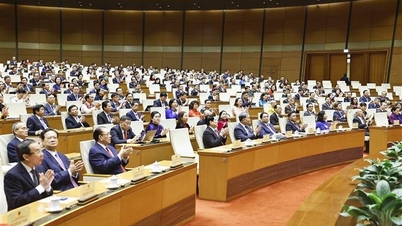
This morning, the National Assembly also approved the draft Resolution of the National Assembly on the National Target Program on healthcare, population and development for the period 2026-2035 with an overwhelming majority of National Assembly deputies voting in favor.

The healthcare sector is subject to special policies. (Illustrative image: Thach Thao)
The overall goal of the program is to ensure that all citizens receive primary healthcare management and care, early and remote disease prevention at the local level, and to reduce disease; to increase the birth rate, strive to achieve a natural balance in the sex ratio at birth, adapt to population aging, and improve the quality of the population; to strengthen care for vulnerable groups; and to contribute to improving the physical and mental health, stature, life expectancy, and quality of life of the people, building a healthy Vietnam.
The National Assembly's resolution emphasizes the goal of striving for 100% of the population to have electronic health records and manage their health throughout their lifecycle by 2030.
Regarding funding, the National Assembly decided that the total capital for implementation during the 2026-2030 period would be 88,635 billion VND, including 68,000 billion VND from the central government budget; 20,041 billion VND from local government budgets; and 594 billion VND from other sources.
Vietnamnet.vn
Source: https://vietnamnet.vn/tang-muc-thanh-toan-chi-phi-kham-chua-benh-mien-vien-phi-tu-nam-2030-2471494.html














































![[OFFICIAL] MISA GROUP ANNOUNCES ITS PIONEERING BRAND POSITIONING IN BUILDING AGENTIC AI FOR BUSINESSES, HOUSEHOLDS, AND THE GOVERNMENT](https://vphoto.vietnam.vn/thumb/402x226/vietnam/resource/IMAGE/2025/12/11/1765444754256_agentic-ai_postfb-scaled.png)



















































Comment (0)