

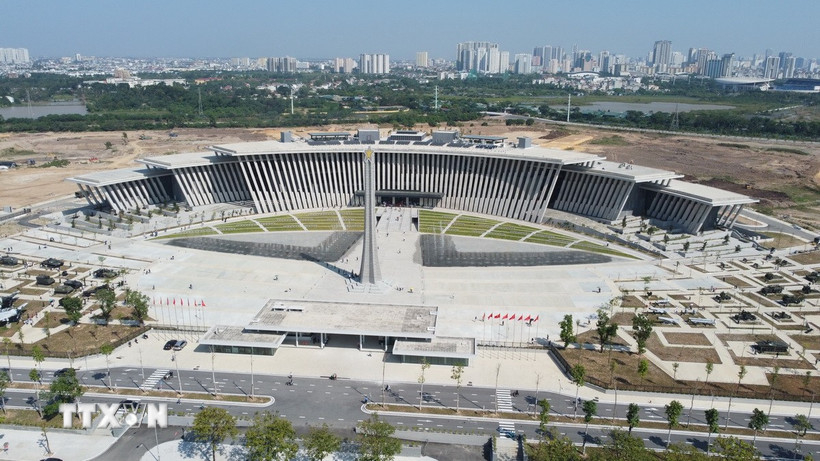
Vietnam Military History Museum with the highlight of the 45m high stone Victory Tower, symbolizing the year 1945 when the country gained independence. (Photo: VNA)
According to an article in the famous American-based science and discovery magazine - National Geographic, 50 years after the country's reunification, Vietnam has overcome the pain of war to move towards the future. But despite its strong growth, Vietnam still cherishes and preserves historical memories.
The following destinations are recommended by National Geographic for tourists who love history and are looking for a tour with a profound experience, especially during the National Day on September 2.
1. Hanoi
In Hanoi, two destinations mentioned by National Geographic magazine are Hoa Lo Prison and the Vietnam Military History Museum.
Vietnam Military History Museum
The museum has moved to a beautiful and spacious location since the end of 2024. This place is preserving and displaying more than 150,000 documents and artifacts, including many unique collections and national treasures including the Soviet-made MiG-21 aircraft, the tank that crashed into the Independence Palace on April 30, 1975, and the Ho Chi Minh campaign map.
There are also exhibition rooms with personal items, photographs, and handwritten letters from soldiers and villagers affected by the war.

National treasure - T54B tank numbered 843 on display at the Vietnam Military History Museum. (Photo: Hoang Hieu/VNA)
Hoa Lo Prison
The prison was built by the French in the late 19th century and held many American prisoners of war. Most of the prison was demolished in the 1990s, but a portion remained and is now a museum.
The exhibits include personal belongings of famous prisoners, including the flight suit of US Senator and Vietnam War veteran John McCain, who was held prisoner when his plane was shot down over Hanoi in 1967.
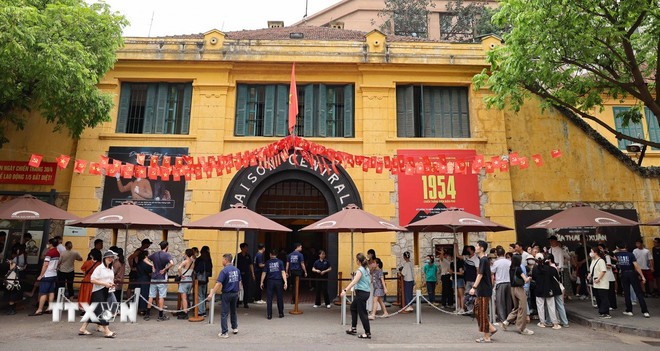
Hoa Lo Prison relic is a “Red Address,” a place to educate patriotism and revolutionary traditions to all classes of people, especially the young generation. (Photo: Thanh Tung/VNA)
2. Quang Tri
Along the country, when coming to Quang Tri, tourists can visit two places associated with the resistance war for national independence: Vinh Moc Tunnels and the Hien Luong-Ben Hai river banks.
Hien Luong-Ben Hai banks
Hien Luong-Ben Hai is a place that witnessed the pain of division between the two regions and historical events associated with the struggle for national liberation and reunification of our army and people during the anti-American-puppet period.
After the Geneva Agreement was signed (July 20, 1954), our country was temporarily divided into two regions, North and South, with the 17th parallel (Ben Hai River) as the boundary, to wait until July 1956 to hold a general election to unify the country. But with the events caused by the sabotage of hostile forces, it took us 21 years (1975), with the blood of soldiers and compatriots shed, to gain independence and unify the country.
The main axis of this monument runs through the North-South direction, with the center being the historic Hien Luong Bridge - the link between the Northern Flagpole and the "Aspiration for Unification" Monument Cluster on the South bank.
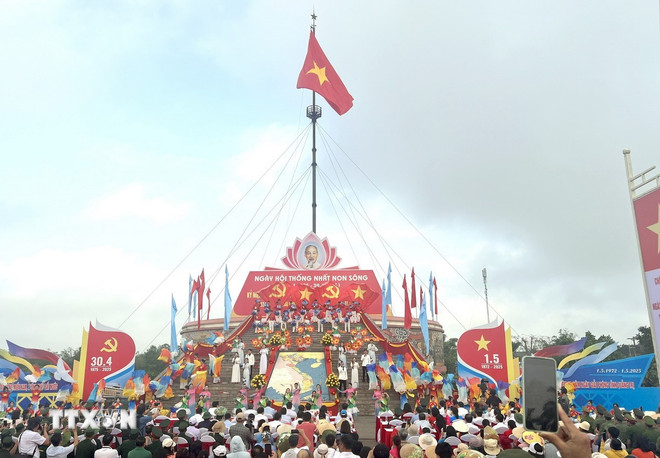
The "National Unification" flag-raising ceremony at the flagpole of the Hien Luong-Ben Hai special relic site. (Photo: Nguyen Linh/VNA)
Vinh Moc Tunnels
Like the Cu Chi tunnels, the tunnels at Vinh Moc are preserved and open to visitors. They once housed 90 families from nearby villages who took refuge there from 1966 to 1972 when the area was bombed by the US.
The tour takes visitors inside the tunnel, showing areas built for kitchens, wells and even maternity wards.
Vinh Moc Tunnels is located near Hien Luong-Ben Hai, visitors can combine two sightseeing spots in one day.
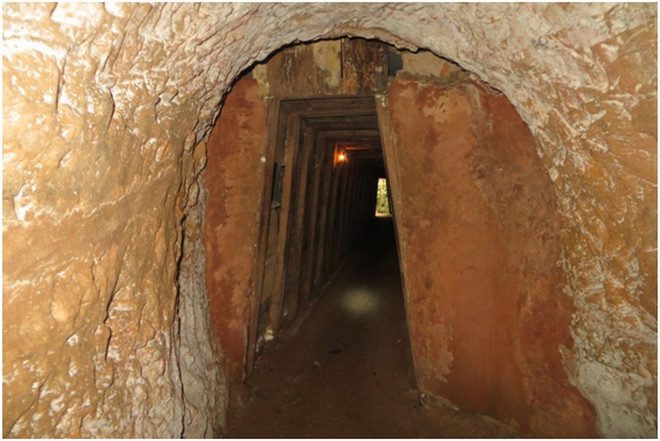
Vinh Moc Tunnels. (Photo: Department of Cultural Heritage)
3. Quang Ngai
In Quang Ngai, National Geographic mentioned My Son Relics - where every tree branch and blade of grass is associated with unforgettable memories.
There is a touching and heartbreaking museum and monument here about the My Lai massacre in Son My village.
Once a witness to horrors, Son My is now a place of peaceful life. Visitors can linger to learn about the lives of the people on river tours and enjoy seafood on the beach.
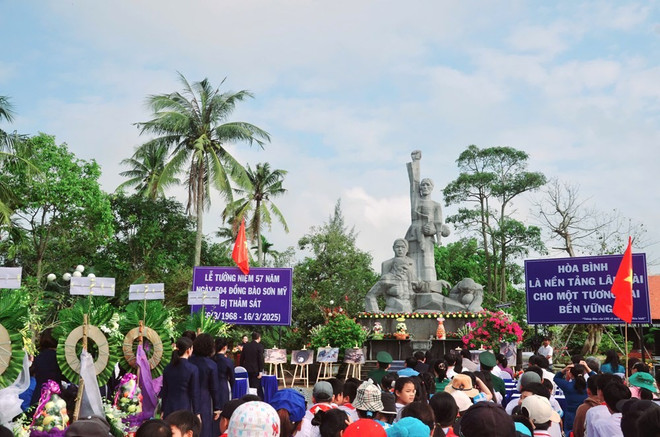
(Photo: Vietnam National Administration of Tourism)
4. Ho Chi Minh City
In Ho Chi Minh City, three historical destinations not to be missed this time are the War Remnants Museum, Independence Palace and Cu Chi Tunnels.
Independence Palace
The building is considered a symbol of Ho Chi Minh City, marking the official end of the war in Vietnam. Built in 1966, the Independence Palace is widely open to tourists, with guides in Vietnamese and several other languages. The interior remains largely unchanged since its construction. The basement leads visitors to the war rooms, which feature antique radio equipment, telephones and soundproof walls.
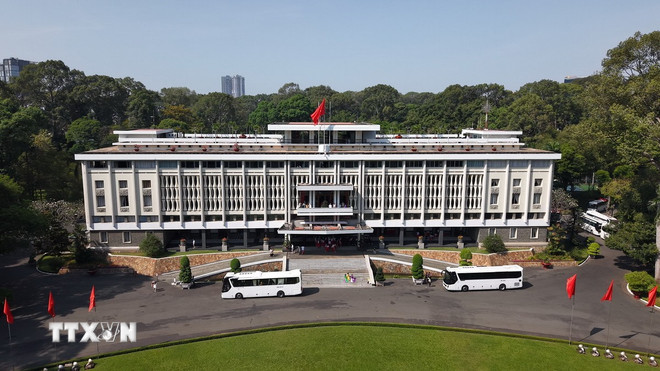
Independence Palace at 135 Nam Ky Khoi Nghia, Ben Thanh Ward, District 1, Ho Chi Minh City. (Photo: VNA)
War Remnants Museum
The War Remnants Museum was established on September 4, 1975 and is currently a member of the Vietnamese Museum system, the Museums for World Peace (INMP) and the International Council of Museums (ICOM).
The museum specializes in researching, collecting, preserving and displaying evidence of crimes and consequences of wars of aggression against Vietnam. Through that, the museum calls on the public to raise awareness against unjust wars, protect peace and solidarity and friendship between peoples of countries around the world.
The museum currently has 9 permanent exhibitions, many short-term and traveling exhibitions, and organizes receptions, meetings, and exchanges between the public and war witnesses.

Tourists visit the Museum. (Photo: Hong Dat/VNA)
Cu Chi Tunnels
Located about 70km northwest of Ho Chi Minh City center, Cu Chi tunnels are a miniature of the creative and varied battle formations of the army and people of Cu Chi during the long and fierce 30-year resistance war against invaders, gaining independence and freedom for the Fatherland.
The entire Cu Chi tunnels have a total length of 250km, divided into 3 different depths. The highest level is 3m above ground, the middle level is 6m, the deepest level is 12m. In addition to the area for soldiers to live and store weapons, the Cu Chi tunnels are also divided into many branches with areas of nail holes, spike pits, minefields...
Relying on the system of underground tunnels, fortifications, and trenches, soldiers and people of Cu Chi fought extremely bravely, achieving miraculous feats.
With its great feat, Cu Chi tunnels have entered the history of the heroic struggle of the Vietnamese people as a legend of the 20th century and become a famous place in the world./.
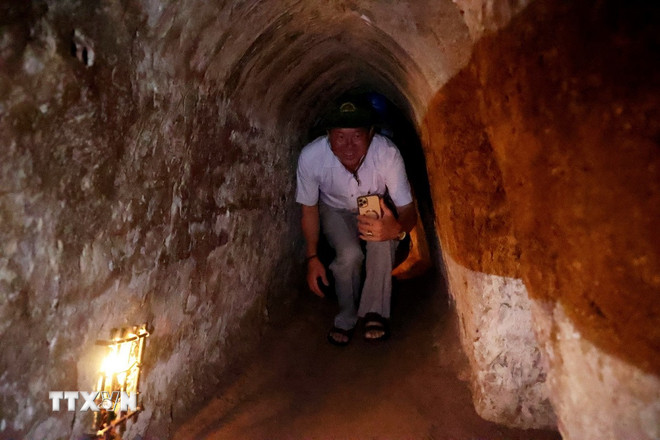
Visitors experience the tunnel space in Cu Chi tunnels. (Photo: Hong Dat/VNA)
(Vietnam+)
Source: https://www.vietnamplus.vn/tap-chi-my-goi-y-cho-du-khach-nhung-diem-den-lich-su-o-ba-mien-viet-nam-dip-le-29-post1055006.vnp


![[Photo] Explore the US Navy's USS Robert Smalls warship](/_next/image?url=https%3A%2F%2Fvphoto.vietnam.vn%2Fthumb%2F1200x675%2Fvietnam%2Fresource%2FIMAGE%2F2025%2F12%2F10%2F1765341533272_11212121-8303-jpg.webp&w=3840&q=75)

















































































Comment (0)