

China - the biggest customer for Vietnamese agricultural products.
According to a report by the Ministry of Agriculture and Rural Development , in 2023, China, the United States, Japan, the EU, and ASEAN continued to be the top five export markets for Vietnamese agricultural products.
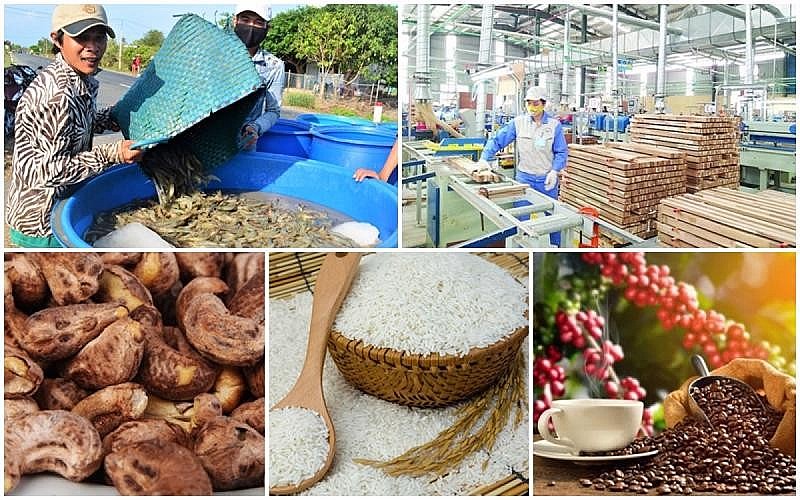 |
| More opportunities, increased agricultural export value to China. |
However, last year, except for the Chinese market which recorded positive growth, Vietnam's agricultural exports to key markets all experienced negative growth.
Specifically, agricultural exports to the Chinese market increased by 17% compared to 2022 and accounted for 23% of the total export value of our country's agricultural sector in 2023.
Accordingly, China has officially surpassed the United States to become the largest customer for Vietnamese agricultural, forestry, and aquatic products. In 2023, China spent up to $12.2 billion importing Vietnamese agricultural, forestry, and aquatic products.
By the end of 2023, Vietnam had issued 3,013 business codes for exporting to China. Of these, 1,570 codes (accounting for 52%) belonged to high-risk product groups managed by five competent authorities.
The remaining 1,443 codes (accounting for 48%) were self-registered by businesses under Order 248. The agricultural and food product groups most frequently exported to the Chinese market by businesses are mainly seafood and plant-based products.
Mr. Ngo Xuan Nam, Deputy Director of the SPS Vietnam Office, stated that the Chinese market is one of Vietnam's key export markets for agricultural products. Recently, China has issued regulations on food safety and plant and animal quarantine for each product category.
For Vietnam, there are certain product categories that have traditionally been exported to the Chinese market. However, there are also product categories that have signed agreements through protocols with the General Administration of Customs of China to promote exports, such as seafood, fresh fruit, plant-based products, and animal-based products like bird's nests, in order to boost agricultural and food exports.
Particularly since 2021, China has issued Orders 248 and 249 on the registration of agricultural and food export enterprises and the management of food safety in import and export. Recently, China has approved over 3,000 product codes for Vietnamese agricultural and food processing plants exporting to China. Therefore, promoting agricultural exports to the Chinese market has been relatively smooth in recent times.
Facilitating the early return of spiny lobster to the Chinese market.
According to experts, in 2024, China continues to be a potential market with many opportunities for Vietnamese agricultural products to increase their market share and export value. This is because, according to the Ministry of Agriculture and Rural Development, the General Administration of Customs of China has agreed to finalize and supplement some contents in three protocols on the export of wild-caught seafood, farmed crocodiles, and farmed monkeys from Vietnam.
In addition, China has also agreed to open its market and expedite the completion of import procedures for key Vietnamese fruits, including avocados and passion fruit. This can be seen as good news for farmers growing these products in the Central Highlands and the Mekong Delta.
Regarding the livestock sector, the General Administration of Customs of China has also agreed to review applications for Vietnam to export poultry products to the Chinese market. This is a testament to Vietnam's proactive efforts after establishing many disease-free zones and exporting livestock products to previously demanding markets.
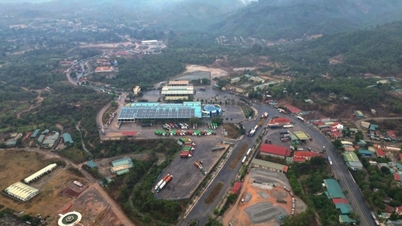
Furthermore, to enhance cooperation between quarantine units in the border area, after the Lunar New Year of the Year of the Dragon, the two sides will hold a briefing meeting between functional forces along the border line to strengthen exchanges, learn from experience, and resolve difficulties arising during the implementation of tasks at border gates.
Regarding the working visit of the Vietnamese Ministry of Agriculture and Rural Development to the Chinese Ministry of Agriculture and Rural Affairs, the General Administration of Customs of China, and the Guangdong Provincial Government, Mr. Tran Thanh Nam – Deputy Minister of Agriculture and Rural Development of Vietnam – stated that, according to international law and protocols, sturgeon is a product permitted for exchange and trade as long as it is not on the CITES restricted list. Vietnam is committed to creating favorable conditions for businesses of both countries to conduct trade in the product, including breeding stock.
Regarding spiny lobsters, your side has recently revised some regulations, particularly prohibiting the harvesting of products from the wild, which are on the list of protected wildlife. However, the delegation from the Ministry of Agriculture informed you that Vietnam raises over 1,000 tons of spiny lobsters in cages annually. Each farming cycle takes approximately 13-18 months before harvesting. Therefore, we request your attention and assistance in resolving the difficulties faced by our fishermen in this marine farming sector.
Regarding this matter, China has basically agreed and will facilitate the return of Vietnamese spiny lobsters to the Chinese market. Along with the sturgeon issue, both sides will add relevant content to the Protocol on sanitary and phytosanitary requirements for naturally harvested aquatic products, aiming to boost bilateral trade.
According to Deputy Minister Tran Thanh Nam, 2023 witnessed spectacular growth in durian, a product that has been officially exported for over a year. Currently, durian is a valuable export fruit, reaching over $2 billion per year. Therefore, we have reason to be optimistic about other products that China will soon open its market to.
With poultry, we have over 500 million birds, successfully exported to Japan, Russia, and South Korea. If we can penetrate the massive Chinese market, it will provide a foundation for the livestock industry to further expand farm-scale production and establish biosafety zones.
However, the Chinese side also noted that we should pay more attention to the quality, design, and packaging of products, to avoid a few batches of substandard goods affecting the entire value chain of the industry.
To establish a strong brand presence in the Chinese market, Mr. Tran Thanh Nam stated that products must meet three criteria: quality, design, and reasonable price. The Chinese side has basically agreed to facilitate access for Vietnamese agricultural products to major wholesale markets in Guangdong province, even allocating dedicated space for display.
"Hopefully, through these results, localities will focus on directing the development of high-quality, safe agricultural and food supply sources that meet the standards required by our partners. Along with that, businesses will cooperate in building logistics chains to ensure the regular and rapid flow of goods, reducing costs before they reach consumers," Mr. Tran Thanh Nam emphasized.
Source link





































































Comment (0)