

In line with Resolution 57, the participation of the entire population is encouraged.
This year's conference attracted over 70 delegates from Vietnam and abroad, participating both in person and online, including government agencies, international organizations, businesses, universities, startups, investors, and social organizations. More than just a side event of TECHFEST, the conference marks a significant milestone in the process of realizing Resolution 57-NQ/TW, a document that identifies science , technology, innovation, and national digital transformation as a "new strategic breakthrough" for Vietnam.
The resolution emphasizes the central role of citizens, businesses, and social organizations, while also outlining requirements such as promoting open data, policy testing (sandboxing), supporting startups, and encouraging social participation in solving public-private issues. This forms the theoretical and policy foundation for open social innovation to become an inevitable trend.
In that spirit, the workshop focused on four main themes: Innovation becoming a nationwide movement – ensuring all community groups have the opportunity to participate in creating solutions; Promoting Community Data (CGD) – the foundation for inclusive innovation; Developing a new generation of human resources – open-minded, responsible, ESG, AI for Good; Launching the SOAR model – Social Open Innovation promoting responsible collaboration.
The launch of the SOAR initiative, a Social Open Innovation model, at TECHFEST 2025 marks a significant milestone in promoting a responsible collaborative ecosystem in Vietnam. SOAR focuses on four pillars: openness to encourage nationwide participation; connectivity to mobilize all resources; inclusiveness to ensure no one is left behind; and responsibility to ensure technology aligns with social values. The model is expected to create a standard platform for open innovation, contributing to broader impacts in education , healthcare, the environment, urban development, and community digital transformation.
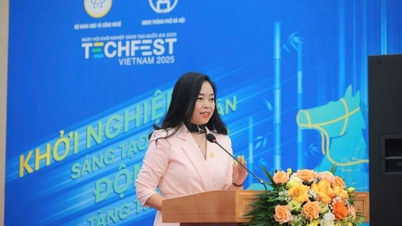
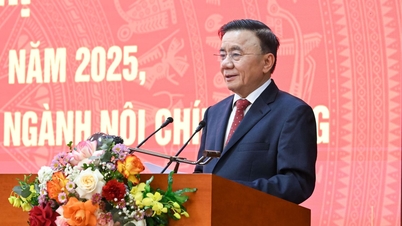
In his opening remarks, Mr. Pham Hong Quat, Director of NATEC, emphasized that open innovation is the key to Vietnam's growth in the face of numerous challenges such as the middle-income trap, population aging, urbanization pressure, and environmental concerns. He compared the spirit of innovation to the image of Saint Giong, the symbol of TECHFEST 2025: "Strength grows from the joint efforts of the community." According to Mr. Quat, when community groups, From young people, women, and people with disabilities to those in rural areas, having the opportunity to participate in testing and benefit from innovative solutions will create more practical and widespread value.

He affirmed that NATEC will continue to work alongside MSD United Way Vietnam and the Open Social Innovation Community to contribute to building a rapidly developing, sustainable ecosystem, aiming towards green, smart, and inclusive cities.
From an international partnership perspective, the Ambassador of the Kingdom of the Netherlands to Vietnam, Kees van Baar, highly appreciated Vietnam's efforts in promoting inclusive innovation. He emphasized that technology must be linked to people to ensure that no one is left behind, especially women, youth, and vulnerable groups. According to the Ambassador, an open society where people have the opportunity to experiment, innovate, and participate in creation is the only environment that can foster sustainable innovation. He affirmed that the relationship between the Netherlands and Vietnam is not just about trade but also about a partnership of shared values, and committed to accompanying Vietnam in initiatives to promote innovation and inclusive development.
Entrepreneurial workforce needs a new mindset: social value is a "competitive weapon".
In her trend analysis, Ms. Nguyen Phuong Linh, Director of MSD United Way Vietnam, presented a comprehensive picture of the social innovation ecosystem. According to her, Vietnam is facing four main barriers: limited data, lack of multilateral cooperation mechanisms, lack of impact measurement standards, and a mismatch in human resource capacity. To overcome these, the ecosystem needs to strengthen its pillars: Innovation - Openness - Connectivity - Inclusion - Soaring. She argued that innovation is not just about technology, but about the ability to create spaces where all citizens are heard and participate in creating solutions. “When an elderly person in a rural area, a woman with a disability, or a student in a remote area can contribute data and feedback, the ecosystem becomes not only smarter but also fairer and more humane,” she emphasized. Genuine connections, based on real data, are the driving force that will enable Vietnam's innovation ecosystem to "take off"—in the true spirit of the SOAR model launched at the event.

From a business perspective, Mr. Sun Sukkun, Director of Shinhan Square Bridge, Shinhan Financial Group Hope Fund He shared his experience in implementing the open social innovation model in South Korea and Vietnam. This model creates an interdisciplinary platform where startups, large enterprises, social organizations, and communities can develop, experiment, and expand their social impact together. He emphasized that mentoring and coaching are vital elements, helping startups overcome barriers in collaborating with large corporations. According to him, the value of open innovation lies not only in economic benefits but also in its ability to create social value, aligning with ESG trends and sustainable development. Shinhan Group is committed to further expanding cooperation and calls for the joint efforts of stakeholders in the Vietnamese ecosystem.

Meanwhile, Ms. Le My Nga, Chairwoman of WeAngels Capital, focused on the capabilities of the new generation of startups. According to her, the innovation ecosystem in Vietnam is entering a period of strong development, but the most important question remains: do startups create real value? She emphasized that in the context of increasingly fierce competition, startups must prioritize innovation linked to social value, understand the true needs of the community, and build sustainable governance models. Small and medium-sized enterprises (SMEs) lacking this mindset need support to develop into innovative, competitive, and highly adaptable businesses in a rapidly changing environment.
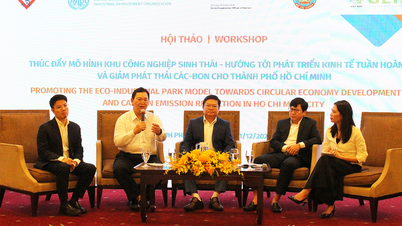
Within the framework of the event, three in-depth panel discussions were held on the topics: “Nationwide Innovation – Unlocking Vietnam's Aspirations”, “Citizen-Generated Data (CGD) and its Application in Innovation and Sustainable Development”, and “Nurturing Future Human Resources for Sustainable Development”. The discussions provided rich perspectives from experts, businesses, research institutes, universities, and social organizations, contributing to clarifying the potential and new direction of the national innovation ecosystem.

The workshop "Open Social Innovation - Promoting Nationwide Innovation and Entrepreneurship" is therefore considered a highlight of TECHFEST 2025, conveying a strong message about a Vietnamese innovation ecosystem entering a phase of acceleration, greater openness, connectivity, and humanism. With the spirit of Saint Giong – growing stronger through community power – open social innovation is expected to become a crucial driving force helping Vietnam achieve its goal of becoming an upper-middle-income country by 2030 and a developed country by 2045.
Source: https://baophapluat.vn/thuc-day-khoi-nghiep-sang-tao-toan-dan-trong-ky-nguyen-moi.html
























































Comment (0)