

A 30% increase in the total salary fund for officials, civil servants, and public employees is unfair.
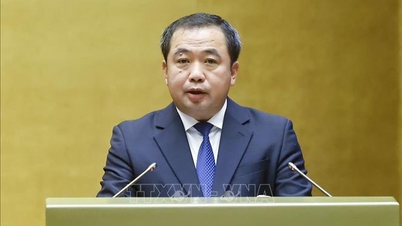
Representative Pham Van Hoa (National Assembly delegation of Dong Thap province) expressed his agreement with the Government's proposal to implement salary reform and related policies according to a roadmap, in a step-by-step, cautious, and certain manner, ensuring feasibility, effectiveness, and suitability to the budget's ability to pay. The representative argued that abolishing the base salary and salary coefficient is still inadequate because the inclusion of a 25% public service allowance in the new salary scale has resulted in an average increase of 23.25% in the basic salary of civil servants (lower than the average increase of 54.3% for public employees and the 43.96% increase for the armed forces).
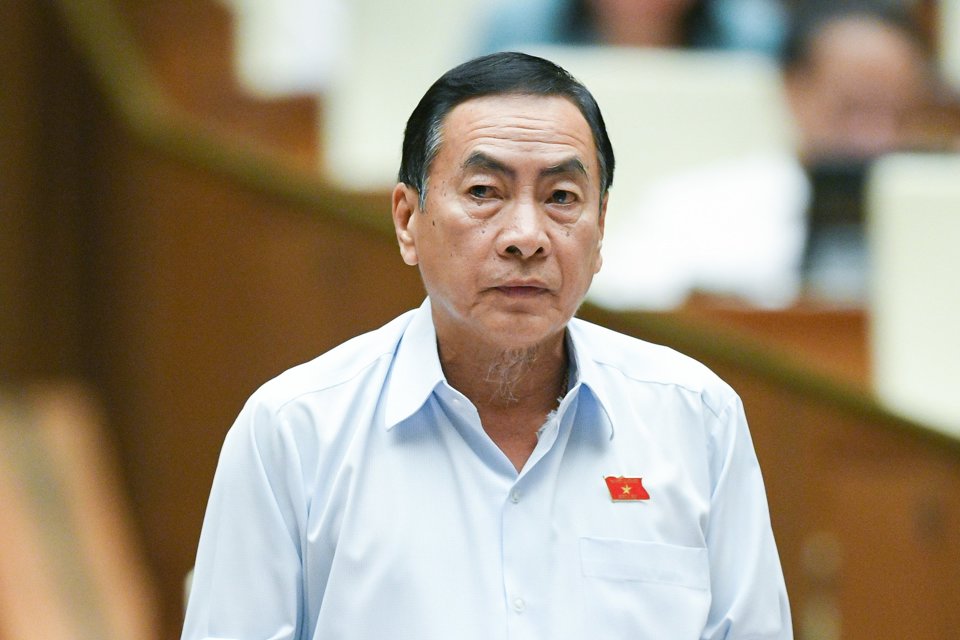
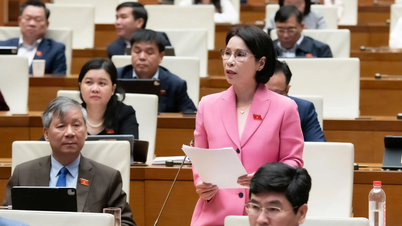
"The 30% increase in the total salary fund for officials, civil servants, and public employees, and the 51.93% increase for the armed forces, is unfair to other salary recipients and inconsistent with the proposed new salary scale. The lowest salary for employees at level 1, intermediate, and probationary levels in the probationary salary scale is low compared to the salary increase and the average salary of civil servants, which could easily cause instability and dissatisfaction during salary reform," said delegate Pham Van Hoa.
Furthermore, according to the delegates, the transition from the old salary scale to the new one for civil servants and public employees holding leadership positions who are currently receiving professional and technical salaries with leadership allowances will be very difficult because many old salary levels, such as civil servant grades, professional titles, and other public employee levels, are placed into a new salary level, leading to many cases where the salary is lower than the current salary. In addition, calculating salaries based on job positions would require amending many regulations of the Party and State regarding policies and regimes linked to the current base salary.
Representative Pham Van Hoa also analyzed the disparity in pension benefits between those retiring before and after July 1, 2024, as well as the removal of seniority allowances for some civil servants and public employees in specialized fields, which has led to a significant reduction in new salaries - especially in mountainous and difficult areas - and the preferential allowances have caused resentment among civil servants and public employees.
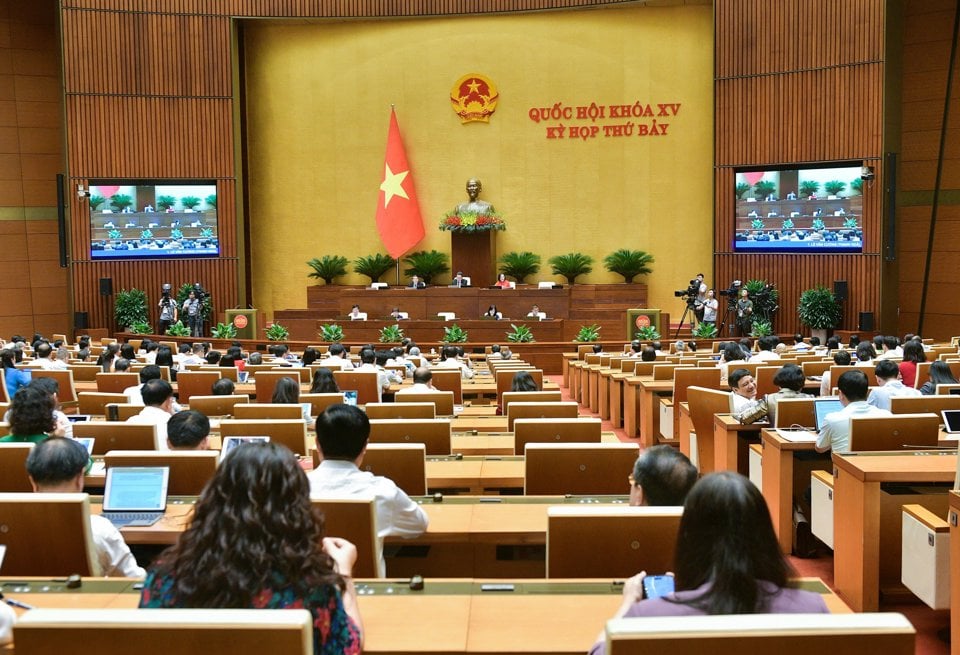
Teachers continue the same refrain of "waiting and hoping."
Representative Duong Minh Anh (Hanoi National Assembly Delegation) stated that the solution to adjust the basic salary for civil servants, public employees, and armed forces personnel in the public sector from 1.8 million VND to 2,340,000 VND, an increase of 30%, and to increase the bonus fund by 10% of the basic salary fund, effective from July 1, 2024, has partially met the expectations of voters. However, because the salary reform policy has not yet been implemented, we continue to apply the current salary scale and allowance system. Therefore, some civil servants and public employees in the public sector, including those in the education sector, still have many concerns and anxieties.
According to delegate Duong Minh Anh, since 2013, after the Central Committee issued Resolution 29 on fundamental and comprehensive educational reform, many major policies on educational reform have been promulgated. The demands for improving the quality of education and training, both in terms of quality and quantity, have become increasingly high, creating considerable pressure on teachers. However, the salary policy only applies Resolution 29, which prioritizes teachers' salaries, placing them at the highest level in the administrative and public service salary system. After 11 years, this regulation remains on paper and has not been implemented.
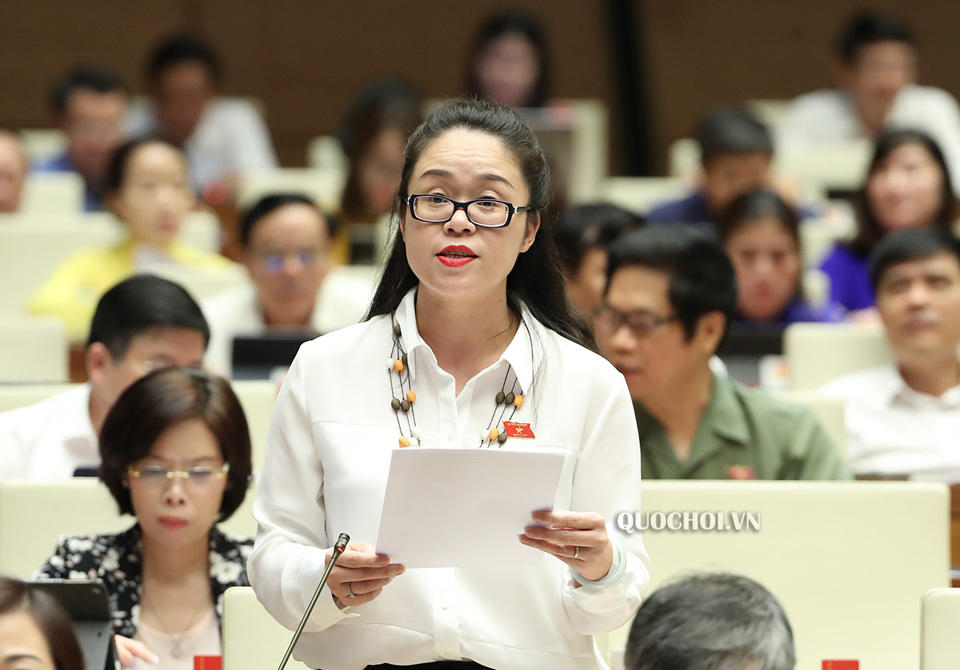
Throughout this time, educators have always strived to dedicate themselves fully to the cause of education and training, encouraging each other to wait and hope for a major change in salary policies someday. However, to this day, educators will continue the same refrain of "waiting and hoping" until new salary reform policies are enacted.
"I earnestly propose to the National Assembly and the Government that when studying the upcoming salary reform policy, they should institutionalize the Party's guidelines through laws or sub-laws on salary policies and professional allowances for teachers," said Representative Duong Minh Anh.
Along with raising wages, there must be solutions to stabilize prices.
Regarding the proposed salary payment method, National Assembly delegate Nguyen Quang Huan (Binh Duong province) stated that Resolution 27/2018 of the Central Committee mentioned that we have reformed the salary system four times, the most recent being in 2003. Comparing the economy in 2003, when our GDP was approximately $45 billion, to the current GDP of over $450 billion, it represents a tenfold increase. Accumulating 913 trillion VND to pay salaries in this round is a significant effort given the current economic difficulties.
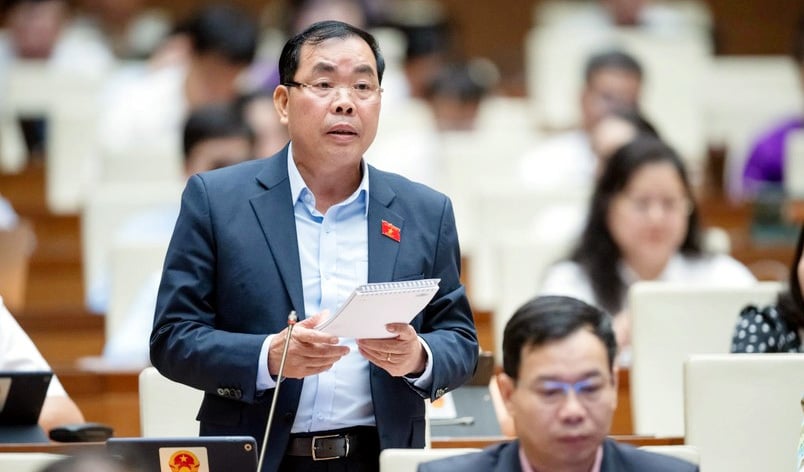
However, delegates suggested that the government consider implementing a salary formula based on GDP growth: salaries would increase proportionally to GDP growth. Increasing salaries in line with GDP would reassure civil servants about their income, encourage long-term commitment to their jobs, and also combat corruption from the outset. Because when salaries are high enough to cover living expenses and support their families, they will be less inclined to engage in corruption and will be hesitant to get involved due to the potential loss of significant income.
Representative Ta Van Ha (National Assembly delegation of Quang Nam province) suggested that in addition to salary increases, reforms to streamline the organizational structure and reduce the number of personnel must be further promoted. While living standards have improved with higher salaries, streamlining the organizational structure and reducing the number of personnel must be pursued more actively.
Representatives stated that, in reality, prices had already risen before the salary increase. Therefore, along with the salary increase, solutions are needed to stabilize prices, especially for consumer goods. At the same time, attention must be paid to the issue of personal deductions; if salaries increase by 30%, personal deductions should also increase by at least 30%, or even up to 50%.
Source: https://kinhtedothi.vn/dai-bieu-quoc-hoi-tra-luong-theo-muc-tang-gdp-se-chong-tham-nhung-tu-dau.html






















![[Photo] Prime Minister Pham Minh Chinh holds a phone call with the CEO of Russia's Rosatom Corporation.](/_next/image?url=https%3A%2F%2Fvphoto.vietnam.vn%2Fthumb%2F1200x675%2Fvietnam%2Fresource%2FIMAGE%2F2025%2F12%2F11%2F1765464552365_dsc-5295-jpg.webp&w=3840&q=75)

















































Comment (0)