

The violations are happening every day, every hour.
In just the last few years, cross-border platforms have simultaneously launched new applications, most notably TikTok, which, with its short video clips, is attracting a large number of users—in a way, these users are also readers of news articles—and copyright infringement has shifted to a new form that, according to many experts, seems far more serious.
A series of video clips, images, and audio recordings containing information that has been edited, copied, distorted, or misrepresented not only cause significant economic losses for copyright holders but also affect the reputation of many mainstream media outlets.
In 2022, according to research by Media Partners Asia, Vietnam ranked third in the region, after Indonesia and the Philippines, in terms of copyright infringement rates in the digital space. However, per capita, Vietnam ranked first with approximately 15.5 million people illegally viewing content. The situation of organizations and individuals infringing on journalistic copyright is quite serious, especially for television broadcasters.
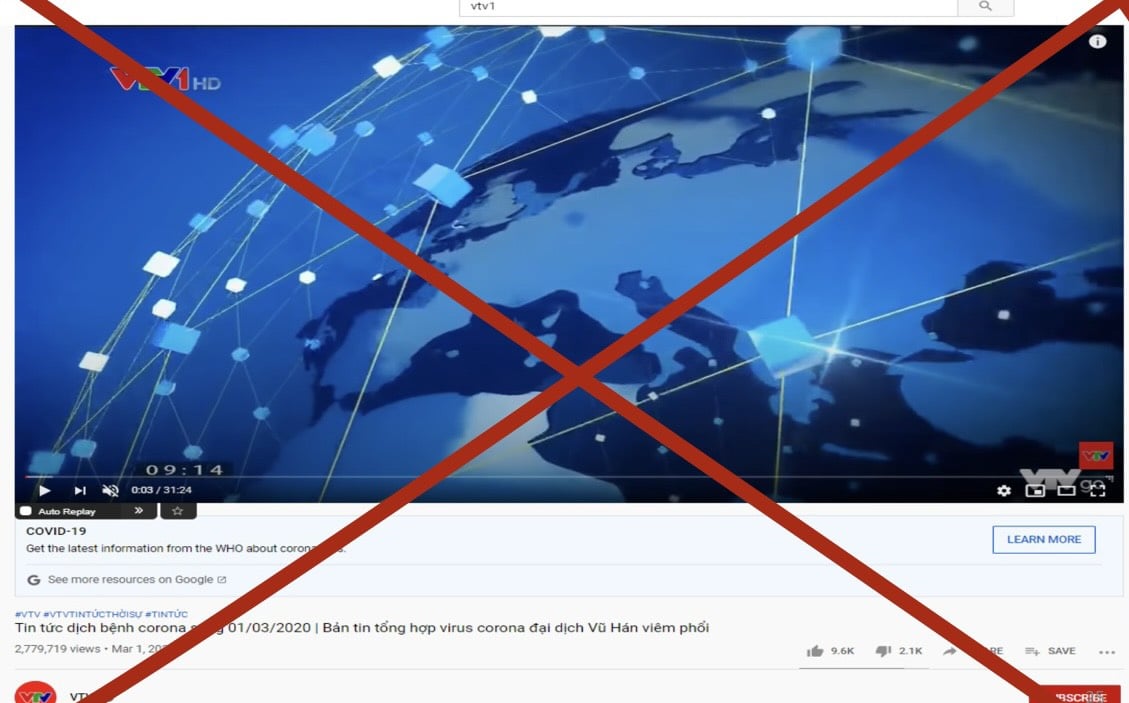
A video on a fake VTV1 YouTube channel has over 2.7 million views.
Regarding the issue of copyright infringement by Vietnam Television (VTV), Mr. Nguyen Thanh Van, Deputy Head of the Inspection Department of VTV, stated that many entities use VTV's television programs without permission or agreement. When re-broadcasting VTV's programs, many places arbitrarily cut out or inserted their own advertisements. Outstanding television programs such as The Voice, Do Re Mi, and Gap Nhau Cuoi Nam (Meeting at the End of the Year), which VTV incurred extremely high copyright and production costs for, are being copied and widely distributed on the Internet, even being printed and sold on DVDs.
"Some television stations are re-broadcasting programs from the station, especially entertainment programs on VTV3, on their own channels. Many programs require significant costs to purchase broadcasting rights, particularly on Pay TV platforms, but are then re-broadcast by other individuals and organizations without paying royalties. In the internet sector, copyright infringement of VTV programs is very serious," Mr. Nguyen Thanh Van stated.
According to Mr. Van, game shows, sports programs, and television dramas are increasingly becoming "victims" of copyright infringement in the digital environment. Television series are being fragmented, cut into pieces, and taped with sensationalist captions to attract views. Currently, there are approximately 200 websites showing copyrighted films, generating hundreds of millions of views annually and earning hundreds of billions of dong in illegal advertising revenue. To evade state authorities, criminals are constantly devising new methods to steal copyrights, such as livestreaming, streaming, and the newest form: film reviews.
In the field of sports, all sporting events worldwide can be illegally streamed through nearly a hundred copyright-infringing websites. For the English Premier League alone, in the first quarter of 2023, there were over 4 million illegal streams in Vietnam. Mr. Van stated: "A brazen tactic that has emerged recently is for criminals to attack government websites to connect to online football betting sites."
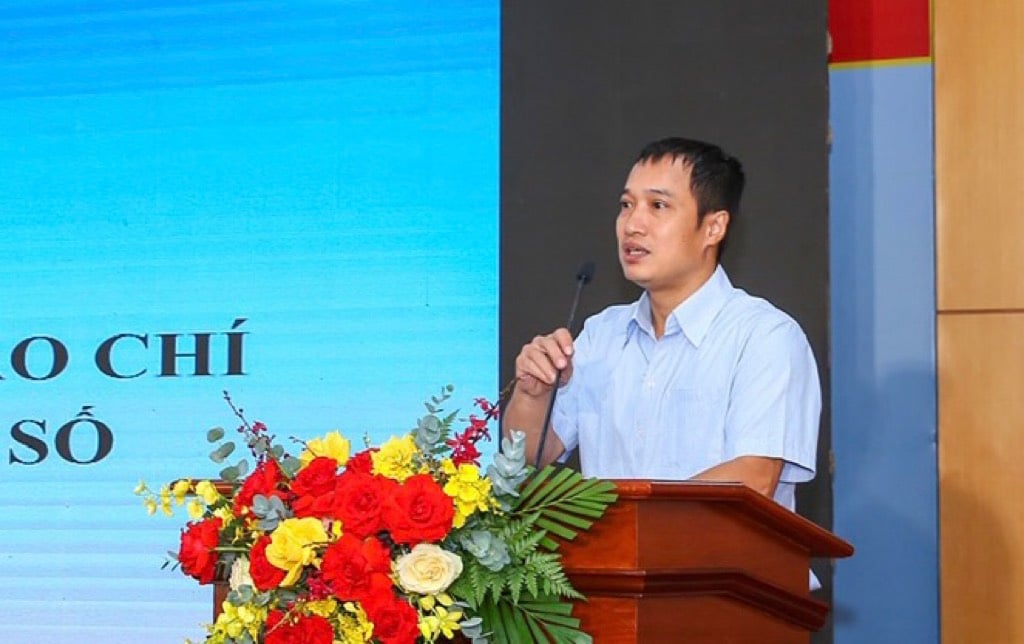
Mr. Nguyen Thanh Van, Deputy Head of the Inspection Department of Vietnam Television, stated that violations of content in the digital environment not only cause significant material damage but also affect the reputation and brand of the station. (Photo: Son Hai)
Data from Kantar Media Vietnam reveals a paradox: It is projected that in 2023, the advertising market in Vietnam for news organizations will only be worth approximately 3 trillion VND. Meanwhile, revenue related to exploiting journalistic content, such as advertising, is flowing to websites, online platforms, and social media accounts that copy journalistic products, amounting to around 80 trillion VND. Many individuals and organizations have taken advantage of social media platforms and video applications to extensively use journalistic information and products, subsequently profiting from advertising.
"VTV's content is being illegally uploaded and pirated by numerous video streaming sites every day and every hour. Individuals create clips inserting VTV's logo and video content to build trust, advertise traditional medicine and gambling applications, causing not only significant material damage but also affecting the station's reputation and brand. VTV has been rejected by partners who own the broadcasting rights for attractive entertainment and sports programs because they could not effectively prevent copyright infringement," Mr. Van emphasized.
The penalties for violations are still not strict enough.
According to Mr. Nguyen Thanh Van, the situation of organizations and individuals violating press copyright is serious, especially for television organizations. However, the handling of violations is still not strict and comprehensive enough.
This requires VTV in particular, and media agencies in general, to proactively invest in modern scanning tools and build a team of highly qualified and experienced personnel in the field of intellectual property. At the same time, it demands strict enforcement from state management agencies and concerted efforts from internet service providers.
From a legal standpoint, journalist Nguyen Duc Hien, Deputy Editor-in-Chief of the Ho Chi Minh City Law Newspaper, argues that the current penalties for copyright infringement are very low and insufficient to deter violations. He suggests amending the regulations to increase administrative penalties for copyright infringement to enhance deterrence against such acts.

Taking advantage of VTV's reputation and brand, the clip inserted VTV's logo and video content to build trust and advertise traditional medicine and gambling applications.
Specifically, journalist Nguyen Duc Hien cited Decree No. 131/2013 on administrative penalties for violations of copyright and related rights, amended and supplemented by Decree No. 28/2017, stating that the act of infringing the right to protect the integrity of a work is only punishable by a fine of 3-10 million VND. The act of infringing the right to publish a work without the permission of the copyright owner is only punishable by a fine of 5-10 million VND. The act of distributing a work without the permission of the copyright owner is only punishable by a fine of 10-30 million VND.
Alternatively, according to Decree 119/2020, a general information website that publishes or broadcasts journalistic, literary, artistic, or published works without the consent of the intellectual property rights holder will only be fined between 10 and 20 million VND.
"These figures are insignificant; the current penalties are very low. I think they need to be increased three, five, or even ten times to have a stronger deterrent effect on organizations and individuals who violate the law," journalist Nguyen Duc Hien stated.
According to Mr. Hien, one obstacle preventing media outlets from exercising their right to protect themselves is that, in order to punish infringers, they must sue, report, and prove their innocence. This process can sometimes be much more time-consuming and expensive than the compensation they might receive. Many media outlets currently either ignore the infringement, or call the infringing party to request the removal of the content, or have the author, who is a reporter, complain on Facebook.
"If we were to sue for a violation now, instead of a 30 million VND fine, we could increase it to 500 million VND. Even before the authorities get involved, our lawyers working with the opposing side's lawyers would certainly force them to negotiate a compensation agreement, and they wouldn't dare violate the law again," Mr. Hien stated.
Mr. Nguyen Duc Hien commented that the penalties are too low, making victims feel that the infringement is "not worth it." It creates a feeling for both the abuser and the victim that it's not a big deal. Over time, such illegal and uncivilized behavior becomes normalized. Furthermore, with works being "brutally" infringed upon by multiple parties, media organizations are completely powerless to fight back or protect themselves.
Determining damages caused by copyright infringement in the digital environment is extremely difficult.
According to lawyer Tran Thi Khanh Huong, Director of Hanoi Legal - Communication Law Firm, with the development of science and technology opening up many new opportunities in the way of expressing, communicating, distributing, and enjoying works, acts of copyright infringement are also becoming more sophisticated and diverse, including not only direct copyright infringement but also indirect acts that create the basis for copyright infringement.
Ms. Tran Thi Khanh Huong stated that when facing copyright infringement in journalism, depending on the severity and consequences of the violation, the infringed individuals and organizations have the right to choose appropriate measures to protect their copyright. They can either use civil means – through self-negotiation – or request criminal or administrative measures through competent authorities, depending on the extent of the infringement.
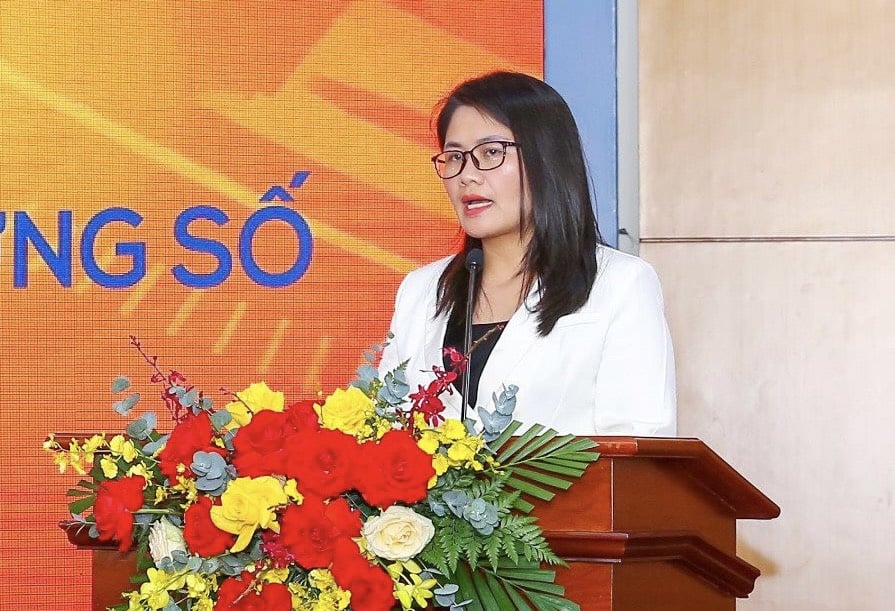
Lawyer Tran Thi Khanh Huong, Director of Hanoi Legal - Communication Law Firm. (Photo: ICT)
Compensation for damages is a form of civil liability that compels the party causing the damage to remedy the consequences by compensating the injured party for material and emotional losses.
"However, determining the extent of damage in the field of intellectual property is always a difficult issue in practice, and determining the damage caused by copyright infringement in journalism on the Internet is even more challenging," lawyer Tran Thi Khanh Huong commented.
Ms. Tran Thi Khanh Huong cited an example: if a journalistic work is stored and illegally accessed on the Internet, technical tools can be used to count how many people illegally access or download that work on a specific website. In this case, assuming that the online viewing or downloading of the work is predetermined for each access, a preliminary calculation of the actual damage lost by the copyright owner can be made.
However, the problem is that in many cases, works are illegally copied from one website and then uploaded to other websites or shared among individuals. "It's very difficult to control the number of unauthorized users in such cases. Assessing the reduction in income, profits, and business opportunity losses in the copyright sector is also particularly difficult – because the use of works depends heavily on factors such as public sentiment and demand," Ms. Huong said.
According to lawyer Huong, civil law and intellectual property law already have regulations on compensation for damages when journalistic copyrights are infringed. This provides a basis for parties to reach agreements or propose compensation levels to competent authorities, while also upholding the spirit of the rule of law.
Phan Hoa Giang
Source
























![[Photo] Prime Minister Pham Minh Chinh holds a phone call with the CEO of Russia's Rosatom Corporation.](/_next/image?url=https%3A%2F%2Fvphoto.vietnam.vn%2Fthumb%2F1200x675%2Fvietnam%2Fresource%2FIMAGE%2F2025%2F12%2F11%2F1765464552365_dsc-5295-jpg.webp&w=3840&q=75)













































Comment (0)