

Strategic advantages for Vietnam to achieve a breakthrough.
Looking back at nearly 40 years of reform, it can be affirmed that Vietnam has entered a new stage of development with the aspiration to become a developed, high-income country by 2045. The Party and State have identified the Vietnamese intellectual workforce abroad as a particularly important resource, an inseparable part of the national development strategy.
General Secretary To Lam's speech at the 9th Plenum of the 13th Central Committee emphasized that one of the key tasks is to attract at least 100 leading overseas Vietnamese experts back to the country between 2025 and 2027, along with special incentive mechanisms. The Party and State's stance demonstrates a high level of political determination in reforming thinking and approaches to harnessing Vietnam's global intellectual resources.
Currently, more than 600,000 Vietnamese intellectuals and experts are working in many developed countries, holding key positions in the fields of semiconductors, artificial intelligence, biology, new materials, green energy, medicine, management, etc. This is Vietnam's "global intellectual resource," serving as an important bridge for transferring technology, international standards, management experience, and new knowledge into the country.
However, for this resource to truly become a driving force for development, a groundbreaking, unconventional mechanism is needed to remove administrative procedural barriers, improve diploma recognition and professional licensing, and create an open, creative, and transparent working environment.
To realize the strategic breakthroughs outlined in the draft document of the 14th Party Congress, it is necessary to implement a comprehensive policy of special incentives, linking the effectiveness of contributions with practical benefits; applying flexible contract mechanisms and internationally competitive income; and simultaneously encouraging part-time work models and task-based cooperation, creating conditions for experts to both conduct research and commercialize products.
Simultaneously, building an innovation ecosystem, developing a national data platform connecting Vietnamese intellectuals globally, and establishing a transnational fund to support research and technology startups are necessary steps. The network of Vietnamese expatriate intellectuals in other countries should be more closely linked with Vietnamese embassies and representative offices abroad, becoming a central point of contact with domestic research institutions, universities, and businesses.
If these policies are implemented consistently, sustainably, and with international competitiveness, Vietnam will unlock the enormous potential of its intellectual workforce worldwide , transforming global intellectual strength into a strategic advantage for national development.
Joining hands with the aspiration for national development.
As responsible Vietnamese citizens living abroad, Vietnamese intellectuals overseas not only possess global knowledge but also have a deep love for and a strong desire to contribute to their homeland. Overseas Vietnamese intellectuals are ready to participate in the fundamental areas prioritized in the draft documents of the 14th National Congress of the Communist Party of Vietnam.
In particular, science and technology, semiconductors, artificial intelligence, and biotechnology; comprehensive digital transformation, building a digital government, digital economy , and digital society; developing green industries, a circular economy, and clean energy. At the same time, contributing to ensuring social progress and equity, and improving the quality of life for the people. This is the path for Vietnam to achieve rapid and sustainable development, linking economic growth with human development, and affirming the nation's position in the global value chain.
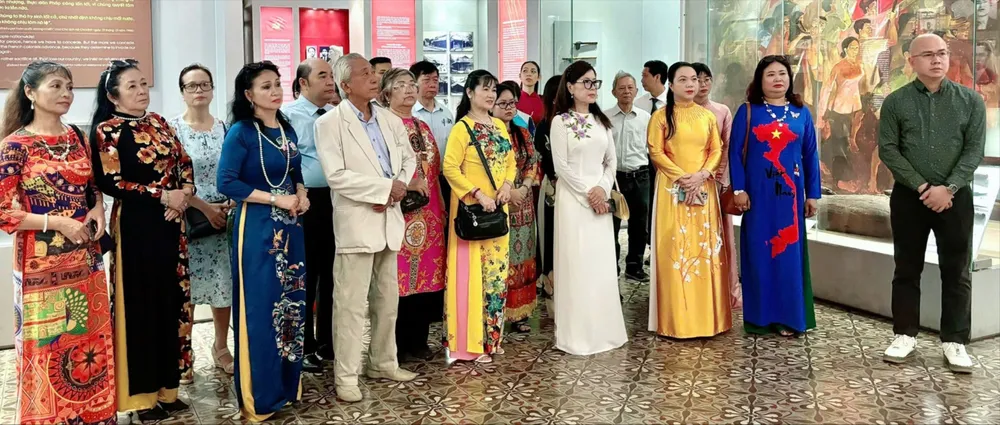
Driven by a desire to contribute to their country, Vietnamese intellectuals abroad hope that the State will implement policies to attract talent through diverse means. These include programs such as "overseas Vietnamese experts collaborating with research institutes, universities, and businesses"; and building an innovation ecosystem where experts can both conduct research and commercialize products.
Simultaneously, there should be a synchronized administrative and legal support mechanism, and the construction of a global database of Vietnamese intellectuals. The model of in-depth connection should be expanded with Vietnamese embassies and representative offices abroad, acting as intermediaries in each country; and close links should be established with intellectual associations and Vietnamese expert communities in other countries…
The confidence of Vietnamese expatriate intellectuals is increasingly strengthened as the Party and State remain steadfast in their goal of developing the country based on science and technology, innovation, and high-quality human resources, placing people at the center of the development process.
The 14th National Congress of the Party is not only an important political event but also a historical milestone that opens up the "era of Vietnamese intellect reaching the world," where the strength of the global Vietnamese community is gathered, resonates, and is most powerfully developed.
No matter where they live, the people of Vietnam share a common aspiration to stand alongside their homeland, contributing their intellect and strength to realize the goal of making Vietnam a developed, powerful, and prosperous nation by 2045.
Source: https://www.sggp.org.vn/tri-thuc-kieu-bao-dong-luc-dot-pha-cho-khat-vong-phat-trien-post820487.html









































































Comment (0)