

"The wider the road, the lower the level of awareness, and the more catastrophic the accidents will be."
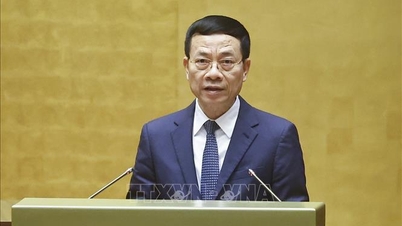
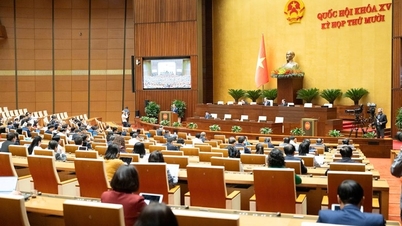
Speaking at the group discussion on the socio-economic situation on the morning of October 26th at the 8th Session, Minister of Transport Nguyen Van Thang stated that during this term, the Government has been very decisive in upgrading 2-lane expressways.
According to him, the National Assembly and the Government's decision to implement the 2-lane expressway project in the past was reasonable, because in reality, many routes had very low traffic volumes, but after a period of development, the need for upgrading was inevitable.
The Ministry of Transport is also upgrading expressways from 2 lanes to 4 lanes, and some limited 4-lane routes to full and larger lanes. This is being implemented aggressively, with investment already underway on some routes.
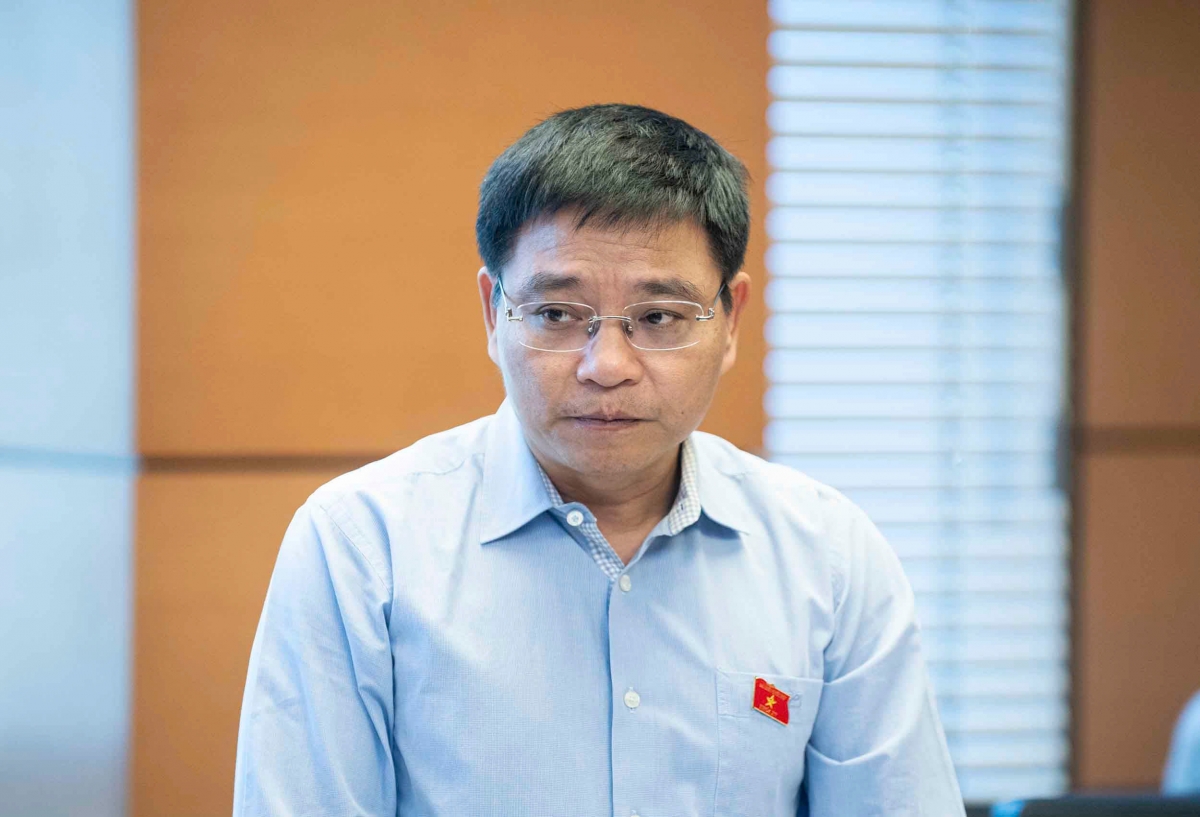
Minister Nguyen Van Thang also shared that he had traveled to Europe and seen many four-lane highways without emergency lanes, yet the drivers had very good awareness. “At that point, people accept slowing down and driving cautiously. Therefore, roads don't necessarily need to be big or wide; the bigger the road, the more catastrophic the accidents will be if people lack awareness.”
Citing statistics showing that over 90% of traffic accidents are caused by the awareness of road users, Mr. Nguyen Van Thang argued that along with investing in transportation infrastructure, many solutions are needed to change and upgrade the habits and culture of road users.
Sea sand mining must be done in moderation.
Also during the group discussion, there were concerns raised about the scarcity of sand for highway construction, especially in the context of the Mekong Delta region currently implementing 600km of north-south and 600km of south-south axis highways.
The provinces and cities in the Mekong Delta are making great efforts to coordinate with the Ministry of Transport to implement the project, but the sand shortage is a major concern for the localities. Key local projects also require this sand, so it is suggested that the ministries and agencies consider alternative options, possibly constructing the expressway using elevated viaducts.
Responding to the above comments, Minister of Transport Nguyen Van Thang affirmed that in the Mekong Delta, there is currently no shortage of reserves, but due to the simultaneous implementation of many expressways during this term, the demand has increased dramatically, while following the procedures and processes is very time-consuming.
Currently, approximately 40 million cubic meters of river sand have been licensed, while about 32 million cubic meters are in the process of being licensed by local authorities. Regarding sea sand as a substitute for river sand on the North-South expressways, Soc Trang province has already supplied 5.5 million cubic meters for the Soc Trang-Can Tho expressway, significantly reducing the pressure on river sand. The Ministry of Transport will expand the pilot program to expressways in the North and Central regions, and expects to widely publicize the use of sea sand as a construction material nationwide by the end of this year.
However, he also cited expert opinions suggesting that sea sand mining leads to erosion, therefore, mining should be done in moderation to serve economic development without negatively impacting the environment.
Regarding proposals from several provinces in the Mekong Delta to build elevated bridges along some expressways, Mr. Nguyen Van Thang said the Ministry of Transport is studying the matter and is very keen to do so. However, the biggest difficulty and obstacle is the cost.
"According to calculations, implementing this plan would cost 3.1 times more than usual, and even with efforts to reduce the cost, it would still be 2.5 times higher. Given the current difficult budgetary situation, this would be impossible to implement," Minister Thang stated.
Furthermore, in the West, the elevated bridges are only slightly higher than the road surface, so the spatial development aspect needs further study. In fact, many countries have built elevated roads extensively, but have now encountered spatial issues; therefore, thorough and sustainable research is necessary.
Three railway projects are currently underway.
Regarding further information on the implementation of the North-South high-speed railway project and other major railway lines, the Minister of Transport said that three railway projects are currently being promoted: Lao Cai - Hanoi - Hai Phong; Lang Son - Hanoi; and Mong Cai - Ha Long - Hai Phong.
The Ministry of Transport plans to propose operating standard gauge railways for both passengers and freight, at a speed of approximately 200 km/hour. Previously, 200 km/h was considered a high speed for standard gauge railways, but now it is considered normal.
Regarding the Ho Chi Minh City - Can Tho route, the Ministry of Transport is preparing to complete the pre-feasibility report to submit to the Government and the National Assembly. The project involves a standard-gauge railway with a speed of approximately 190 km/h for passengers and approximately 120 km/h for freight.
This project is 174km long with a total investment of over 9 billion USD (approximately 220,000 billion VND), divided into two phases. Phase 1 requires about 155,000 billion VND and will handle both cargo due to the very high demand. The Minister stated that if this railway line is completed, travel time from Ho Chi Minh City to the Mekong Delta will be reduced to just one hour.
Source: https://vov.vn/chinh-polit/bo-truong-nguyen-van-thang-trien-khai-quyet-liet-nang-cap-nhieu-tuyen-cao-toc-post1131111.vov
























![[Photo] Prime Minister Pham Minh Chinh holds a phone call with the CEO of Russia's Rosatom Corporation.](/_next/image?url=https%3A%2F%2Fvphoto.vietnam.vn%2Fthumb%2F1200x675%2Fvietnam%2Fresource%2FIMAGE%2F2025%2F12%2F11%2F1765464552365_dsc-5295-jpg.webp&w=3840&q=75)











































Comment (0)