

Final article: Comprehensive institutionalization of the new development mindset
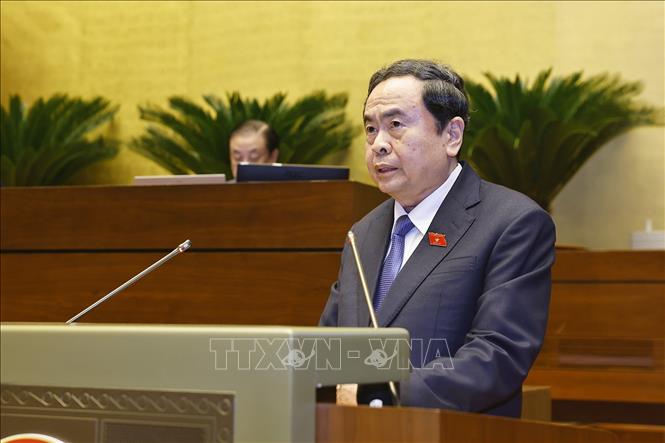
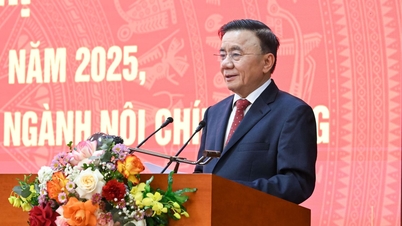
In his closing remarks, National Assembly Chairman Tran Thanh Man stated that during this session, the National Assembly had thoroughly and comprehensively reviewed the work of the state apparatus agencies during the 2021-2026 term; and considered and decided on personnel matters in accordance with the regulations of the Party and the laws of the State.
At the same time, the National Assembly thoroughly discussed the draft documents to be submitted to the 14th National Congress of the Party, contributing intellect, dedication, and ideas for the country's development towards the goal of becoming a developing country with modern industry and high middle income by 2030, when the Party celebrates its 100th anniversary; and becoming a developed country with high income by 2045, the 100th anniversary of the founding of the Socialist Republic of Vietnam.
During the group discussion, many delegates affirmed that the draft Political Report submitted to the 14th National Congress clearly demonstrated the strategic vision, comprehensive development thinking, and strong aspiration for innovation of the Party in the new period. Delegates proposed that the draft documents for the 14th National Congress emphasize several more fundamental, core, and powerful orientations. These include comprehensively institutionalizing the new development thinking, taking innovation and digital transformation as the central driving force, and considering this as a breakthrough leading all sectors.
This also involves building a modern, honest, efficient, and flexible development-oriented state based on open data and digital governance, minimizing administrative interference in market and social activities; establishing a mechanism for genuine decentralization and delegation of power, coupled with power control and accountability, thereby maximizing the creativity of each level and locality.
Delegate Ha Sy Dong (Quang Tri Province Delegation) analyzed that institutions remain the biggest bottleneck, but also the greatest potential for reform. Many correct policies and guidelines are slow to be institutionalized and implemented, lacking consistency, preventing the full utilization of social resources. Therefore, according to the delegate, the draft document needs to clarify the role of the State not only in managing but also in leading and creating an institutional space for innovation…
In discussions on the sidelines of the National Assembly, several delegates stated that the draft document reflects the aspiration for breakthroughs in national development thinking, as well as strategic vision and a spirit of innovation. The Party has proactively grasped global trends in the context of a world undergoing strong shifts driven by technology, climate change, and geoeconomic competition; it has set directions for improving institutions, promoting digital transformation, developing a green economy, enhancing the quality of human resources, and expanding deep international integration...
Addressing policy fragmentation
One of the most important resolutions of the 10th Session was the Resolution on adjusting the National Master Plan for the period 2021-2030, with a vision to 2050. The National Assembly voted to approve this Resolution with an absolute majority of 100% of the attending delegates (443/443).
The resolution provides a legal basis for adjusting the national spatial development orientation in the new context, ensuring synchronization with the national development strategy for the period up to 2050.
Several important indicators were added, notably the proportion of the processing and manufacturing industry reaching approximately 28% of GDP, accurately reflecting the goal of developing a modern, high-value-added production sector. The resolution also particularly emphasized the task of strengthening disaster prevention and control capabilities in the context of increasingly complex climate change.
To address the issue of fragmented policies, the National Assembly passed a Resolution approving the investment plan for the National Target Program on New Rural Development, Sustainable Poverty Reduction, and Socio-Economic Development in Ethnic Minority and Mountainous Areas for the period 2026-2035.
Looking back after nearly five years of implementation, the three national target programs for the 2021-2025 period have achieved and exceeded most of the set targets; however, 4 out of 21 targets remain unfulfilled. Many shortcomings exist regarding mechanisms and guidance, and progress is slow. The duplication between programs leads to resource dispersion and hinders progress. Therefore, the Government proposes integrating the three programs into a single unified program to ensure focus and continuity, while avoiding fragmentation and overlap. Government representatives affirmed that integrating the three national target programs will not disrupt or omit any policies, while giving the highest priority to the development of ethnic minority and mountainous regions.
In addition, the National Assembly considered and adopted resolutions on the socio-economic development plan for 2026; the state budget estimate for 2026; and the allocation of the central budget for 2026, aiming to create a legal basis and unified direction for the management and operation of socio-economic development and national finance and budget in 2026.
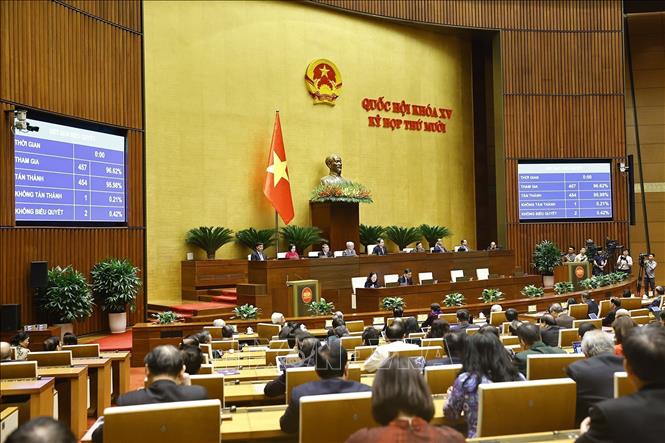
Notably, the Resolution on the Socio-Economic Development Plan for 2026 clearly states that 2026 is a significant year, marking the 14th National Congress of the Party, the election of deputies to the 16th National Assembly and representatives to People's Councils at all levels for the 2026-2031 term, the first year of implementing the 5-year Socio-Economic Development Plan 2026-2030, and the beginning of an era of national development towards prosperity and strength. Priority is given to promoting growth while maintaining macroeconomic stability, controlling inflation, and ensuring major balances.
The resolution set out 15 key targets, including a target of 10% or higher for gross domestic product (GDP) growth; and a GDP per capita of 5,400-5,500 USD…
In his closing remarks, National Assembly Chairman Tran Thanh Man emphasized that, looking back over the past five years, the National Assembly is pleased to have overcome countless difficulties and challenges. From the beginning of the term, the COVID-19 pandemic unfolded in a very complex manner, causing serious consequences. The National Assembly had to hold online meetings under social distancing conditions, with many National Assembly deputies having to quarantine and wear masks during meetings. Towards the end of the term, the entire country suffered successive natural disasters, storms, and floods, causing heavy losses of life and property for the State and the people; the country also had to face complex and unpredictable developments in the region and the world.
Against this backdrop, together with other agencies within the political system, under the leadership of the Party, the National Assembly has made extraordinary efforts, adapted flexibly, and acted decisively, maintaining unity and achieving fairly comprehensive results in the fields of constitutional drafting, legislation, supreme oversight, decision-making on important national issues, and parliamentary diplomacy.
It is evident that, with the spirit of "Innovation, democracy, discipline, responsibility, and efficiency," National Assembly delegates have focused intensely, maximizing their intellect and experience, all for the benefit of the nation and the people. As delegate Pham Thi Thanh Mai (Hanoi delegation) shared: The large workload and high pressure also create motivation for delegates to continue striving, hoping to contribute their small part to perfecting the institutional framework, removing bottlenecks, and helping the country have a complete legal basis and confidence to enter an era of prosperous development, aiming for the highest goal of ensuring people have a comfortable and happy life.
Source: https://baotintuc.vn/thoi-su/dau-an-ky-hop-thu-10-quoc-hoi-khoa-xvbai-cuoi-the-che-hoa-toan-dien-tu-duy-phat-trien-moi-20251212171216819.htm















![[Photo] Prime Minister Pham Minh Chinh holds a phone call with the CEO of Russia's Rosatom Corporation.](/_next/image?url=https%3A%2F%2Fvphoto.vietnam.vn%2Fthumb%2F1200x675%2Fvietnam%2Fresource%2FIMAGE%2F2025%2F12%2F11%2F1765464552365_dsc-5295-jpg.webp&w=3840&q=75)














































Comment (0)