

At the beginning of each school year, the role of the Parent Representative Committee always becomes a hot topic, attracting the attention of many parents and teachers. Does the Parent Representative Committee truly represent the voice of parents and fulfill its role and responsibilities?
The forum on the role of parent representatives in schools, organized by the Education section of VietNamNeti, aims to listen to opinions, sharing, and contributions from parents, teachers, and anyone interested in the country's education system to develop practical solutions to this issue.
“While I was rearranging the desks and chairs, sweeping, and mopping the classroom with the teacher and the janitor, some parents arrived. Seeing that I had hired someone to clean, the mother of a student in the class immediately objected, saying, ‘You’re spending money like this, no wonder the class fund has to be so high. There are already so many students here, why hire anyone else?’ I felt embarrassed in front of the teacher and the janitor, and also very upset,” Ms. Nhung recounted the incident that happened right before the first day of school.
That day, she had to pay the janitor out of her own pocket, not wanting to use the class fund for fear of causing further gossip.
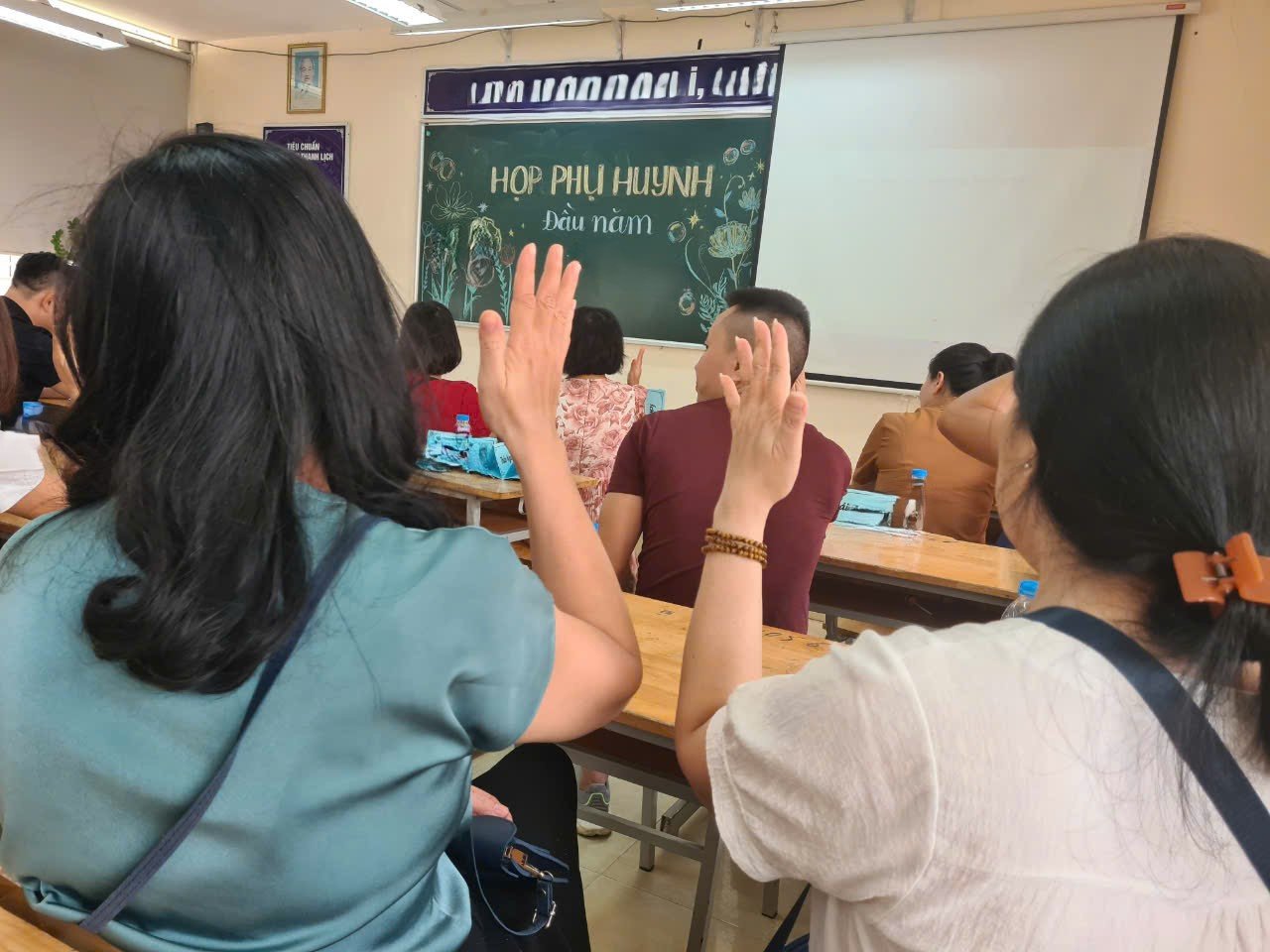
Ms. Nhung is currently the head of the parent-teacher association for her son's 7th-grade class at a school in Thanh Xuan, Hanoi. With over four years of experience as a head of the association, she shared that her participation stemmed from a desire to closely monitor her son's activities after her family moved to a new environment.
"My child is a bit shy, and our family had just moved here from another place. I took on the role in the parent committee so I could be more involved in my child's classroom activities, and better understand the environment and the teachers. Later, there were times I wanted to 'resign' because I was tired and frustrated, but because I was re-elected and the teacher trusted me, I persevered," Ms. Nhung shared.
According to her, as the head of the parent committee, she has to be more careful with finances than when she was a stay-at-home mom, but she is still often met with skepticism from parents of students in her class, sometimes hinting at it indirectly, other times directly confronting them at class meetings.
Not only that, she also had to attend parent-teacher meetings at school, trying to memorize information to relay to the class, and sometimes even having to argue and defend the rights of both parents and students.
For every holiday, New Year's, birthday, or teacher appreciation event, she has to arrange her time to organize things so that the children have fun without exceeding the budget and without violating school regulations.
“Like last year during the Mid-Autumn Festival, I and the other parents in the committee bought fruits, candies, and decorations for the children to set up their display booths. After we publicly disclosed the expenses, many people said we had spent too extravagantly, that there was no need to buy expensive, high-quality items. Even when I explained in detail that these items would be used for the children's feast, and that all the trimming, decorating, and other tasks were done by the mothers themselves for free or brought from home… many people were still resentful and said they wouldn't contribute to the fund in the second semester,” Ms. Nhung recounted.
Ms. Bich Dao (Nam Tu Liem, Hanoi) decided to withdraw from the parent committee after volunteering for a year. Ms. Dao recounted that when she first joined, she simply thought it was to "set an example" for her daughter, who was passive and rarely participated in group activities, and that as a member of the parent committee, she only needed to support what everyone asked. However, in reality, conflicts arose within the parent committee, especially regarding financial decisions.
“Things were more complicated than I thought. Once, on November 20th, the chairman wanted to give each teacher teaching a main subject one million dong in an envelope, and teachers teaching supplementary subjects 500,000 dong. The vice chairman thought that amount was too low and proposed doubling it. Unable to reach an agreement, they formed a separate group to discuss and attack each other. I thought the chairman was more reasonable, but I didn't want to get involved in any faction,” Ms. Dao recounted.
She also shared that, before joining the parent committee, she wondered about the fact that expenses were rarely discussed openly, fearing there might be something fishy going on. However, after joining, she understood some of the "unwritten rules." "Discussing among a group of several dozen people, each with their own circumstances and opinions, and who hardly know each other, it's often difficult to reach a consensus. Moreover, anything discussed in the group chat is easily screenshotted and posted online for discussion and criticism, so the committee often makes decisions first and then gets approval later," Ms. Dao recounted.
As a member of the parent committee, she was occasionally assigned to buy extra supplies for the children, sometimes even using her own money because she was afraid of a large overspending of the class fund, fearing that raising additional contributions at the end of the year would draw questions from everyone.
Ms. Dung, another parent in Ha Dong, Hanoi, also served as the head of the parent-teacher association for both of her children for five years. She recounted that she took on this role because she saw many unreasonable expenditures by the previous parent-teacher association. However, throughout those five years, she often felt hurt and even cried because of criticism stemming from unnecessary misunderstandings.
"For example, when installing air conditioners for the children, I had to pay upfront because for many months I hadn't collected enough money from parents. Even after the children graduated, despite agreeing to sell the air conditioners to fund a graduation party, some people still criticized me, saying I was 'using other people's property for my own benefit,' taking the class's shared assets to curry favor with the school administration," Ms. Dung recounted.
Despite facing many difficulties and misunderstandings, Ms. Dung still believes that once someone takes on the role of head of the parent committee, they need to dedicate their time and effort without calculating personal gain. At the same time, it is necessary to clearly distinguish the responsibilities of the parent committee and the school in class activities.
At the beginning of each new school year, especially after parent-teacher meetings, there are quite a few negative opinions about the role of the parent committee. Some even argue that this committee is merely an "extension of the school's arm," leading to excessive fees and spending.
However, according to the Ministry of Education and Training, parent representative boards operate under Circular No. 55, with the role of coordinating with schools in the care and education of students. This document also clearly stipulates the operating budget of the board, emphasizing that no voluntary contributions or fees that do not directly serve the activities of the parent representative board should be collected.
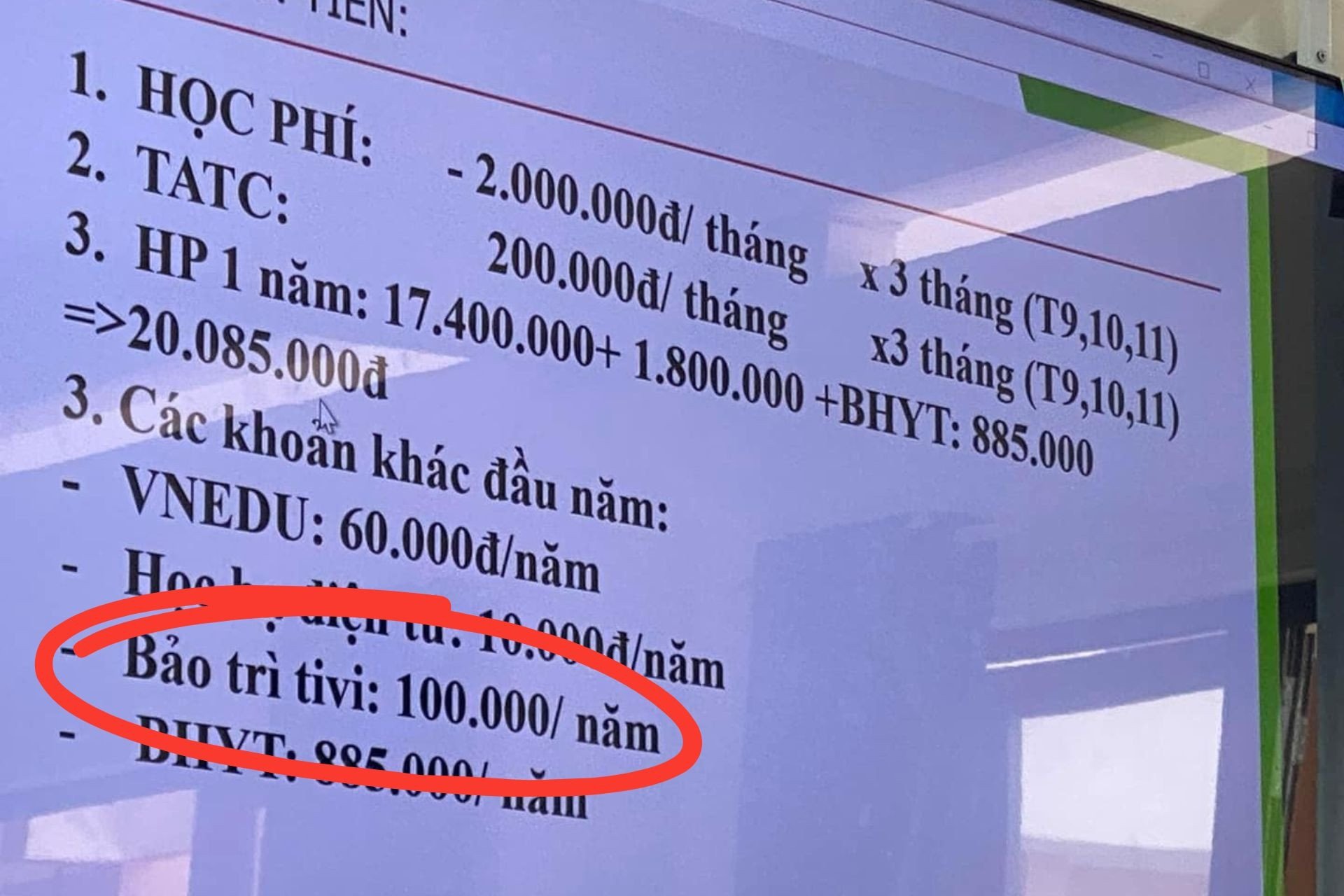
Parents are outraged after being charged 100,000 VND per student for "TV maintenance."
Source: https://vietnamnet.vn/truong-ban-phu-huynh-bat-khoc-vi-chuyen-chiec-dieu-hoa-cuoi-nam-hoc-2322565.html








































































Comment (0)