

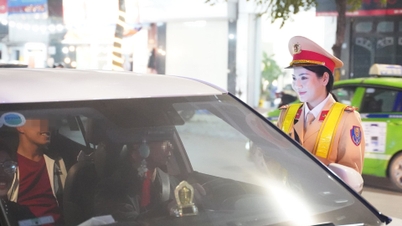
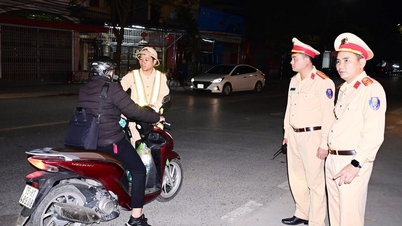
According to Dr. Nguyen Huy Hoang from the Vietnam-Russia Tropical Center, Ministry of Defense , if you consume beer labeled as 0% alcohol, your breath will still have a low alcohol concentration. If you are stopped and asked to take a breathalyzer test while driving, it could still be positive and you would be in violation.
Therefore, even when consuming 0% alcohol beer, you still need time to eliminate all alcohol from your blood and breath before driving. "It's best not to drink beer at all, even 0% alcohol beer ," advises Dr. Hoang.
There are many types of beer with varying alcohol content. Most beers contain 5-8% alcohol, while some have higher concentrations ranging from 8-15%.
Zero-alcohol beer, also known as non-alcoholic beer, is a product from which all the alcohol has been removed or brewed to contain an alcohol content lower than the permitted level.
In fact, many beers advertised as 0% alcohol still contain around 0.5%. Different countries have different regulations regarding alcohol content in beer.
According to the U.S. Food and Drug Administration (FDA), beverages with an alcohol content below 0.5% can be considered non-alcoholic. The same applies in Germany.
Meanwhile, in Italy, zero-alcohol beer actually contains up to 1.2% alcohol. In the UK, bottles labeled "zero alcohol" have an alcohol content of less than 0.05%.
Experts also stated that, based on the widespread practice of alcohol consumption among the population in most countries worldwide, the World Health Organization (WHO) has introduced the concept of an alcohol unit.
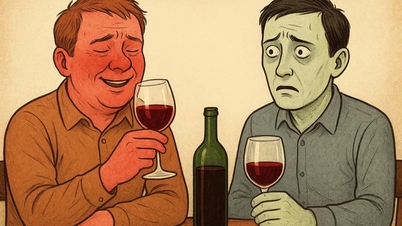
One unit of alcohol is equivalent to 10g of pure ethanol, which is equal to 200ml of beer; 75ml of wine (1 glass); or 25ml of spirits (1 shot). The approximate number of units of alcohol will depend on the amount consumed.
For a healthy adult, the liver can eliminate about one unit of alcohol every hour. This is an average figure. Depending on the individual, such as those with weak livers or those who are overweight, this time may increase or decrease.
In addition, factors such as medical conditions, age, weight, or a large amount of food in the stomach can slow down the rate of alcohol absorption and consequently slow down its elimination.
Regarding the body's mechanism for eliminating alcohol, approximately 10-15% is eliminated through respiration, skin, and sweat. About 85-90% is processed by the liver.
Source
















![[Photo] Prime Minister Pham Minh Chinh holds a phone call with the CEO of Russia's Rosatom Corporation.](/_next/image?url=https%3A%2F%2Fvphoto.vietnam.vn%2Fthumb%2F1200x675%2Fvietnam%2Fresource%2FIMAGE%2F2025%2F12%2F11%2F1765464552365_dsc-5295-jpg.webp&w=3840&q=75)














































Comment (0)