

No rigid integration of the National Program
.jpg)
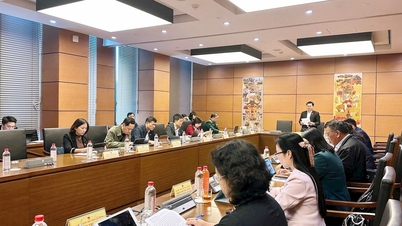
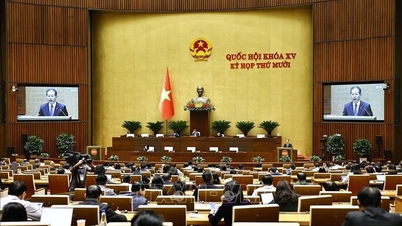
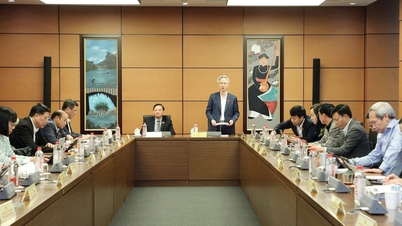
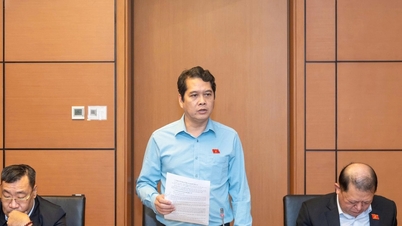
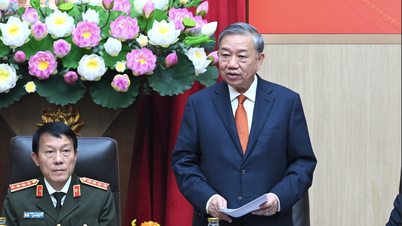
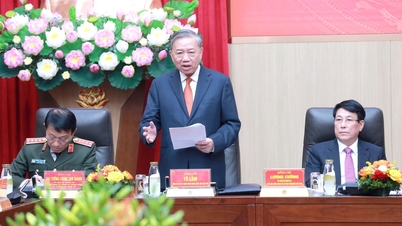
Delegate Vi Van Son (Nghe An) agreed with the Government's assessment of the results of the implementation of the 3 National Target Programs in the past time and supported the integration policy to reduce management units, reduce administrative procedures and strengthen decentralization and delegation of power to localities. However, the delegate emphasized: it is necessary to clearly see the very special characteristics of the Socio -Economic Development Program for Ethnic Minority and Mountainous Areas, because this is a program of strategic significance, different in terms of objects, locations and methods of organization and implementation.
Delegate analyzed: The programs for new rural construction and sustainable poverty reduction have been "on track", implemented stably from the grassroots for many years, while the Ethnic Program under Resolution 88, although issued in 2019, will not complete the system of guiding documents until the end of 2021; localities must submit mechanisms and policies to the Provincial People's Council and will start implementation by the end of 2022, and will be on track in 2023. As of the time of speaking, the program still has many problems with documents.
From that reality, the delegate said that designing the report into two components is reasonable. Due to its very unique characteristics, the Ethnic Program cannot be rigidly integrated into other programs, otherwise it will cause disruption and reduce efficiency. For the new rural and sustainable poverty reduction components, it is necessary to soon have a common set of criteria for evaluation; resources must be mobilized mainly from the locality and socialization, the central budget plays a role as a model. The delegate agreed to see this component as a major movement of the entire Party, the entire people and the entire political system.
Regarding the ethnic component, the delegate emphasized: this is the "core area of difficulty", "the lowland of development", so the goal of creating a push must start from this area. The delegate suggested that the Government allocate the central budget for the period 2026 - 2030 at least equal to the period 2021 - 2025 (about 104 trillion VND), balance investment and career expenditures at a ratio of 50/50, and clearly define resources for each component instead of recording the total resources.
.jpg)
Regarding the 2030-2035 target, delegates noted that it is necessary to consider, especially the target of 100% of communes escaping poverty and basically no longer having particularly difficult communes and villages - a target that is too high and difficult to achieve when there is currently no list of poor communes and particularly difficult communes and villages that have been reviewed, and the merger of villages is still unclear.
Regarding the assignment of program policies, delegates proposed to clearly stipulate in the Resolution: The Ministry of Agriculture and Environment shall preside over Component 1; The Ministry of Ethnic Minorities and Religions shall preside over Component 2. The delegates also suggested that the National Assembly assign the Government to direct the two ministries to develop management regulations, or authorize coordination in promulgating principles, criteria and capital allocation norms. The delegates noted: the current draft only assigns the Ministry of Agriculture and Environment without mentioning coordination with the Ministry of Ethnic Minorities and Religions, which needs to be revised to suit reality.
Revise poverty criteria and clarify specific targets
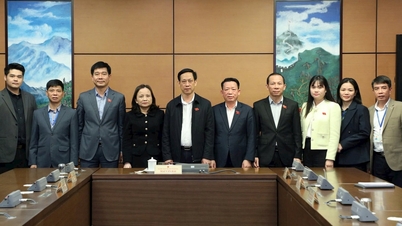
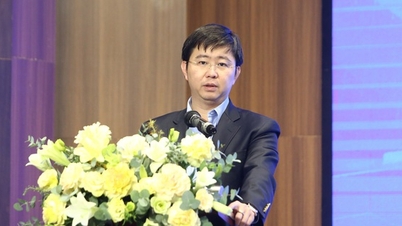
Delegate Tran Thi Thu Hang (Lam Dong) basically agreed with the draft content but emphasized that the Socio-Economic Development Program for Ethnic Minority and Mountainous Areas for the 2026-2035 period is deeply specific and has a direct impact on the lives of ethnic minorities.
Delegates strongly agreed on the policy of combining the three programs to avoid resource dispersion, create self-benefits, not miss out on targets and focus on the right investment. However, before integrating, there must be a comprehensive assessment, clarifying difficulties and advantages, avoiding spreading, paying special attention to core areas and areas lacking resources.
.jpg)
Regarding the general objectives, delegates commented that they are still heavily qualitative, using many macro terms while people have only access to basic conditions. Therefore, the objectives must be reviewed and written in a more directional and quantitative manner.
Regarding specific goals, delegates suggested changing the goal of 100% of poor communes escaping poverty to sustainable poverty escape, because re-poverty can happen very quickly, especially after natural disasters and floods. The content of planning and population arrangement needs to be rewritten, clarifying remote areas, high risk of natural disasters and landslides instead of the concept of "necessary places".
Regarding the National Strategy Program on Clean Water Supply and Rural Sanitation, delegates said: the target is still too high when only about 30% of the population has access to clean water, and many places use substandard water. Even large urban areas still face difficulties, so ethnic minority areas are even more difficult; the target needs to be re-evaluated for feasibility.
Regarding the multidimensional poverty criteria, delegates suggested a review because there are many shortcomings, leading to the omission of beneficiaries. Delegates pointed out practical examples: households with assets but no longer able to work are still considered to have escaped poverty; households with cows for production but lacking audio-visual equipment are still classified as poor. These shortcomings need to be adjusted to ensure the right beneficiaries, increasing the effectiveness of the program.
.jpg)
Delegate Tran Thi Thu Hang especially emphasized two resources that determine success: human resources and finance. Streamlining the payroll, retiring officials or transferring them to inappropriate positions are affecting implementation; therefore, a mechanism is needed to attract and retain officials. Regarding funding, it is impossible to level the playing field among localities; particularly difficult areas need strong priority. Delegates suggested that localities that cannot fully disburse funds need a mechanism to transfer resources to other localities to avoid wasting the budget.
Delegates also agreed with the proposal to assign the ethnic affairs agency to preside over the ethnic component, because this is the agency that understands the culture, customs, thoughts, and conditions of the people; if assigned to another agency, it will lead to confusion, policy disruption, and difficulty in achieving effectiveness.
Maintain the inheritance of ethnic policies, prioritize capital allocation according to the level of difficulty.
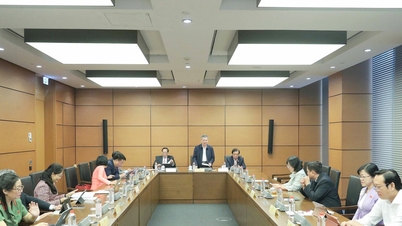
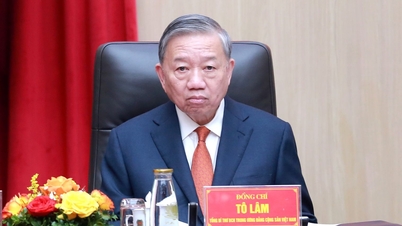
Delegate Pham Thi Kieu (Lam Dong) affirmed: the ethnic policies for the 2016-2020 period still retain their value and many contents have been integrated into the National Target Program for Socio-Economic Development of Ethnic Minority and Mountainous Areas according to Resolution 120 of the 14th National Assembly. This is an important basis for continuing to inherit and perfect policies in the 2026-2035 period.
.jpg)
The delegate emphasized that the principle of capital allocation must be prioritized according to the level of difficulty of each locality, absolutely avoiding equal division, in order to concentrate resources on the core areas and the most difficult areas. The ethnic affairs agency needs to continue to be assigned the role of focal point in organizing the implementation of the specific component, because this is the agency with the deepest expertise, understanding the cultural and social characteristics, living conditions and needs of the people. Assigning the right agency to the lead agency is a prerequisite to ensure the continuity of the policy, strengthen the people's trust and promote effectiveness in the new period.
From experience in implementing previous programs, delegates proposed: clearly specifying in the Investment Policy Report the agency in charge of the ethnic component; recommending assigning the Ministry specialized in state management of ethnic groups to preside over and coordinate with relevant agencies. Delegates cited Conclusion Notice No. 4665/TB-VPQH dated November 27, 2025 of the National Assembly Standing Committee to clarify the urgency.
Regarding Article 2 of the draft Resolution, delegates proposed to add a provision: The Ministry of Agriculture and Environment shall take the lead in accordance with the Law on Public Investment; the Ministry of Ethnic Minorities and Religions shall take the lead in the second component related to socio-economic development in ethnic minority and mountainous areas.
Delegates affirmed that clarifying the role of each ministry and agency is of special importance to ensure transparency, unity and effective implementation, towards the ultimate goal of improving the material and spiritual life of ethnic minorities, building sustainable development in mountainous areas and leaving no one behind.
Source: https://daibieunhandan.vn/uu-tien-nguon-luc-phat-trien-vung-dong-bao-dan-toc-thieu-so-mien-nui-10398090.html


![[Photo] Cat Ba - Green island paradise](/_next/image?url=https%3A%2F%2Fvphoto.vietnam.vn%2Fthumb%2F1200x675%2Fvietnam%2Fresource%2FIMAGE%2F2025%2F12%2F04%2F1764821844074_ndo_br_1-dcbthienduongxanh638-jpg.webp&w=3840&q=75)



























![[VIMC 40 days of lightning speed] Da Nang Port: Unity - Lightning speed - Breakthrough to the finish line](https://vphoto.vietnam.vn/thumb/402x226/vietnam/resource/IMAGE/2025/12/04/1764833540882_cdn_4-12-25.jpeg)




































Comment (0)