

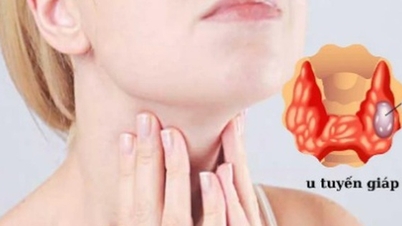
In Vietnam, thyroid cancer is increasing rapidly, rising to the 6th position among the most common cancers according to data from GLOBOCAN 2022. It is estimated that each year our country records more than 6,120 new cases, in which there is a clear gender gap as the disease is especially common in women with a rate 3 times higher than in men.
Despite the increasing number of cases, thyroid cancer is still considered by doctors to be the disease with the best prognosis, with a 5-year survival rate of over 90% if detected early and treated properly.
For decades, thyroid cancer was considered a disease that mainly occurred in middle-aged or elderly people. However, recently, a reality has startled the global health sector: the incidence of thyroid cancer in teenagers and young people under 40 years old is increasing significantly. People in their twenties and thirties can now also face a risk that few people thought of before.
- Shocking data shows that tumors do not discriminate by age
- When should you pay attention, signs to see a doctor
- Small tumors still need monitoring
- Correct perception, correct examination and correct prevention
- Screening and lifestyle concerns
Shocking data shows that tumors do not discriminate by age
Every year, endocrinology and oncology clinics in many countries record a sharp increase in the number of young patients diagnosed with thyroid cancer. Many people under 30, even 20 years old, come to the clinic because of a feeling of obstruction in the neck, hoarseness, swollen lymph nodes, or simply because of an ultrasound health check and thyroid tumors are detected.
This phenomenon makes many doctors ask: is thyroid cancer really "getting younger", or is it just because diagnosis is becoming more common, ultrasound and biopsy techniques are being used more widely? Perhaps both factors are at play, but more importantly, it reminds people: don't be complacent because you're young.
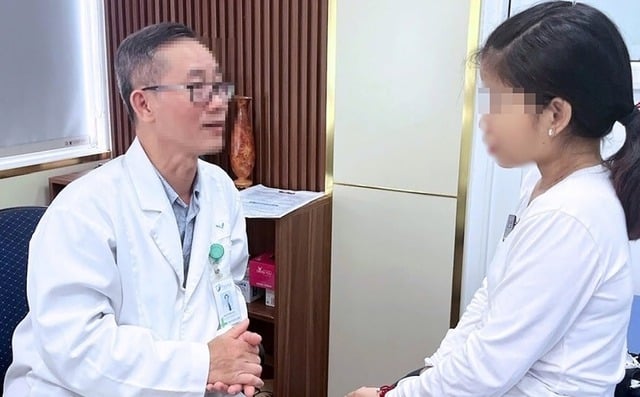
Endocrinologists advise young people on thyroid nodule monitoring and thyroid cancer screening.
In fact, most thyroid tumors detected in young people are very small, silently manifest and have a very slow growth rate, sometimes not affecting health much throughout life. However, when detected, many people worry too much, leading to biopsy, surgery, and thyroidectomy - treatment steps that change the lives of many people, even causing long-term consequences on hormones, health, and spirit.
Therefore, doctors recommend: if there are no obvious symptoms (large tumor, change in voice tone, difficulty swallowing, neck lymph nodes), do not rush to surgery. Annual ultrasound in healthy young people, especially when there is no family history, is not considered necessary. Thyroid examination should be based on real needs, clear signs or significant risks.
When should you pay attention to thyroid tumors and what are the signs that require medical attention?
If you notice one or more of the following signs, you should see a doctor soon: Lumps or lymph nodes appear in the front of the neck, prolonged swelling.
- Feeling of obstruction when swallowing, difficulty swallowing, choking, pain in the back of the neck, unusual hoarseness that lasts for a long time.
- Have a relative with thyroid disease, or have had radiation therapy to the head/neck area, or have been exposed to high levels of radiation.
- Indicated by an endocrinologist or oncologist due to an incidental finding such as a thyroid nodule during a general health check-up. In that case, you should discuss carefully with your doctor and consider monitoring or biopsy.
- In the absence of signs, annual ultrasound is no longer universally recommended, as it may lead to “over-diagnosis,” unnecessary anxiety, and treatment that is sometimes not really needed.
Small tumors still need monitoring
Although many small thyroid nodules grow slowly or never become malignant, it is not always possible to predict accurately in advance. There are cases where the tumor progresses silently, spreading to the lymph nodes, affecting the gland, especially if the patient delays examination or ignores medical advice.
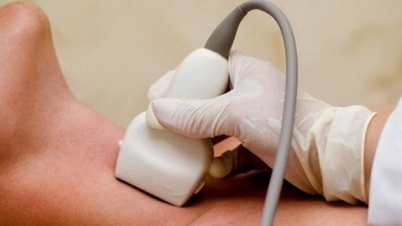
Therefore, if you detect a small thyroid nodule, even if there are no symptoms, you should be monitored regularly by your doctor, have an ultrasound and evaluate it according to specialist recommendations. "Active surveillance" is now encouraged by many experts instead of immediate surgery, to avoid hormonal fluctuations and unwanted treatment consequences.
Correct perception, correct examination and correct prevention
The important thing is not to look in the mirror every day, or touch your neck every week, but to have the right awareness: thyroid cancer can occur in young people, but not all thyroid nodules are scary. Going for a check-up should be based on real signs, instead of being confused by trends or hearing "jealous ghosts from acquaintances".
Thyroid cancer education should aim at: understanding the risks, signs, choosing appropriate options from monitoring, biopsy, to treatment decisions, not overreacting when seeing a small nodule.
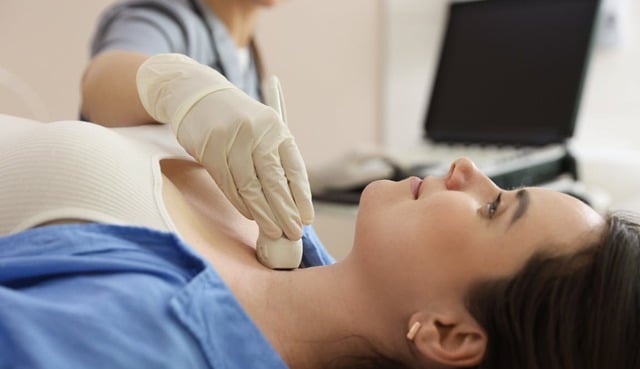
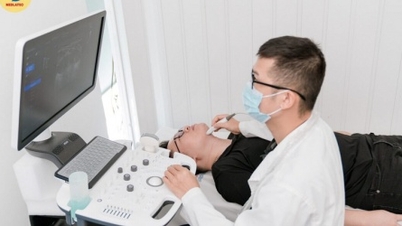
Young people should have regular thyroid ultrasounds to detect potential tumors early.
Screening and lifestyle concerns
In addition to screening and monitoring, young people should maintain a healthy lifestyle: a reasonable diet, limit exposure to pesticides, radiation, and avoid prolonged stress because there are many hypotheses that changes in living environment, hormones, and pollution can contribute to increasing the risk of thyroid disease.
Get regular check-ups when needed, but don't let them become a phobia; be prepared for information, but differentiate between benign and dangerous tumors.
Thyroid cancer in young people is a warning: do not wait until you are "old" to care about your health. But at the same time, society from the press, health care, and experts need to convey the right information: not causing panic, not encouraging unnecessary testing, but guiding scientific monitoring, detection and treatment.
Young people, therefore, are responsible for their health: listen to their bodies, go to the doctor when there are signs, see a specialist if necessary and importantly: stay calm, understand correctly, do not let fear turn into unnecessary decisions.
Thyroid cancer is no longer a "middle-aged disease"; it can strike people in their 20s, 25s, and 30s. But early detection does not mean rushing to treatment. If you know how to observe, get checked at the right time, and choose the right treatment, you can effectively control the disease, protect your health, and not let fear dominate your life. Consider it a gentle, but meaningful reminder: being young does not mean being immune.
Source: https://suckhoedoisong.vn/vi-sao-ung-thu-tuyen-giap-tang-nhanh-o-nguoi-tre-tuoi-169251202120058955.htm
![[Photo] National Assembly Chairman Tran Thanh Man attends the VinFuture 2025 Award Ceremony](/_next/image?url=https%3A%2F%2Fvphoto.vietnam.vn%2Fthumb%2F1200x675%2Fvietnam%2Fresource%2FIMAGE%2F2025%2F12%2F05%2F1764951162416_2628509768338816493-6995-jpg.webp&w=3840&q=75)
![[Photo] 60th Anniversary of the Founding of the Vietnam Association of Photographic Artists](/_next/image?url=https%3A%2F%2Fvphoto.vietnam.vn%2Fthumb%2F1200x675%2Fvietnam%2Fresource%2FIMAGE%2F2025%2F12%2F05%2F1764935864512_a1-bnd-0841-9740-jpg.webp&w=3840&q=75)







![[Infographic] Air pollution and recommendations from the Ministry of Health](https://vphoto.vietnam.vn/thumb/402x226/vietnam/resource/IMAGE/2025/12/05/1764950568593_screen-shot-2025-12-05-at-222015-png.webp)







































































Comment (0)